The three frame materials used in impact doors — aluminum, vinyl, and fiberglass — each perform differently in South Florida’s salt-air coastal environment, and the right choice depends on your home’s exposure, door size, and long-term maintenance expectations. All three are available with Florida Product Approval, but they are not interchangeable. Understanding the differences before you buy saves time, money, and surprises at inspection.
- Aluminum is the dominant frame material for large impact doors in South Florida because of its structural rigidity and deep product-approval history.
- Vinyl offers excellent thermal performance but is best suited to smaller door configurations in lower-exposure locations.
- Fiberglass carries the best corrosion resistance of the three materials, making it worth considering for homes directly on the water.
- Frame material affects which Florida Product Approval number applies — confirm the approval matches the installed product before signing a contract.
- The frame is only part of the system; flashing, anchoring, and the permit inspection matter just as much as the material itself.
Why Frame Material Is a Code and Performance Decision
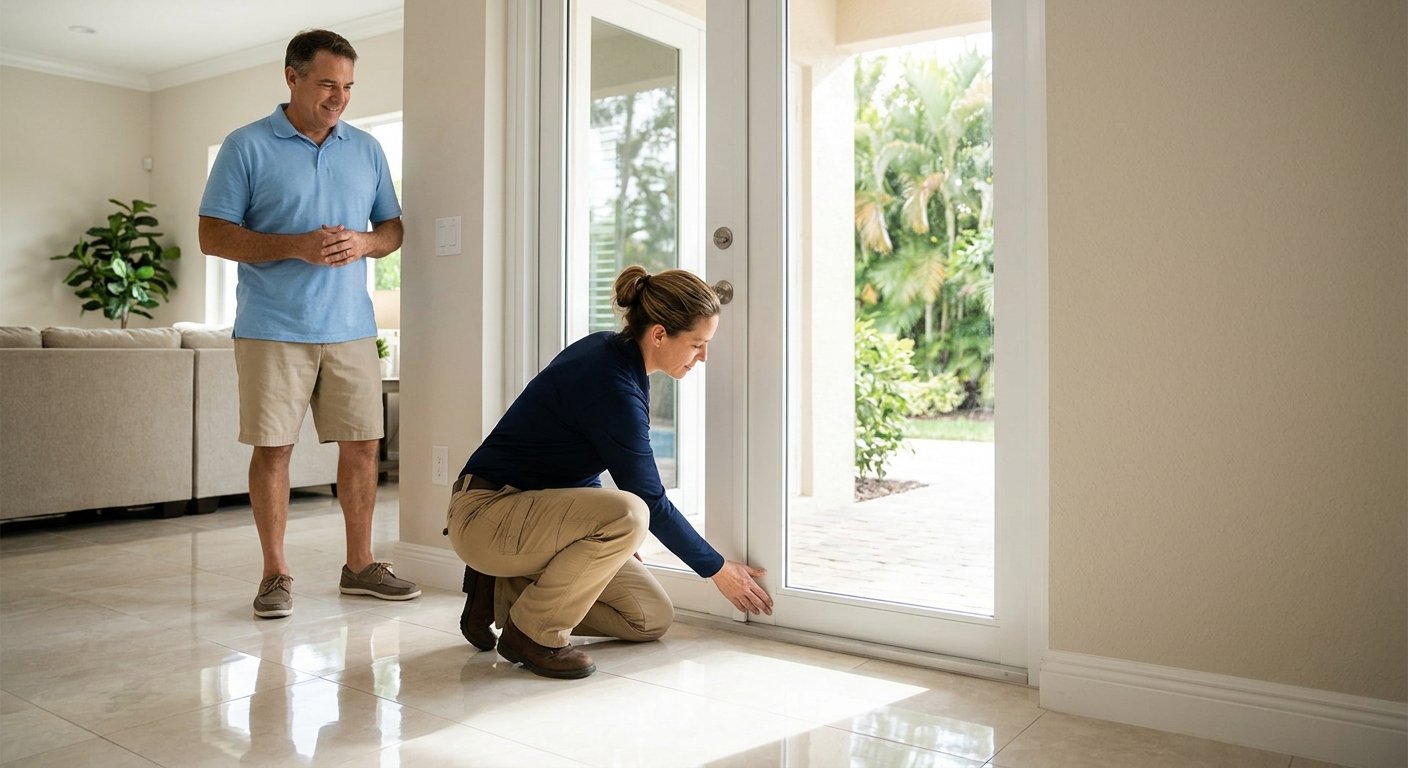
When homeowners in Palm Beach County, Broward County, Fort Myers, and Naples start researching impact doors, they typically focus on glass type first. That makes sense — the laminated glass is what stops penetration. But the frame is what holds the glass to your structure, what keeps water out at the perimeter, and what determines whether the door passes the product-approval testing that Florida requires. Choosing a frame material without understanding these factors leads to either an overpay or a product that underperforms for where it’s installed.
Florida’s approval process, administered through the Florida Building Commission’s product approval system, ties each approval number to a specific product, including frame type, glass configuration, and anchoring method. When we pull a permit for an impact door installation in Boca Raton or Cape Coral, the permit package cites those exact approval numbers. If the installed frame doesn’t match, the inspection fails. This is why frame selection is a technical conversation, not just an aesthetic one.
Aluminum Frames: The South Florida Standard
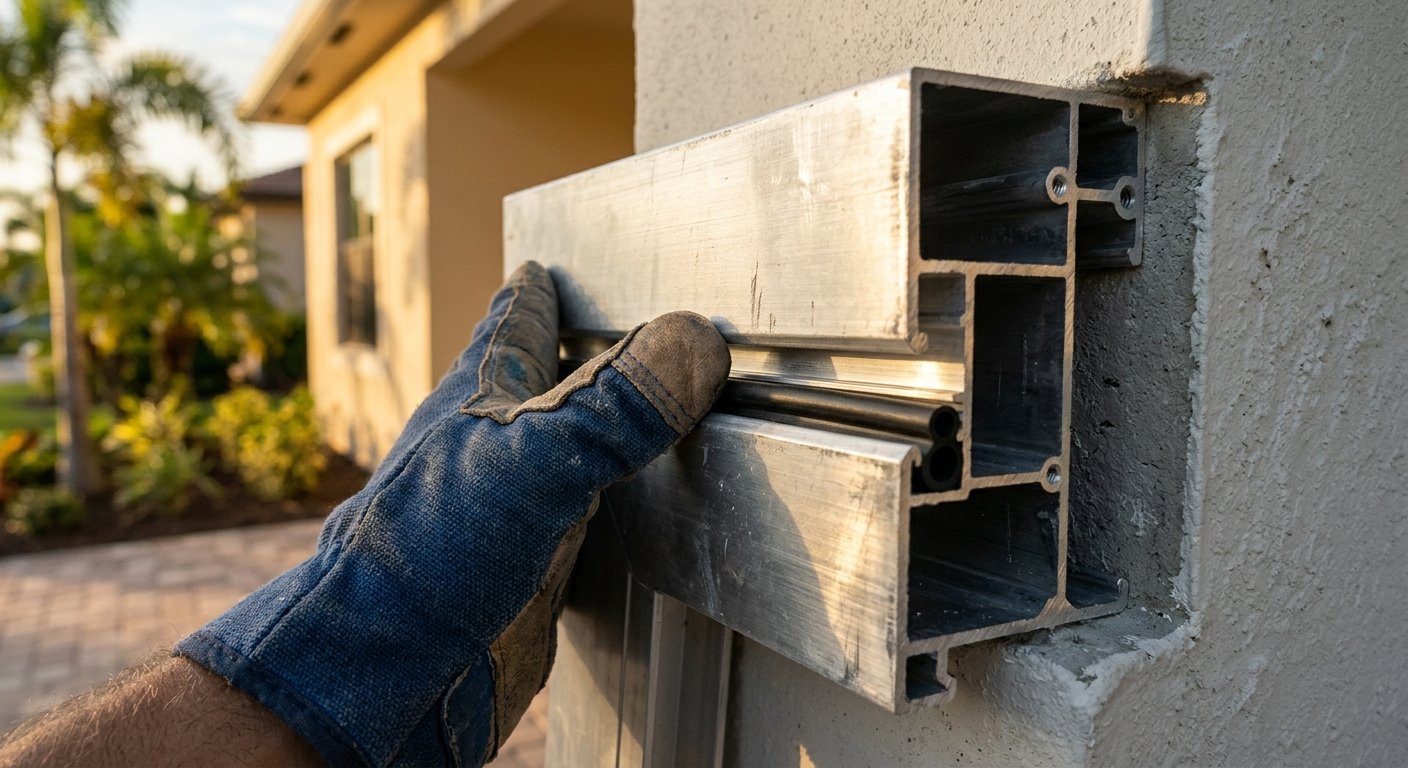
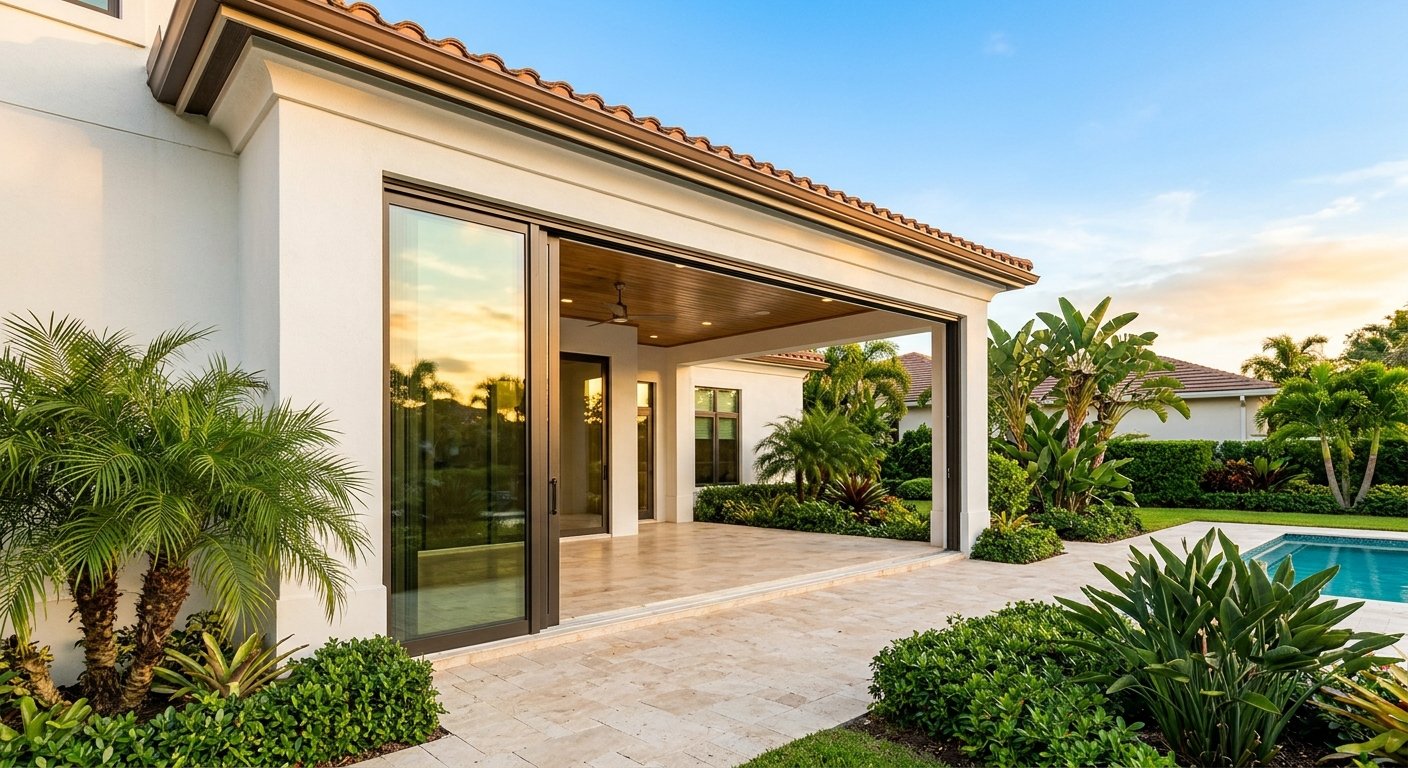
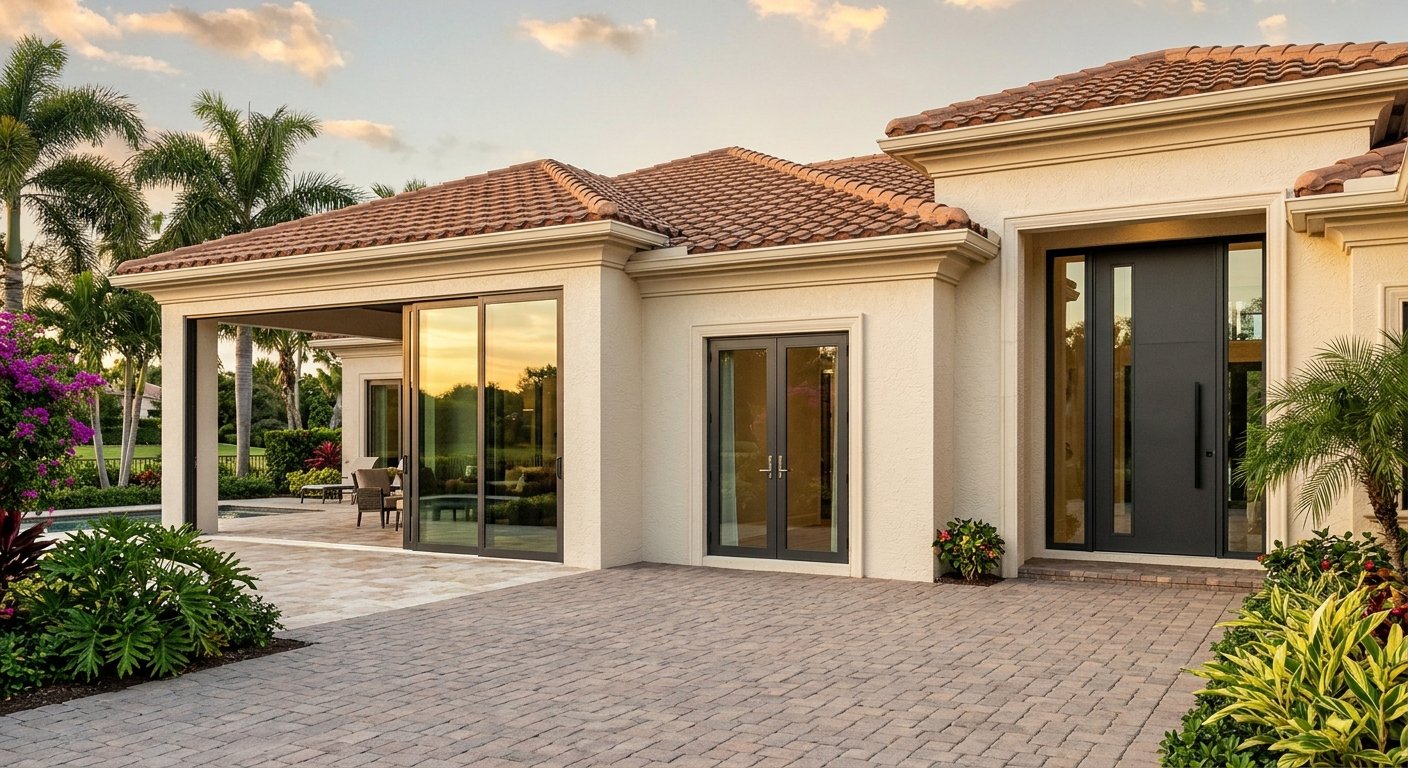
Aluminum is the most widely used frame material for impact doors across our service area, and for good reason. It is structurally dense, dimensionally stable in Florida’s heat, and capable of spanning large openings — including wide sliding glass doors, French door systems, and pivot configurations — without deflecting under load. The product-approval library for aluminum-framed impact doors is extensive because aluminum has been the industry standard here for decades.
Strengths of Aluminum in Coastal Florida
- Structural rigidity: Aluminum handles large door widths without bowing, which is critical for multi-panel sliding glass doors common in Palm Beach Gardens and Weston homes.
- Thermal-break options: Modern aluminum frames include a thermal-break insert that reduces heat transfer, addressing the material’s main historical weakness.
- Color and finish: Anodized and powder-coated finishes hold up well in South Florida sun; color options are broad.
- Product approval depth: More tested configurations exist for aluminum than for any other material, giving installers and inspectors a well-established reference point.
Where Aluminum Has Limitations
Aluminum conducts heat more readily than vinyl or fiberglass, which is why a thermal-break frame is worth specifying in Fort Myers and Naples homes where air-conditioning loads are a concern. Without a thermal break, condensation can form on the interior of the frame in certain conditions. In extreme waterfront exposures — docks in Cape Coral, oceanfront in Delray Beach — aluminum can corrode at the fastener points over time if the finish is scratched and left untreated. Regular rinsing and inspection of the finish prevents this in most cases.
At Access Impact, the aluminum-framed impact doors we install through CWS and ES Windows carry Florida Product Approval numbers listed on every quote. Before installation, we confirm the approval covers the exact opening size, frame profile, and glass unit specified — not just the product family. This matters at inspection in Broward and Palm Beach counties, where inspectors verify the documentation against what’s in the opening.
Vinyl Frames: Thermal Performance, with Trade-offs
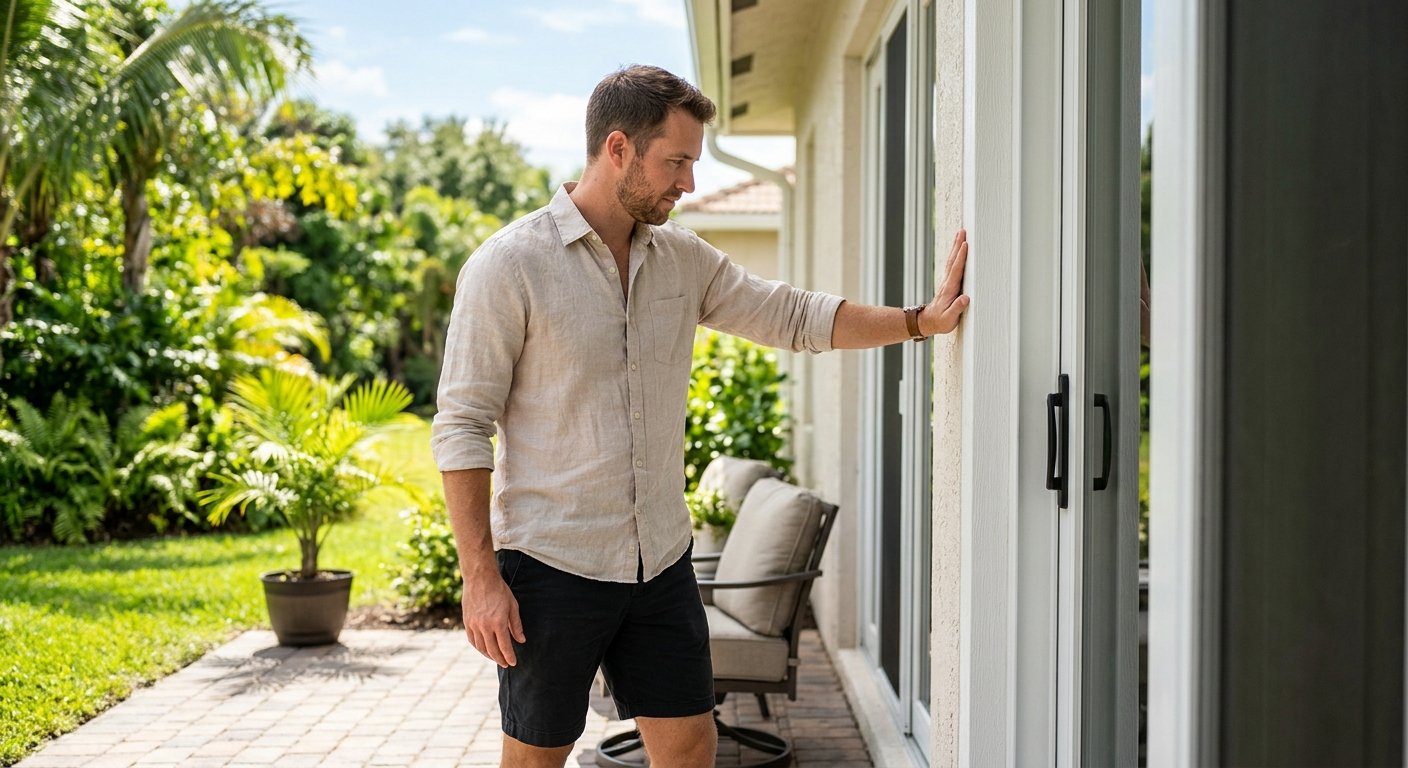
Vinyl frames offer the best intrinsic thermal insulation of the three materials and require essentially no surface maintenance — the color is molded through the material, so there is no finish to repaint or recoat. For impact doors in Coral Springs, Plantation, or inland Boynton Beach neighborhoods where direct salt-spray exposure is minimal, vinyl is a legitimate option worth considering.
Strengths of Vinyl Frames
- Low maintenance: No painting, no anodizing to touch up; cleaning with mild soap and water is sufficient.
- Thermal performance: Vinyl is a natural insulator, which helps reduce solar heat transfer at the frame perimeter.
- Lower initial cost on standard sizes: For single-panel impact front door installations in mid-size openings, vinyl can be cost-effective.
Where Vinyl Has Limitations
Vinyl expands and contracts with temperature changes more than aluminum or fiberglass. In South Florida’s climate, that thermal movement can stress seals over time in very large openings. For this reason, vinyl-framed impact doors are generally best in smaller, single-panel configurations. Very wide sliding glass doors or large pivot doors in fiberglass or aluminum are the more structurally sound specification for those applications. The U.S. Department of Energy’s guidance on window and door frames notes that vinyl’s lower conductivity is advantageous for thermal performance but that frame stiffness becomes a limiting factor in larger spans.
| Performance factor | Aluminum | Vinyl | Fiberglass |
|---|---|---|---|
| Structural rigidity for large openings | Excellent | Moderate | Very good |
| Corrosion resistance (salt air) | Good with maintenance | Excellent | Excellent |
| Thermal performance (frame) | Good (thermal-break required) | Very good | Very good |
| Maintenance requirement | Low–moderate | Very low | Very low |
| Product-approval depth (FL) | Extensive | Moderate | Growing |
| Best application | Large doors, any exposure | Smaller doors, inland | Waterfront, mid-to-large doors |
Fiberglass Frames: The Waterfront Specialist
Fiberglass is the least common of the three materials in South Florida, but it earns its place in the right application. It doesn’t corrode, doesn’t rust at fastener points, and doesn’t expand and contract as dramatically as vinyl. For a home directly on the Intracoastal in Jupiter or on the Gulf in Naples, fiberglass deserves serious consideration even if the upfront cost is higher than aluminum.
Fiberglass frames can be painted and accept wood-grain finishes that suit traditional or craftsman-style homes where bare aluminum or white vinyl would look out of place. The growing product-approval base for fiberglass means more configurations are now tested and listed — but it remains a smaller pool than aluminum, so confirming that your specific door size and configuration carries a Florida Product Approval is essential before committing.
If you’re replacing an impact front door installation on a waterfront property in Lee or Collier County, ask specifically which frame material your installer is quoting and request the Florida Product Approval number for that configuration before contracts are signed. A product approval that covers a 36-inch single door does not automatically extend to a 72-inch double door in the same frame profile.
What Frame Material Doesn’t Change: Installation Quality
No frame material performs to its tested specification if the installation is done incorrectly. Proper buck framing, flashing, sealant application at the perimeter, and anchoring to the structural opening are all equally critical regardless of whether the frame is aluminum, vinyl, or fiberglass. This is where the difference between an in-house crew and day-labor subcontractors shows up — not in the sales presentation, but at the inspection and ten years later when you check the sill for water intrusion.
At Access Impact (Florida Certified General Contractor CGC1525402, Certified Roofing Contractor CCC1337755), every impact door installation is handled by in-house crews, permitted, and carried through final inspection with a permit-passing guarantee. We’ve completed 2,000+ installations across Palm Beach County, Broward County, and Southwest Florida since 2007. The frame type discussion is part of every project consultation — not an afterthought. You can explore more about the full installation process on our impact door installation service page, and if you’re also evaluating windows alongside doors, our impact window installation overview covers how the two projects are often sequenced. For homeowners who want to understand frame material comparisons in the window context as well, the aluminum vs. vinyl impact window frame comparison covers parallel considerations for window openings.
Frequently Asked Questions
Which frame material holds up best near the ocean in South Florida?
Fiberglass is the most corrosion-resistant frame material and is the strongest choice for homes with direct salt-spray exposure — oceanfront or waterfront properties in Jupiter, Delray Beach, Naples, or Cape Coral. Aluminum with a quality anodized or powder-coated finish performs well too, but requires periodic inspection and maintenance of the finish to prevent corrosion at the fastener points.
Does the frame material affect whether my impact door gets a Florida Product Approval?
Yes. Florida Product Approvals are issued for a specific product system, which includes the frame material, frame profile, glass unit, and anchoring method. An approval for an aluminum-framed door does not transfer to the same door in a fiberglass frame. Your contractor should provide the specific approval number for the exact configuration being installed in your opening.
Can I mix frame materials between my impact doors and impact windows?
Yes, and it’s fairly common. Many homeowners choose aluminum-framed sliding glass doors for large openings and a different frame type for a front entry door. The frame materials don’t need to match across products as long as each product carries its own Florida Product Approval and the installation method for each is correct. Aesthetically, finish colors can usually be matched or coordinated.
Is vinyl a good choice for impact sliding glass doors in Palm Beach or Broward County?
Vinyl works well for smaller impact door configurations, but for wide sliding glass doors — common in Palm Beach Gardens, Weston, and Parkland homes — aluminum is generally the better structural choice. Vinyl’s thermal movement characteristics and lower rigidity make it less suitable for very large spans. Confirm the specific approval for your opening size before selecting a material.
How do I know if my installer is using the right frame product for my permit?
Ask your contractor to provide the Florida Product Approval number for the specific door being installed — not just the product family — before work begins. The permit application references that number, and the inspector verifies it on-site. A contractor who cannot provide this documentation before installation is a warning sign. At Access Impact, the product approval number appears on every quote.
The frame is what holds the glass to your structure — it determines whether the door passes product-approval testing, keeps water out at the perimeter, and holds up over decades of South Florida conditions.
Get a Frame-Specific Quote for Your Impact Door Project
Tell us about your opening, your exposure, and your goals — we’ll identify the right frame material, confirm the Florida Product Approval, and give you a written quote with no pressure and no guesswork.

About Access Impact
Access Impact is a licensed Florida general contractor (CGC1525402) and roofing contractor (CCC1337755) installing impact windows, impact doors, and roofing across Palm Beach County, Broward County, and Southwest Florida (Lee and Collier) since 2007. In-house crews, Florida Product Approval on every product, and a permit-passing guarantee: the technically authoritative installer, not a volume reseller. Windows and doors are CWS and ES Windows; roofing is CertainTeed, Owens Corning, GAF, Dynamic Metals, Metal Alliance, and Polyglass. Offices in Deerfield Beach and Fort Myers. Visit accessimpact.com →