In South Florida’s combination of intense UV exposure, salt air, humidity, and periodic tropical storms, roofing material lifespan varies significantly by type. Concrete and clay tile typically outlasts every other option, followed by metal, then asphalt shingle, with flat membrane systems requiring the most active maintenance. Understanding what each material realistically delivers helps homeowners in Palm Beach County, Broward County, Lee County, and Collier County make a decision they won’t regret in year ten.
- Concrete and clay tile is the longest-lived option in South Florida’s climate — routinely lasting several decades when properly installed and maintained.
- Metal roofing performs exceptionally well in salt-air environments and resists the UV degradation that shortens other materials’ lives.
- Asphalt shingles carry a shorter realistic lifespan here than their national averages suggest — Florida’s heat and humidity accelerate aging.
- Flat and low-slope membrane systems need regular inspection and maintenance to reach their design life in a subtropical climate.
- Florida Product Approval and proper permitting are non-negotiable for any roofing material — they determine how the system performs, not just what it’s made of.
Why South Florida Is Hard on Roofing Materials
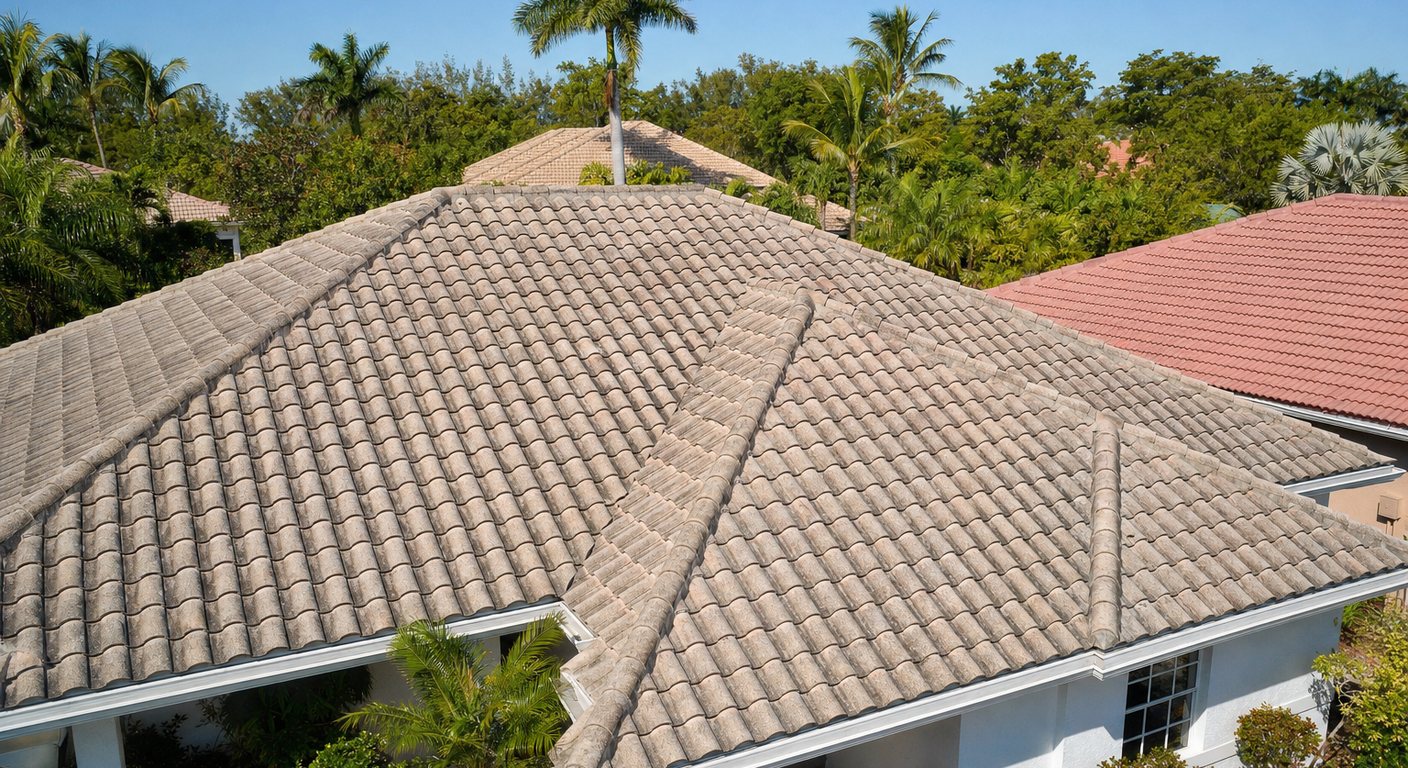
South Florida’s climate presents a specific combination of stressors that most of the country never deals with simultaneously: relentless UV radiation year-round, high humidity that never fully retreats, salt-laden air within miles of the coast in areas like Boca Raton, Fort Lauderdale, Cape Coral, and Naples, and the occasional tropical storm or hurricane that tests every fastener and seam. The result is that national lifespan estimates for roofing materials — the ones printed on marketing literature or referenced in general home-improvement guides — routinely overstate what homeowners in this region will actually see.
That doesn’t mean you can’t have a durable, long-lasting roof in South Florida. It means the material choice, the installation quality, and the ongoing maintenance regimen all matter more here than they do in a temperate climate. It also means the Florida Building Code’s requirements around product approvals and permitting exist for good reason: they set a baseline that filters out products and installation methods that simply won’t hold up.
Every roofing product Access Impact installs carries a Florida Product Approval or Miami-Dade NOA number, which is documented on every quote. These approvals aren’t bureaucratic formalities — they confirm the product has been tested for the specific conditions South Florida roofs face. When a permit is pulled and inspected, that documentation is part of what the inspector verifies.
Concrete and Clay Tile: The South Florida Standard
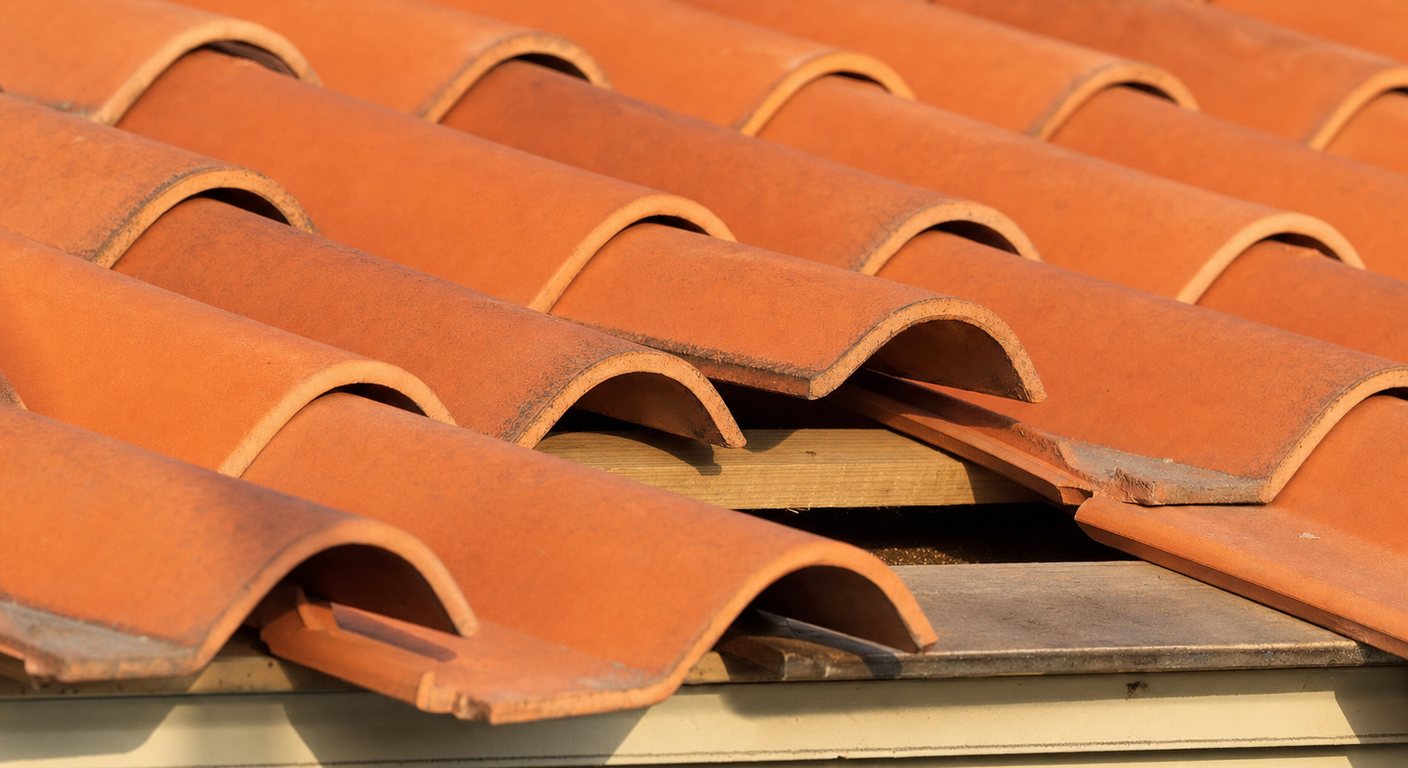
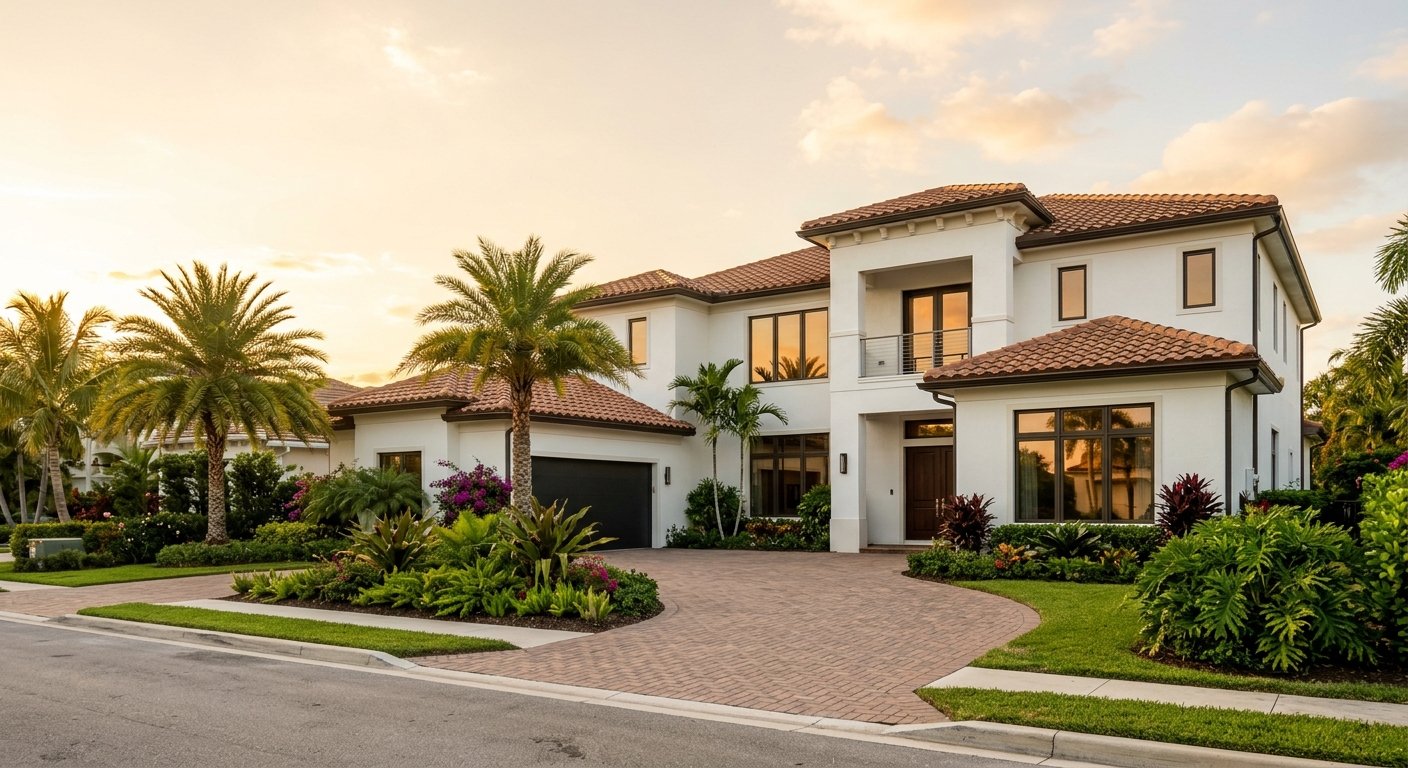
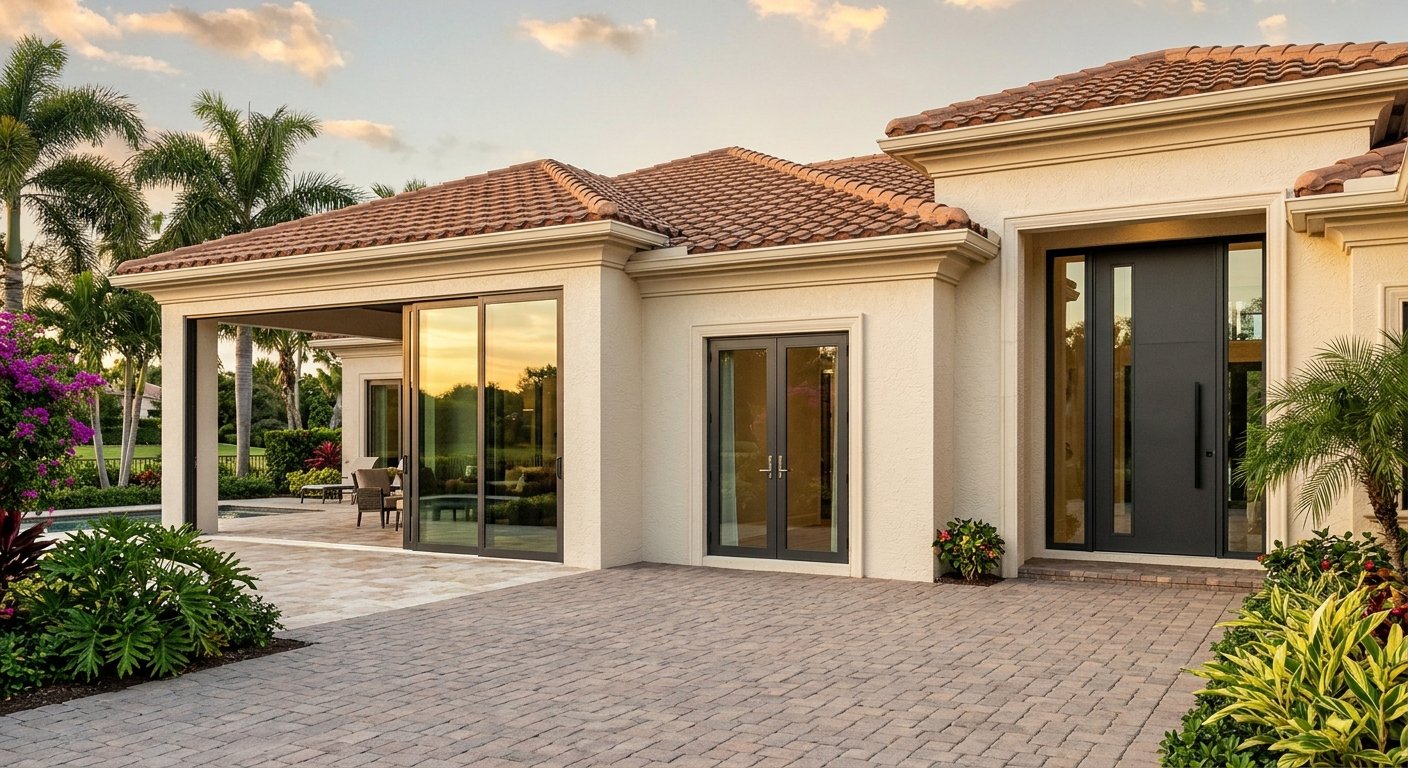
Tile roofing — both concrete and clay — is the dominant residential roofing material across Palm Beach County, Broward County, and Southwest Florida for a reason. It handles UV exposure without meaningful degradation, doesn’t absorb moisture the way organic materials do, and the thermal mass of a tile system manages attic heat better than lighter roofing options. When a tile roof is properly installed on the right underlayment system, with correct fastening and flashing, it is the most durable residential roofing choice available in this climate.
Concrete tile and clay tile behave slightly differently. Clay is denser and lighter in color, often used in Mediterranean and Spanish Colonial architecture common in areas like Coral Springs and Palm Beach Gardens. Concrete tile offers more profile variety and is generally more affordable, though it is heavier and can absorb more moisture over time if the surface coating breaks down. Both materials are non-combustible, which also matters for homeowners in communities with specific fire-rating requirements.
The primary maintenance concern with tile roofing in South Florida isn’t the tile itself — it’s the underlayment beneath it. Tile is a “batten and tile” system; the underlayment does the waterproofing work. When an underlayment reaches the end of its life, the visible tile often looks fine while the roof is no longer fully waterproof. This is why tile roof replacements sometimes look like a full tear-off despite the existing tiles appearing intact. Our tile roofing installation services address the full system, not just the visible surface.
| Characteristic | Concrete Tile | Clay Tile |
|---|---|---|
| UV resistance | Very good; surface coating may fade | Excellent; color is inherent to the clay |
| Salt air performance | Good with intact coating | Excellent |
| Weight on structure | Heavy; structural check required | Heavy; similar structural requirement |
| Profile variety | Wide range | More limited |
| Maintenance focus | Underlayment and flashing | Underlayment and flashing |
Metal Roofing: The Low-Maintenance Long-Hauler
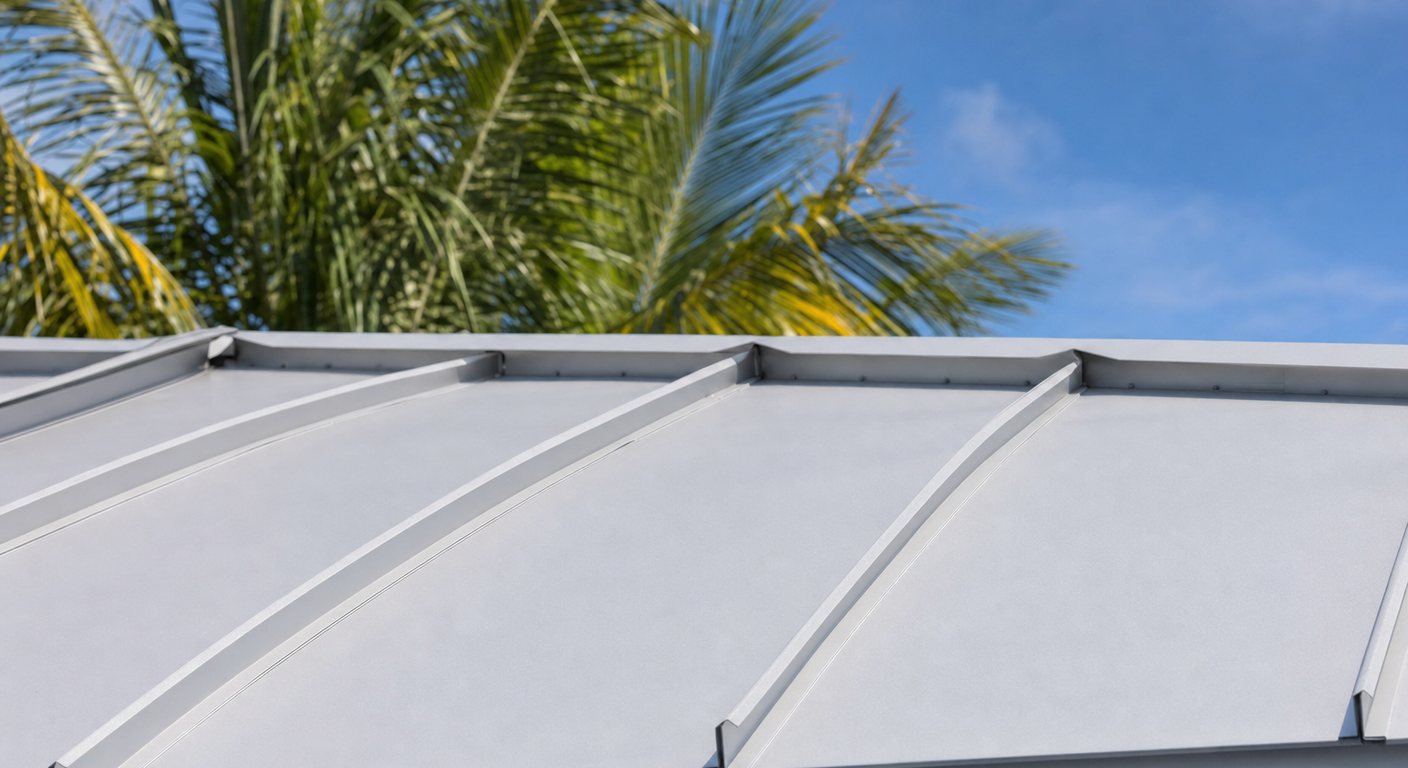
Metal roofing has gained significant market share across South Florida over the past decade, and the performance data supports the trend. A properly installed metal roof — standing seam or metal shingle — resists UV degradation, doesn’t support mold or algae growth the way organic materials can, and handles salt air well when the right alloy and coating are specified. For coastal communities in Lee and Collier counties particularly, metal roofing is a strong long-term answer.
The key variables for metal roofing lifespan in South Florida are alloy selection, coating system, and installation method. Galvanized steel, Galvalume, and aluminum each have different performance profiles in salt environments. Standing seam systems, which eliminate exposed fasteners, outperform screw-down panels in this climate because they remove the most common failure point — a fastener that corrodes or allows water intrusion as its neoprene washer degrades. Access Impact installs metal roofing using Dynamic Metals, Metal Alliance, and other approved systems, all carrying the Florida Product Approval required for permitted work in Palm Beach, Broward, Lee, and Collier counties.
If you’re within a few miles of the coast in areas like Fort Lauderdale, Boynton Beach, or Cape Coral, ask your contractor specifically about the alloy and coating system being proposed — not all metal roofing products perform equally in high-salt environments. The Florida Product Approval documentation will reference the testing conditions the product was evaluated under.
Asphalt Shingle: Shorter Lifespan, Real Cost Considerations
Asphalt shingles remain the most common roofing material in the United States by volume, and they are widely installed across inland South Florida communities — particularly in areas of Broward County and western Palm Beach County where salt exposure is lower. They are also a practical choice for lower-slope applications and certain architectural styles.
The honest conversation about asphalt shingles in South Florida is that the lifespan is compressed relative to what manufacturers publish. Heat accelerates the oxidation and granule loss that cause shingles to fail. Florida’s high relative humidity means the mat beneath those granules stays wet longer than it would in a drier climate. The U.S. Department of Energy’s guidance on roofing and solar reflectance notes that darker, less-reflective roofing surfaces absorb significantly more heat — a meaningful consideration in a climate where cooling loads dominate. Algae staining, while cosmetic at first, can accelerate granule loss and shorten the functional life of a shingle roof.
Access Impact installs asphalt shingle systems from CertainTeed, Owens Corning, and GAF — manufacturers whose product lines include algae-resistant and high-solar-reflectance options specifically suited to Florida’s conditions. The right shingle specification makes a measurable difference in how long the system performs. See the full scope of our shingle roofing options to understand what’s available for your project.
Flat and Low-Slope Roofing: Maintenance-Dependent Lifespan
Flat roofing is common on commercial buildings across Fort Lauderdale, West Palm Beach, and Fort Myers, and it appears on many residential properties as well — particularly mid-century modern homes and newer contemporary architecture. The lifespan of a flat roof system in South Florida is more maintenance-dependent than any other roof type, because water management on a low slope depends entirely on the integrity of the membrane, the drains, and the flashings.
Modified bitumen systems using Polyglass membranes, TPO, and other approved products each have different performance profiles. What they share is the need for periodic inspection — particularly after tropical weather events — to identify and address small breaches before they become large water-intrusion events. The National Roofing Contractors Association’s low-slope roofing guidance consistently emphasizes that proper drainage design and flashing detail at penetrations and perimeters are where flat roofs succeed or fail. In South Florida’s heavy rain events, a drain that’s partially blocked can pond water that eventually finds its way through a membrane seam. Access Impact’s flat roofing work is covered under our flat roofing services.
The Role of Installation Quality in Lifespan
Every material discussed above can underperform its potential lifespan if the installation is poor. In South Florida’s permitting environment, this isn’t a hypothetical risk — it’s something the inspection process exists to catch. When Access Impact pulls a permit for a roof replacement in Broward County, Palm Beach County, or Southwest Florida, our in-house crews do the work and carry it through final inspection. We don’t use day-labor subcontractors. The permit passing guarantee we offer isn’t a marketing phrase; it reflects the reality that we’ve been installing permitted roofing in this market since 2007, with over 2,000 installations across our service area.
The Florida Building Code’s roofing requirements exist to ensure that materials are fastened, flashed, and waterproofed in ways that actually protect the structure. You can verify a contractor’s licensing through the Florida Department of Business and Professional Regulation’s license search. Access Impact holds Florida Certified General Contractor license CGC1525402 and Certified Roofing Contractor license CCC1337755 — both verifiable through that database.
The right material specification and a correctly permitted installation are what actually determine how long your roof lasts — not the number on a product sheet.
Frequently Asked Questions
Does tile roofing actually last longer than metal in South Florida?
Both tile and metal can deliver excellent long-term performance in South Florida. Tile has a proven track record in this climate and handles UV and humidity well. Metal roofing, particularly standing seam, performs comparably in many applications and offers advantages in salt-air coastal environments. The honest answer is that installation quality and underlayment or sealing system matter as much as the material itself.
Why does asphalt shingle perform worse in Florida than in other states?
Florida’s combination of intense UV radiation, high temperatures, and persistent humidity accelerates the oxidation and granule loss that cause shingles to degrade. National lifespan estimates for asphalt shingles are based on average climatic conditions; South Florida’s climate is more demanding. Choosing a shingle with a high solar reflectance index and built-in algae resistance helps, but the Florida environment is simply harder on this material.
What’s the most important maintenance task for a flat roof in South Florida?
Keeping drains clear and scheduling periodic professional inspections — particularly after significant rain events or tropical weather — is the highest-impact maintenance task. Ponding water is flat roofing’s primary enemy. Small membrane breaches at seams or flashings are manageable when caught early; the same breaches ignored through a rainy season can require a full replacement rather than a repair.
Does a permitted roof replacement affect what I need to tell my insurance company?
Ask your insurance agent what documentation they need when you complete a roof replacement. We provide a completed permit, the Florida Product Approval numbers for the installed system, and final inspection documentation — your agent can tell you how those documents apply to your policy.
How do I know if a roofing contractor is properly licensed in Florida?
The Florida Department of Business and Professional Regulation maintains a public license lookup at myfloridalicense.com. You can search by license number or contractor name and confirm whether the license is active and in good standing. Access Impact holds CGC1525402 (General Contractor) and CCC1337755 (Roofing Contractor) — both are searchable in that database.
Planning a Roof Replacement in South Florida
Whether you’re evaluating tile roof replacement in Palm Beach County, considering metal roof installation in Southwest Florida, or looking at shingle or flat roof replacement options in Broward County, the starting point is a free, no-pressure estimate from a licensed contractor who pulls permits and uses in-house crews. Access Impact serves Boca Raton, Delray Beach, West Palm Beach, Fort Lauderdale, Deerfield Beach, Coral Springs, Fort Myers, Cape Coral, Naples, and surrounding communities across our four-county service area. For a full overview of what a roof replacement project involves, our roof replacement resource page covers the process from estimate to final inspection.
Get a Free Roof Estimate
Tell us your roofing material, your county, and what you’re seeing — we’ll schedule a site visit and give you a written estimate with no obligation.

About Access Impact
Access Impact is a licensed Florida general contractor (CGC1525402) and roofing contractor (CCC1337755) installing impact windows, impact doors, and roofing across Palm Beach County, Broward County, and Southwest Florida (Lee and Collier) since 2007. In-house crews, Florida Product Approval on every product, and a permit-passing guarantee: the technically authoritative installer, not a volume reseller. Windows and doors are CWS and ES Windows; roofing is CertainTeed, Owens Corning, GAF, Dynamic Metals, Metal Alliance, and Polyglass. Offices in Deerfield Beach and Fort Myers. Visit accessimpact.com →