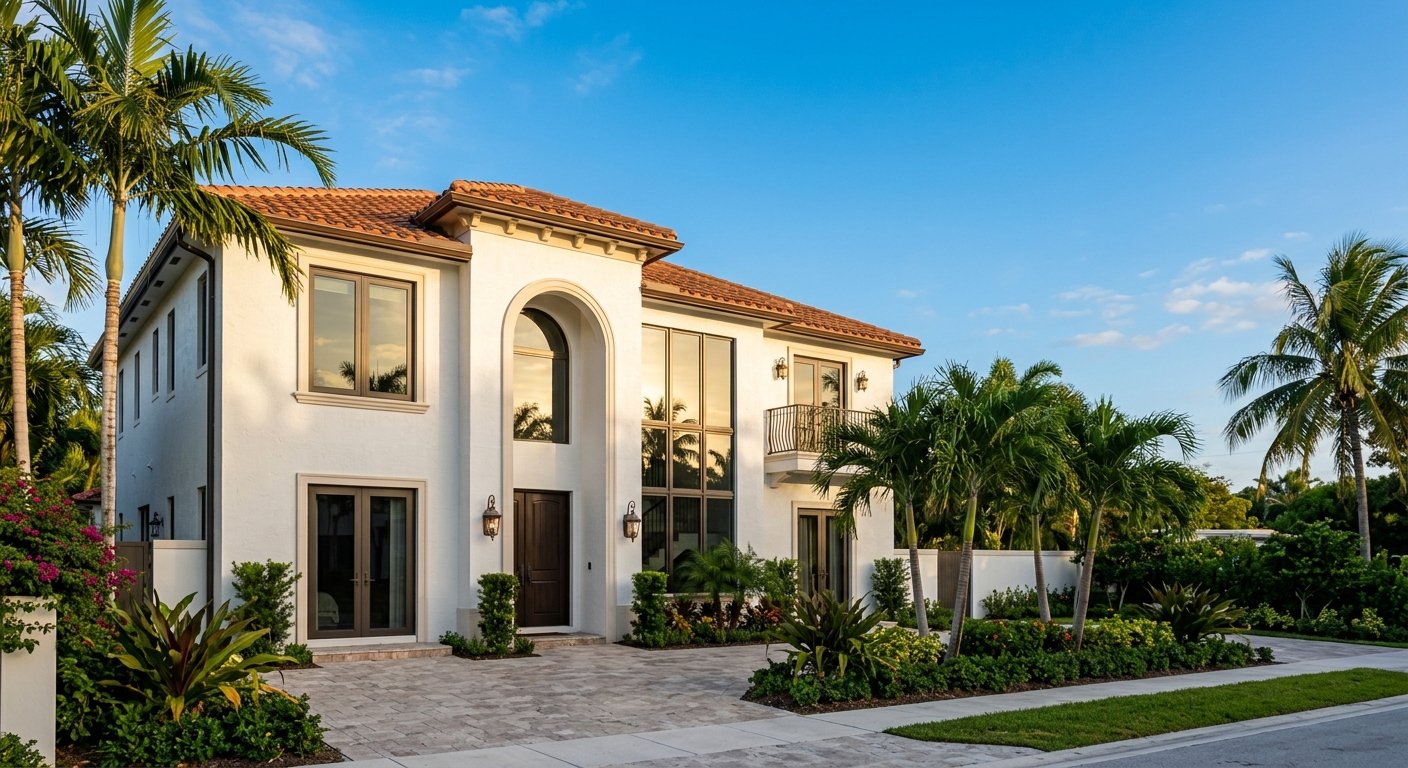
Replacing a roof in Broward County means navigating the Florida Building Code, county permitting, and product approval requirements before a single shingle goes down. Whether your roof is aged-out asphalt, failing tile, or a flat membrane at the end of its service life, the right contractor pulls the permit, installs Florida-approved materials, and passes inspection — no exceptions and no shortcuts.
- Every roof replacement in Broward County requires a permit and a final inspection under the Florida Building Code.
- Material choices — asphalt shingle, concrete or clay tile, metal, or flat membrane — affect longevity, weight load, and code requirements differently.
- Florida Product Approval (or a Miami-Dade NOA where required) must appear on every product installed.
- In-house crews, not day-labor subcontractors, are the difference between a smooth permit pass and a costly callback.
- Storm-damage roof repair and insurance-claim restoration are distinct from a standard re-roof — the process and documentation differ.
Why Permitting Is the Starting Point, Not an Afterthought
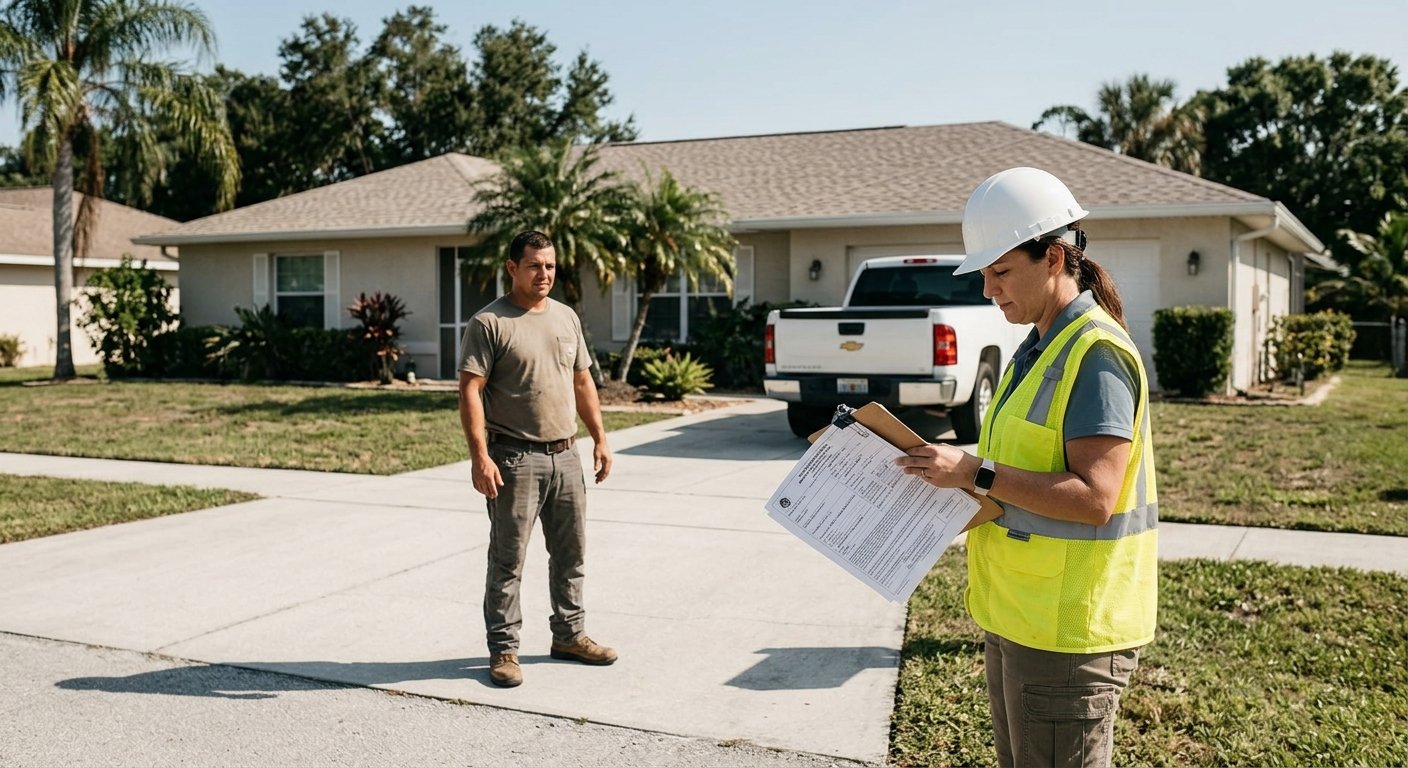
In Broward County, a roof replacement is a permitted construction project governed by the Florida Building Code, Seventh Edition. That means an approved permit must be posted before work begins, and a licensed contractor — not the homeowner — is the responsible party of record. Skipping the permit is not a gray area: an unpermitted roof creates title problems at resale and can trigger forced removal at the owner’s expense.
Every product installed on a permitted roof in Florida must carry a Florida Product Approval number issued by the Department of Business and Professional Regulation. You can verify any approval number through the Florida Building Commission’s product approval search. At Access Impact (CGC1525402 / CCC1337755), Florida Product Approval is confirmed on every product before it goes on a quote — not after the contract is signed.
Broward County follows the Florida Building Code with local amendments. The High-Velocity Hurricane Zone (HVHZ) standards — originally developed for Miami-Dade — apply to wind-speed exposure categories across South Florida, which affects deck attachment patterns, underlayment specifications, and fastener schedules. A contractor unfamiliar with these details will fail inspection.
Roofing Materials: What Works in South Florida
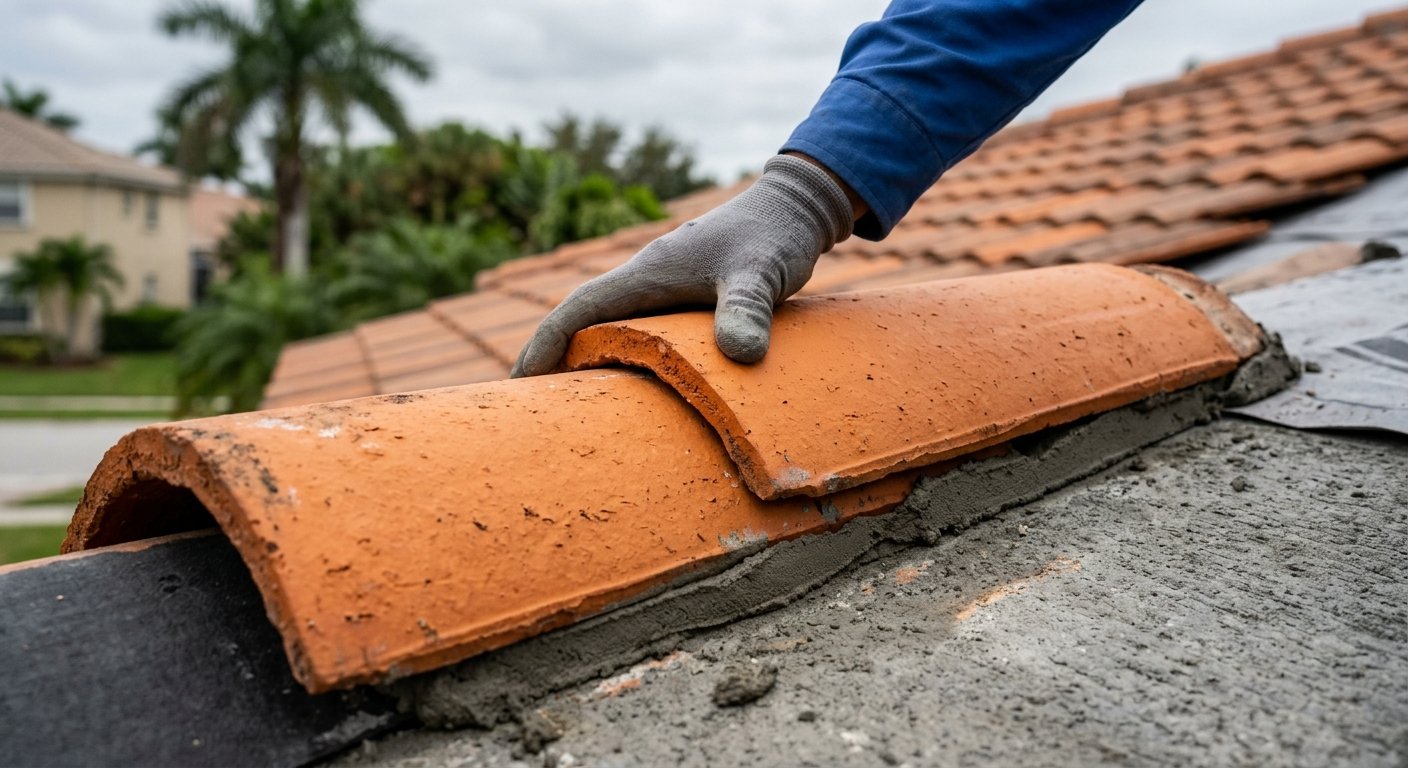
Material selection is not purely aesthetic. Weight, drainage slope, attachment method, and Florida Product Approval availability all vary by material type. Here is how the four primary systems compare for South Florida residential and commercial roofs.
| Criteria | Asphalt Shingle | Concrete / Clay Tile | Metal | Flat / Low-Slope |
|---|---|---|---|---|
| Typical application | Residential, low to mid-pitch | Residential, mid-to-high pitch | Residential & commercial | Commercial & flat residential |
| Weight consideration | Light — no structural upgrade typically needed | Heavy — structural assessment required | Light — often replaces tile without re-engineering | Varies by system |
| Slope requirement | 2:12 minimum | 4:12 minimum (most profiles) | As low as 1:12 with proper seaming | Under 2:12 |
| Available brands | CertainTeed, Owens Corning, GAF | CertainTeed | Dynamic Metals, Metal Alliance | Polyglass |
Asphalt Shingle Replacement in Broward County
Shingle roofing remains the most common residential re-roof in cities like Deerfield Beach, Pompano Beach, and Coral Springs. Modern shingle systems from manufacturers like CertainTeed, Owens Corning, and GAF are engineered specifically for high wind-speed zones and carry Florida Product Approvals that specify nail pattern, exposure, and underlayment pairing. Getting any one of those variables wrong during shingle roof replacement in Florida results in a failed inspection — or worse, a roof that performs below its rated design pressure.
Tile Roof Replacement in South Florida
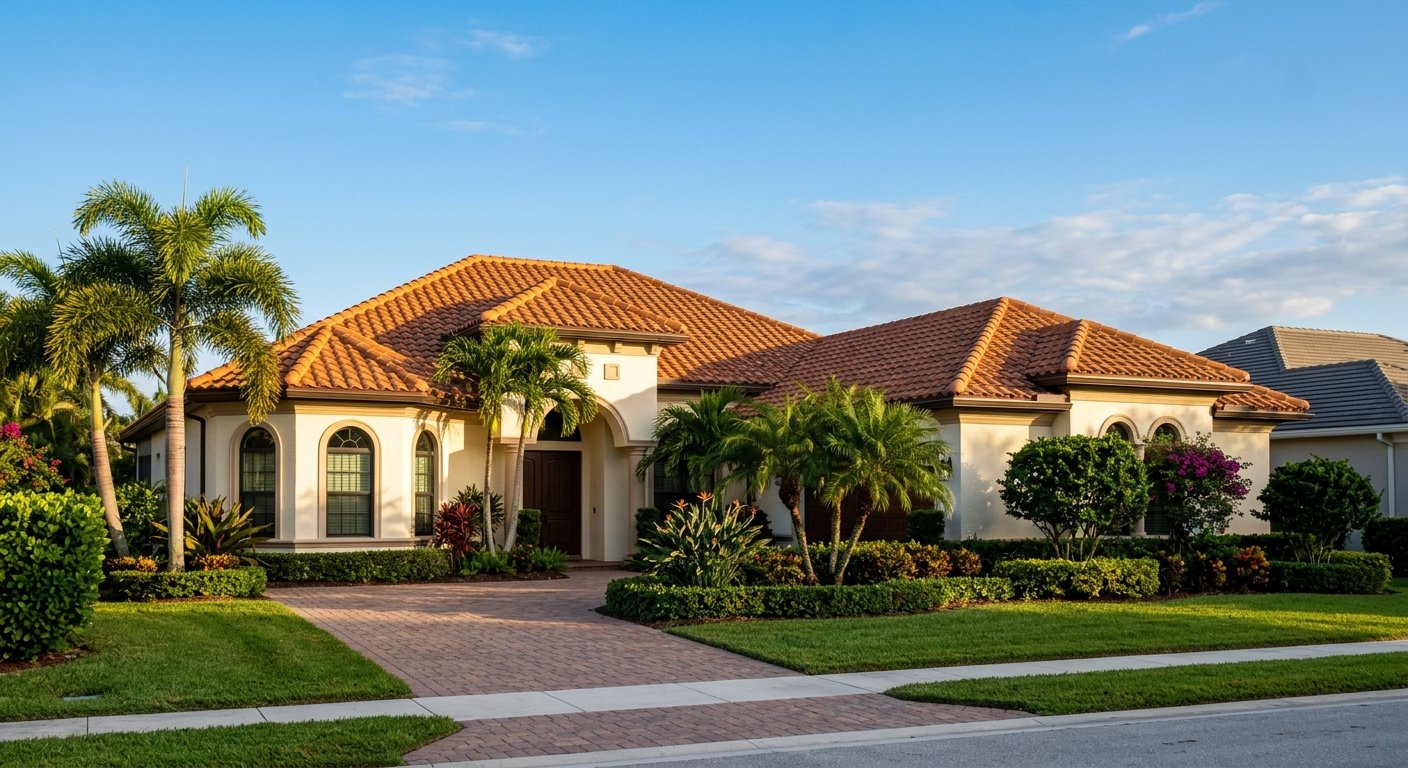
Concrete and clay tile are the dominant roofing material across Boca Raton, Weston, Parkland, and much of Palm Beach County. A tile roof replacement in South Florida involves more than swapping old for new: the structural deck must be assessed for the added dead load, the underlayment system must be an approved two-ply or self-adhered product, and tile attachment — mortar-set, mechanical, or foam-set — must match the Florida Product Approval for that specific tile profile. Access Impact handles all of this in-house, with crews who have done this work in the same counties since 2007.
Metal Roofing in South Florida
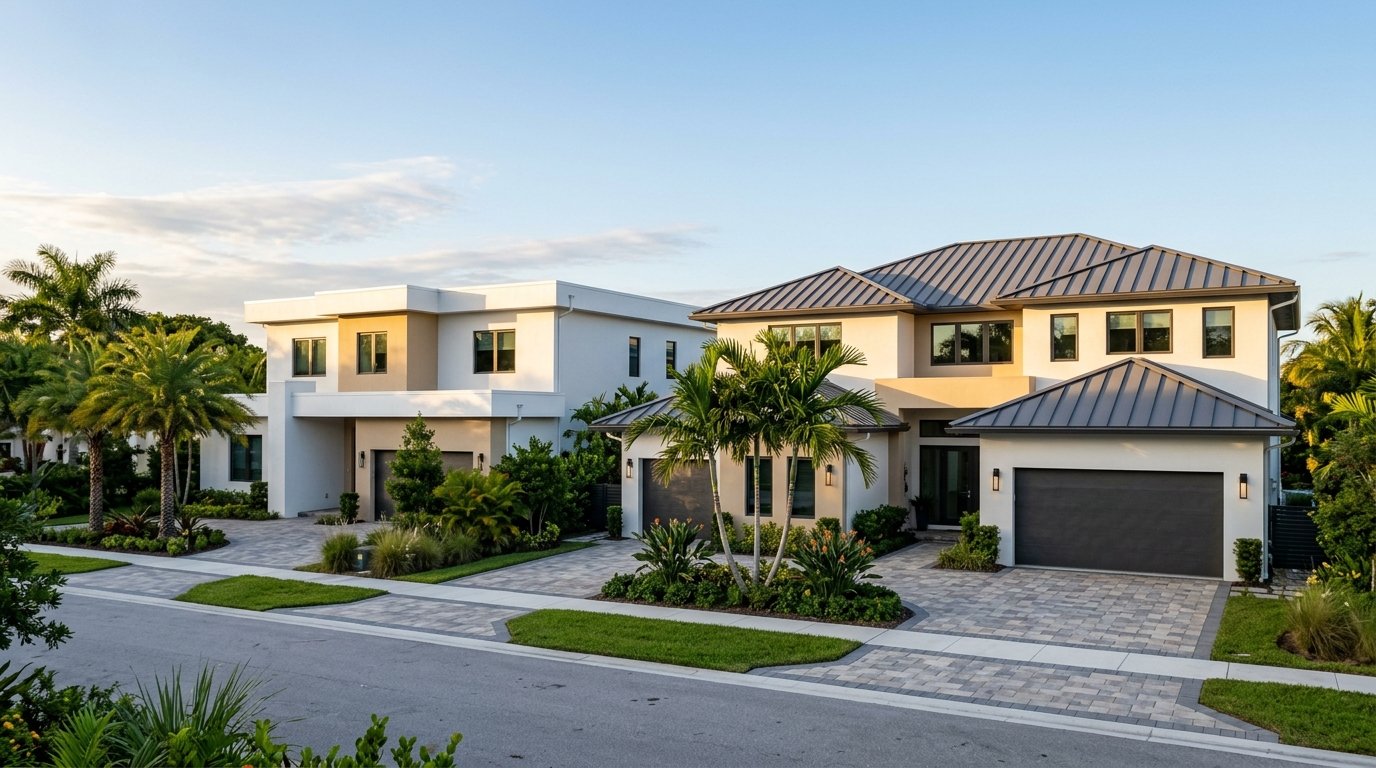
Standing seam and exposed-fastener metal panels from Dynamic Metals and Metal Alliance are increasingly popular for both residential re-roofs and commercial buildings in Fort Lauderdale, Plantation, and Sunrise. Metal roof installation in South Florida requires precise seam geometry and approved clip attachment systems — details that matter during a Broward County inspection. Metal is also one of the only systems that can step down from tile without a structural re-engineering exercise, which makes it a practical choice when homeowners want to change material type.
Flat Roof Replacement in Florida
Low-slope and flat roofs are standard on commercial buildings across Broward and on many mid-century residential designs. Polyglass modified-bitumen and APP/SBS membrane systems meet Florida Product Approval requirements and are appropriate for both new construction and re-roof over existing decks. Flat roof replacement in Florida requires correct drainage design — ponding water is a code deficiency, not just an aesthetic issue — and proper termination at parapet walls and penetrations.
The product approval number on the box has to match the approval on the permit — and the installation method has to match both.
The Roof Replacement Process: What to Expect
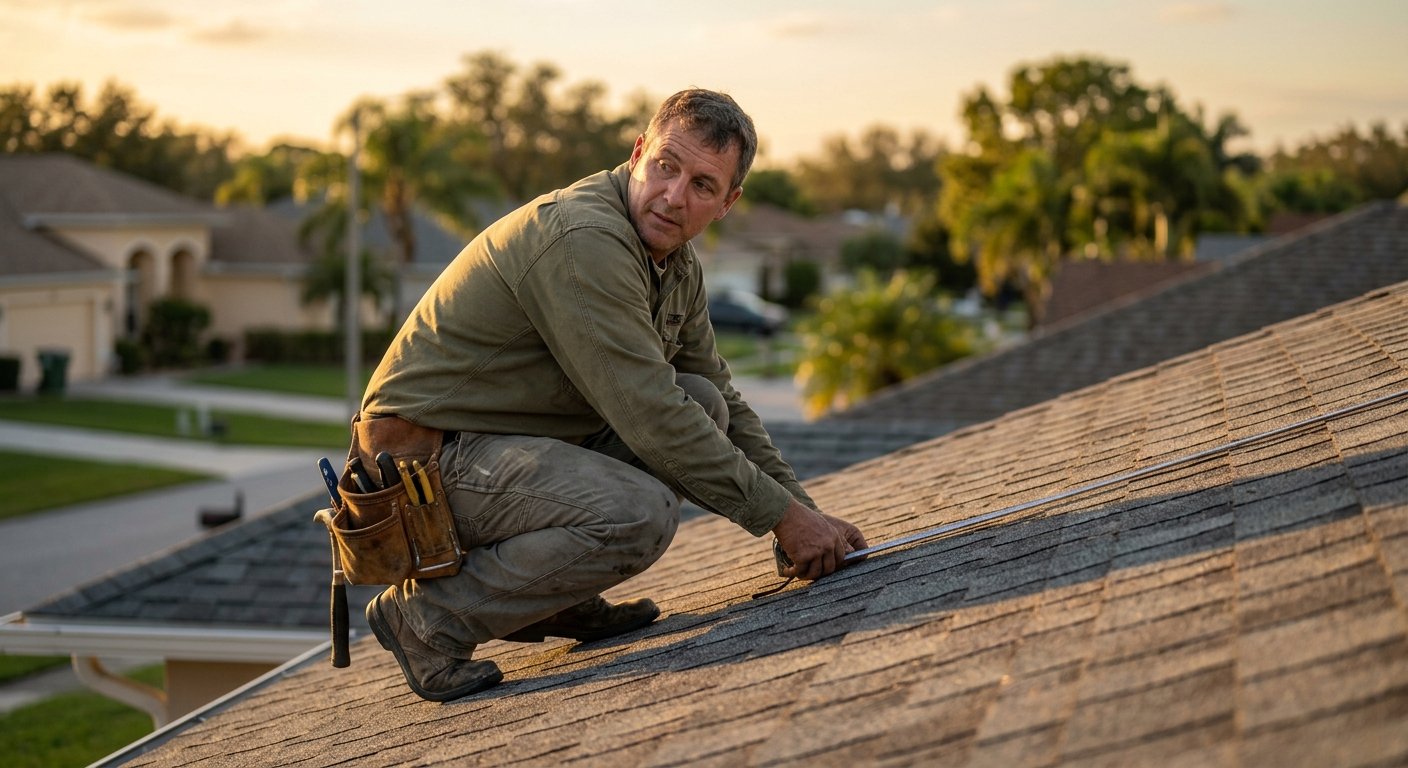
Free estimate and scope assessment
Access Impact inspects the existing deck, drainage, penetrations, and current material. We confirm the correct product approval for your roof type, pitch, and county before quoting.
Permit application
We file with the relevant Broward County municipality — each city (Deerfield Beach, Lighthouse Point, Margate, Tamarac, Davie, etc.) has its own building department. Permit passing is guaranteed.
Tear-off and deck inspection
Our in-house crews remove the existing roof system. Any damaged or rotten deck sheathing is replaced before new material goes down — this is a code requirement, not upsell.
Installation to Florida Building Code specs
Underlayment, fasteners, attachment pattern, and finish material are all installed per the Florida Product Approval documents associated with your permit.
Final inspection and close-out
The county or city inspector reviews the completed work. Access Impact coordinates the inspection and resolves any field questions directly — no third-party layers.
Storm-Damage Roof Replacement
Storm-damage restoration is a separate track from a standard re-roof. If a storm event — wind, hail, or falling debris — has damaged your roof, the documentation process matters as much as the repair itself. Access Impact works directly with homeowners on storm-damage roof repair and insurance-claim restoration across Broward County, preparing the scope-of-loss documentation that insurers require and installing the approved replacement system once the claim is settled. This is not the same as a routine replacement quote, and it should not be treated as one.
If you are filing a property insurance claim for roof damage, the contractor’s documentation — photos, measurements, and a written scope — directly affects the claim outcome. We provide that documentation as part of the storm-damage restoration process, not as a separate fee.
Commercial Roofing in Broward County
Access Impact holds both a Florida Certified General Contractor license (CGC1525402) and a Florida Certified Roofing Contractor license (CCC1337755), which means commercial roofing projects in Broward County — retail strip centers, office buildings, warehouses — are within our licensed scope. Commercial re-roofs often involve multiple drainage zones, rooftop HVAC penetrations, and occupied-building scheduling constraints. Learn more on our commercial roofing page.
Frequently Asked Questions
Does every roof replacement in Broward County require a permit?
Yes. The Florida Building Code requires a permit for any full roof replacement, and Broward County municipalities enforce this through their local building departments. Work without a permit is a code violation and can affect your property’s insurability and resale value.
What is a Florida Product Approval and why does it matter?
A Florida Product Approval is a state-issued certification confirming that a building product — shingle, tile, membrane, or metal panel — has been tested to and meets Florida Building Code performance standards for wind pressure, water infiltration, and impact. Inspectors verify the approval number during the final inspection. If the installed product does not match the permitted approval, the inspection fails.
How long does a roof replacement take in Broward County?
Permit approval timelines vary by municipality, but most residential re-roofs are completed within a few days of receiving the permit. The full timeline from signed contract to completed inspection depends on permit queue times at the specific city’s building department — we give you a realistic schedule during the estimate.
Can I replace a tile roof with a metal roof?
In most cases, yes — metal roofing systems are significantly lighter than concrete tile, which can actually reduce dead load on the structure. The deck and framing are still assessed during the tear-off phase, and the new system must carry a Florida Product Approval appropriate for your roof pitch and wind-speed exposure zone.
What is the difference between storm-damage repair and a standard re-roof?
A standard re-roof is planned and voluntary — the roof has reached the end of its service life. Storm-damage repair involves an insurance claim, a documented scope of loss, and coordination with your carrier before work begins. The permitting and installation standards are identical; the process, documentation, and payment path are different.
Access Impact Serves All of Broward County
Access Impact’s Deerfield Beach office covers the full Broward County service area — Fort Lauderdale, Pompano Beach, Deerfield Beach, Parkland, Coral Springs, Weston, Lighthouse Point, Margate, Sunrise, Plantation, Tamarac, and Davie. Our roofing crews are in-house; we do not use day-labor subcontractors. Every project carries a permit passing guarantee, and every product on every quote has a verified Florida Product Approval number before you sign anything. Explore your options on our roof replacement page, and if you also have windows or doors on your to-do list, our impact window installation and impact door installation services are available as a combined project.
Get a free roof replacement estimate in Broward County
Tell us your address, roof type, and what you’re seeing — we’ll schedule a no-obligation inspection and provide a detailed written estimate with product approval numbers included.

About Access Impact
Access Impact is a licensed Florida general contractor (CGC1525402) and roofing contractor (CCC1337755) installing impact windows, impact doors, and roofing across Palm Beach County, Broward County, and Southwest Florida (Lee and Collier) since 2007. In-house crews, Florida Product Approval on every product, and a permit-passing guarantee: the technically authoritative installer, not a volume reseller. Windows and doors are CWS and ES Windows; roofing is CertainTeed, Owens Corning, GAF, Dynamic Metals, Metal Alliance, and Polyglass. Offices in Deerfield Beach and Fort Myers. Visit accessimpact.com →