Florida Product Approval is the state’s mandatory certification that a window—its glass, frame, hardware, and installation attachment—has been independently tested and meets the Florida Building Code’s structural and water-infiltration requirements for the specific wind speed zone where it will be installed. Every impact window installed in Palm Beach County, Broward County, or the Fort Myers–Naples area must carry a valid Florida Product Approval number before a permit can be issued.
- Florida Product Approval is a state-level certification—not a manufacturer marketing claim—issued through the Florida Building Commission.
- Each approval is product-specific and installation-specific; swapping frame size, glass thickness, or anchor pattern voids the approval.
- Contractors must match the approval to the local wind-speed zone (design pressure) of the specific county and municipality.
- CWS and ES Windows—the brands Access Impact installs—carry current Florida Product Approval and Miami-Dade NOA on applicable products.
- A permit can be denied if the product approval number doesn’t match the permit application exactly—which is why the contractor submitting the permit matters as much as the product itself.
What the Approval System Actually Is
The Florida Building Commission’s Product Approval database lists every building component that has passed independent third-party testing to the standards required by the Florida Building Code. For windows and doors, that means testing under ASTM E1886 and ASTM E1996—the large-missile and cyclic-pressure protocols that simulate wind-borne debris impact and sustained pressure loading. An approval number on a product page isn’t marketing language; it’s a public record tied to a specific test report, a specific lab, and a specific installation configuration.
The approval covers a defined scope. A casement window approved for a 130-mph design pressure zone is not automatically approved for a 150-mph zone. A product approved with one anchor pattern is not approved with a different one. These distinctions matter enormously during permit review in places like Jupiter or Palm Beach Gardens, where building departments scrutinize approval scope carefully. Homeowners rarely see this layer of specification—but it’s exactly where an inexperienced contractor can create problems that surface at inspection.
The Florida Product Approval number is not the same as a Miami-Dade Notice of Acceptability (NOA). An NOA is a higher-bar county-level certification required in Miami-Dade and Broward counties by local amendment. Many products carry both. When specifying windows for homes in Weston, Parkland, or Deerfield Beach, confirm that the product holds a current NOA—not just a statewide approval.
How Approval Scope Affects Your Installation
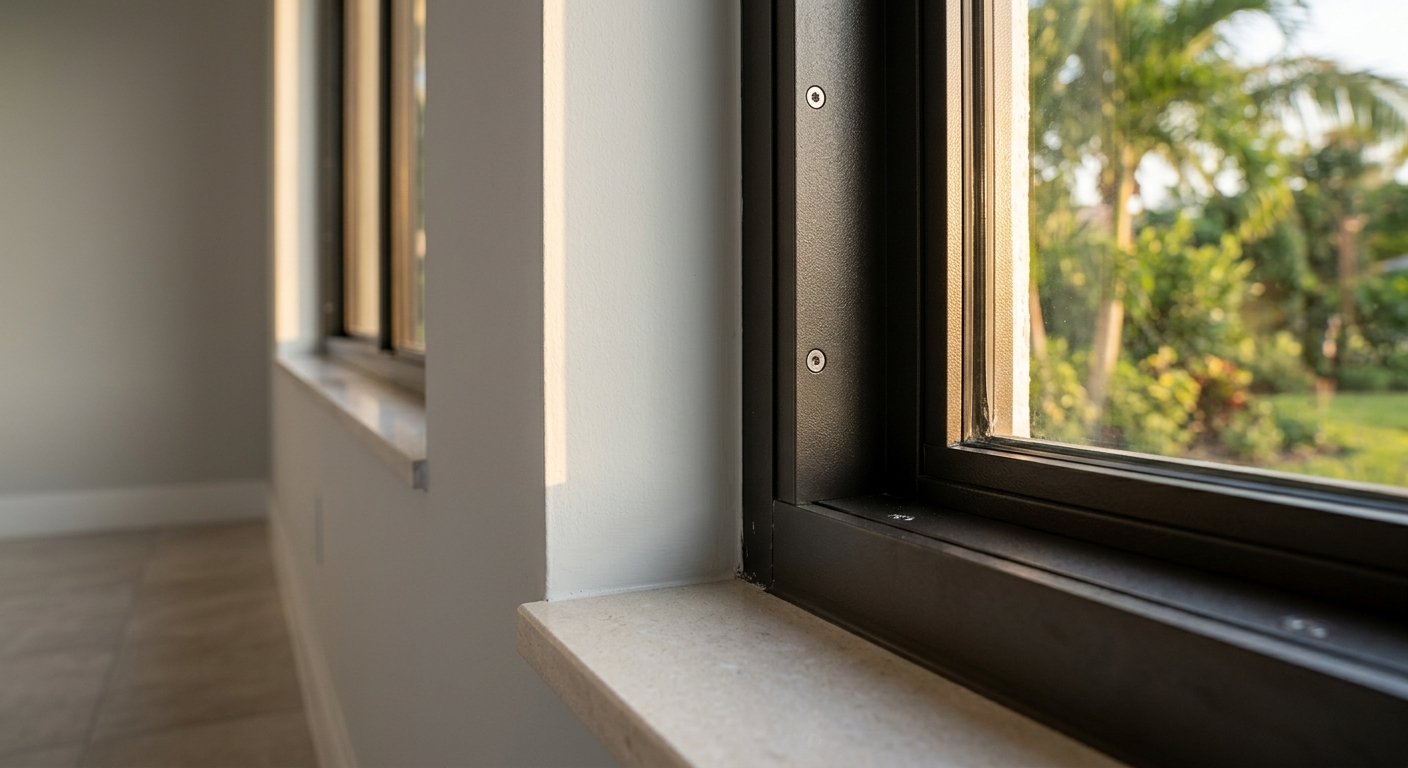
Every Florida Product Approval document contains an installation drawing—sometimes called the “buck detail”—that specifies exactly how the window must be anchored to the rough opening. Anchor diameter, spacing, embedment depth into the substrate, and the type of substrate (concrete block, wood frame, steel stud) are all listed. If the installer deviates from that drawing, the installation is outside the approval’s scope even if the window itself is the right product.
This is one of the primary reasons Access Impact uses in-house crews on every project rather than day-labor subcontractors. The crew installing your windows in Delray Beach or Cape Coral has read the approval documents and knows what the permit drawing has to match. That’s not a procedural detail—it’s the difference between an inspection that passes and one that requires remediation.
Product selection and approval verification
The contractor confirms that the selected window—by size, series, and glazing configuration—holds a current Florida Product Approval for the design pressure required at your specific address.
Permit application with approval documentation
The permit package submitted to the county or municipality includes the product approval number, the NOA where required, and the installation drawings that match the approved scope exactly.
Installation per the approved drawings
Anchor type, spacing, and embedment follow the approval document precisely. Any field condition that differs from the drawing requires an engineer’s approval before proceeding.
Inspection by the authority having jurisdiction
The building department inspector verifies that the installed product matches the permit submittal and the approval scope. Access Impact’s permit passing guarantee covers this step.
Why the Design Pressure Number Matters by County

Florida’s wind-speed map, adopted into the Florida Building Code, assigns different design pressure requirements to different locations. Coastal areas in Palm Beach County, Broward County, Lee County, and Collier County carry higher design pressures than inland areas of the same counties. A window that passes in Coral Springs may not meet the pressure rating required in a beachfront property in Pompano Beach a few miles away.
When Access Impact pulls a permit for impact window installation in Boynton Beach versus a property on Fort Lauderdale’s barrier island, the approval scope verification is different for each job. Both jobs use the same quality CWS or ES Windows product lines, but the specific series, glass package, and anchor schedule are confirmed against the design pressure for that parcel. That matching process is part of what a licensed contractor—not a product reseller—brings to the project.
The approval number on a product is only as good as the installation that matches the drawing behind it.
Reading a Florida Product Approval: What Homeowners Should Know
You don’t need to read technical documents to be an informed buyer, but understanding the structure helps you ask better questions. A Florida Product Approval listing on the Florida Building Commission database includes:
- Approval number and expiration date — approvals must be current. Expired approvals cannot be used on new permits.
- Product category and subcategory — for example, “Exterior Doors and Windows / Impact Windows.”
- Manufacturer and product line — the specific series, not just the brand.
- Approved configurations — which sizes, frame materials, glass types, and anchor patterns are within scope.
- Installation instructions — the drawing that the installer must follow exactly.
When you receive a quote from a contractor, you can ask: “What’s the product approval number for the window you’re proposing, and is it current?” A contractor who can answer that immediately—and who provides it on your permit application—is operating at a different level than one who treats product approvals as a formality.
Ask your contractor to include the Florida Product Approval number in the written proposal before you sign. This confirms the specific product being quoted and gives you something to verify in the public database. It also ensures there are no substitutions during the permitting process.
How This Connects to the Permit and Inspection Process
South Florida building departments—whether in West Palm Beach, Naples, or Fort Myers—will not issue an impact window permit without a valid product approval on file. The permit application must cite the approval number, and the approval’s installation requirements must be reflected in the permit drawings. After installation, the inspector will verify both the product and the installation method against what was submitted.
Access Impact holds Florida Certified General Contractor license CGC1525402 and Certified Roofing Contractor license CCC1337755, and has been pulling and passing permits across Palm Beach County, Broward County, Lee County, and Collier County since 2007—over 2,000 installations. The permit passing guarantee isn’t a marketing phrase; it reflects a process where the product approval verification, permit documentation, and installation execution are handled as a connected system by the same in-house crew, not as independent handoffs.
For a deeper look at the full installation process, see the impact window installation overview on the Access Impact site, which covers scope, timeline, and what to expect at each stage. If your project also includes entry or sliding glass doors, those products follow the same approval framework—reviewed in the impact door installation section.
Florida Product Approval addresses structural and water-infiltration performance. Energy performance—Low-E coatings, solar heat gain coefficient, U-factor—is governed separately under ENERGY STAR criteria and the Florida Building Code’s energy chapter. Both sets of requirements apply to a compliant installation. CWS and ES Windows products are specified to meet both.
Frequently Asked Questions
Can I verify a product approval myself before hiring a contractor?
Yes. The Florida Building Commission maintains a public searchable database at floridabuilding.org where you can look up any approval by number, manufacturer, or product category. Search the product your contractor has proposed and confirm the approval is current and covers your window’s size and configuration.
Does every window in my home need its own product approval, or does one approval cover the project?
One product approval can cover multiple window types if they’re within the same approved series and configuration. However, different window types—say, single-hung versus casement—often have separate approvals even from the same manufacturer. Your contractor’s permit package will list the applicable approval numbers for each product type on the job.
What happens if a contractor installs a window that’s outside the approval scope?
The installation fails inspection. The remedy can range from re-anchoring to full removal and replacement, depending on how far the installation deviates from the approved drawing. This is a risk that falls on the homeowner when an unlicensed or under-qualified contractor is involved—it’s why verifying license status through the Florida Department of Business and Professional Regulation matters before signing any contract.
How long does Florida Product Approval take to factor into the project timeline?
The approval verification happens during the quoting and permitting phase, not during installation. Access Impact’s typical timeline from signed contract to installation is 10–12 weeks, which includes permit application and approval. Because the product approval is confirmed before the permit is submitted, it doesn’t add time to a well-managed project.
Do impact windows in Palm Beach County and Broward County require the same approvals?
Both counties fall under the Florida Building Code, so statewide product approvals apply in both. However, Broward County follows local amendments that require Miami-Dade NOA on certain products—particularly for coastal zones. A product that is Florida Product Approval-compliant for Palm Beach County may need a current NOA to meet Broward’s local requirements. Your contractor should confirm both before permitting.
Get a product-approval-verified quote for your project
Access Impact specifies only Florida Product Approval-compliant windows and doors, pulls every permit in-house, and guarantees a passing inspection—serving Palm Beach County, Broward County, and Southwest Florida from offices in Deerfield Beach and Fort Myers.

About Access Impact
Access Impact is a licensed Florida general contractor (CGC1525402) and roofing contractor (CCC1337755) installing impact windows, impact doors, and roofing across Palm Beach County, Broward County, and Southwest Florida (Lee and Collier) since 2007. In-house crews, Florida Product Approval on every product, and a permit-passing guarantee: the technically authoritative installer, not a volume reseller. Windows and doors are CWS and ES Windows; roofing is CertainTeed, Owens Corning, GAF, Dynamic Metals, Metal Alliance, and Polyglass. Offices in Deerfield Beach and Fort Myers. Visit accessimpact.com →