For low-slope applications in South Florida, both flat (built-up or membrane) roofing and metal roofing are code-compliant, proven solutions — but they perform differently across lifespan, maintenance demands, and building type. The right choice depends on your roof pitch, structure, drainage setup, and long-term goals, not on a single “best” answer.
- Flat and low-slope roofing includes membrane systems (TPO, modified bitumen) and built-up assemblies — all must carry Florida Product Approval for the specific application.
- Standing seam metal roofing can be installed at pitches as low as ¼:12 on some systems, making it a legitimate low-slope option, not just a steep-slope product.
- Both systems require a licensed Florida roofing contractor, a pulled permit, and a passing inspection — the permit is not optional.
- Drainage design is the most underrated factor in low-slope roofing; a perfect membrane fails if the drainage plan is wrong.
- Access Impact installs both flat and metal roofing across Broward, Palm Beach, Lee, and Collier counties with in-house crews and permit passing guaranteed.
What “Low-Slope” Actually Means Under Florida Code
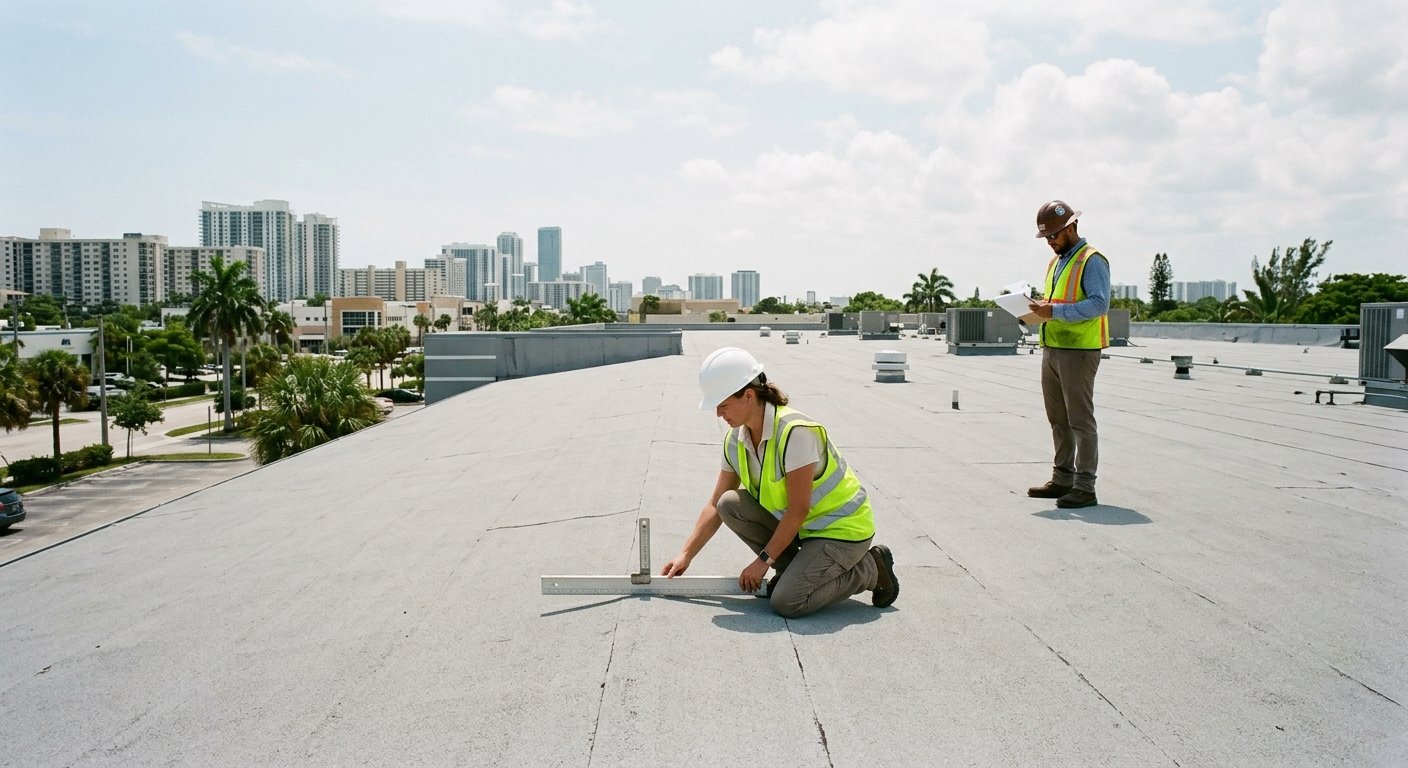
The Florida Building Code defines low-slope roofing as any roof with a pitch of 2:12 or less. That distinction matters because it dictates which products and installation methods are code-acceptable. A steep-slope shingle product installed on a 1:12 pitch is a code violation waiting to be discovered at inspection — and in Broward County or Palm Beach County, inspectors will catch it.
Low-slope applications are common on commercial buildings, flat-top residential additions, modern architectural homes in Naples and Fort Myers, and second-floor overhangs. The two primary families of products that work here are membrane/built-up flat roofing systems and low-slope-rated metal roofing panels.
Florida Product Approval (issued through the Florida Building Commission) must cover the specific product, the specific application, and the specific attachment method. A product approval for steep-slope installation does not transfer to low-slope use. Every product Access Impact installs carries the appropriate Florida Product Approval for the application specified in your permit set.
Flat Roofing: What’s in the System
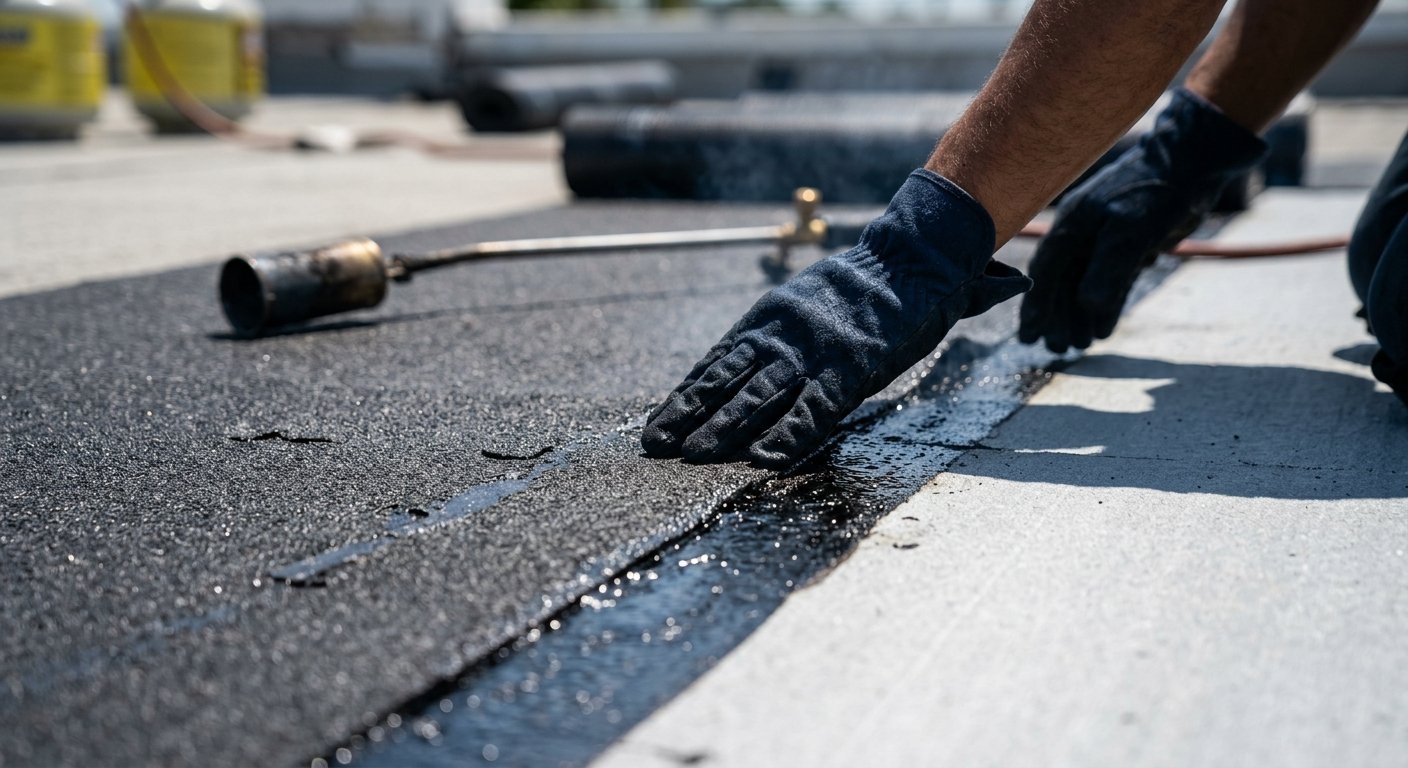
Modern flat roofing in South Florida is not tar-and-gravel from 1985. The category now includes several distinct assemblies, each with different performance profiles.
Modified Bitumen
Modified bitumen is a multi-layer system using polymer-modified asphalt sheets — typically APP or SBS modified — installed in two or more plies over an insulation board. Polyglass, one of the manufacturers Access Impact works with, produces a range of modified bitumen products that carry Florida Product Approval. The system is durable, handles ponding water better than single-ply alone, and is field-proven across decades of Florida rooftops.
Built-Up Roofing (BUR)
BUR systems layer alternating plies of reinforcing fabric and asphalt or bitumen, finished with a cap sheet or aggregate surface. They remain a common spec on commercial buildings throughout Fort Lauderdale, West Palm Beach, and Cape Coral. Properly installed, BUR performs well — but it demands experienced applicators, which is exactly why day-labor crews are a liability on this type of work.
Single-Ply Membrane
TPO and similar single-ply systems are increasingly specified on commercial and residential flat roofs for their light weight and heat-reflective surfaces. They must be mechanically fastened, adhered, or ballasted per the manufacturer’s Florida Product Approval, and the seam welding requires trained applicators to pass inspection.
On flat roofs in Palm Beach County and Broward County, drainage is the most common inspection flag — not the membrane itself. Before selecting any flat roofing system, verify that your existing drains, scuppers, and slope-to-drain are adequate. A re-roof is the ideal moment to correct drainage problems; fixing them after the fact costs significantly more.
Metal Roofing on Low-Slope Applications
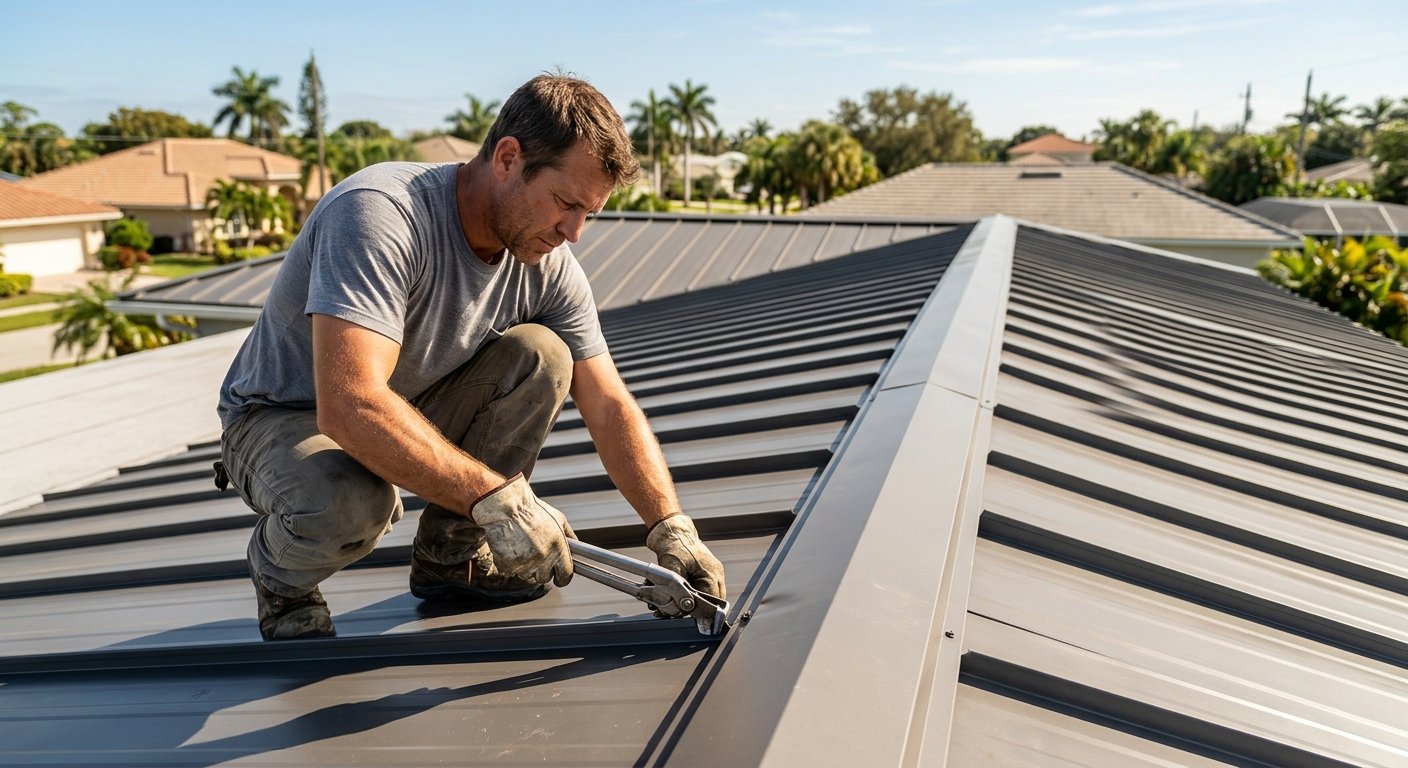
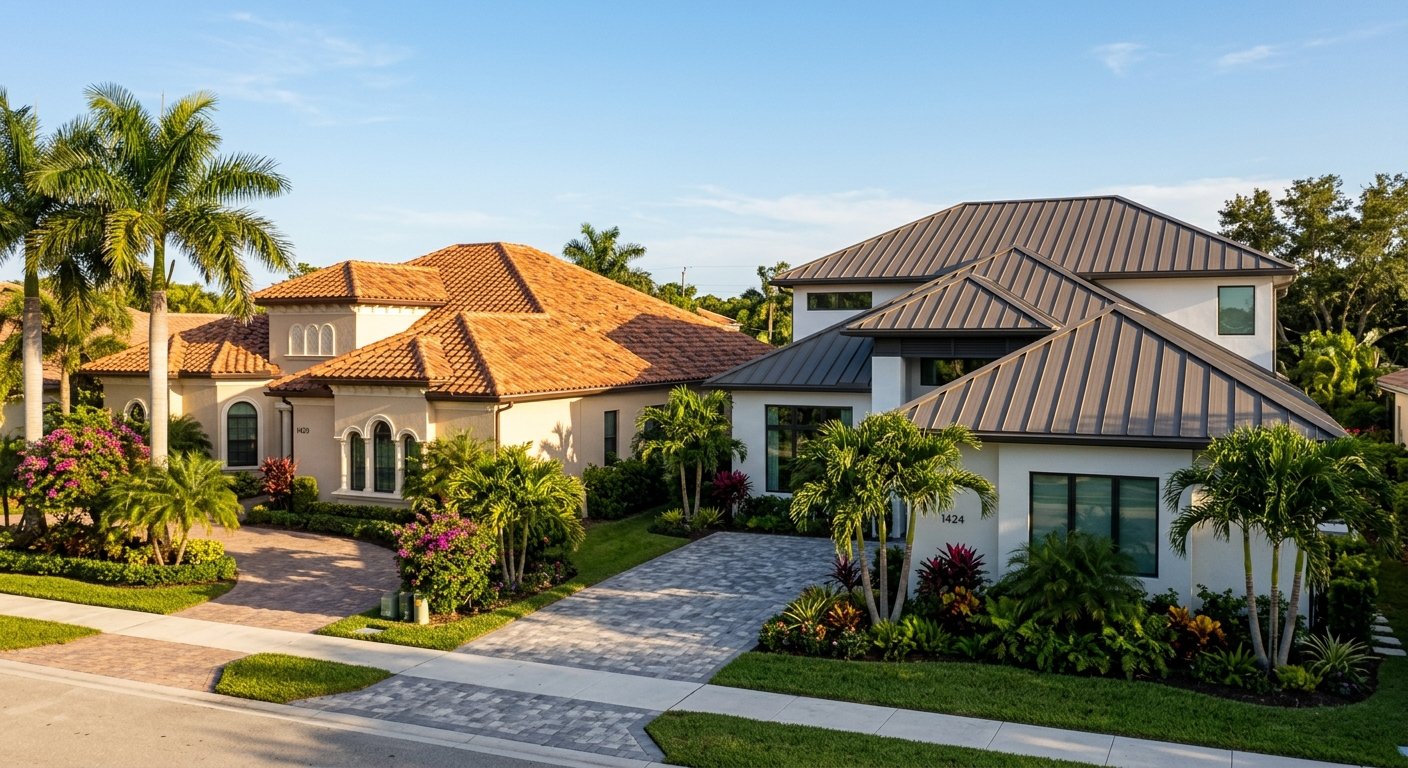
Standing seam metal roofing is not exclusively a steep-slope product. Certain panel profiles — particularly structural standing seam systems — carry Florida Product Approval for pitches as low as ¼:12, making them a legitimate flat-to-low-slope option when the structure can support the attachment requirements.
Access Impact installs metal roofing systems from Dynamic Metals and Metal Alliance, both of which offer profiles approved for low-slope residential and commercial applications. Standing seam panels conceal fasteners within the seam, eliminating exposed penetrations that can fail under South Florida rain events. The result is a roof that handles horizontal rain effectively — a practical advantage from Fort Myers to Boca Raton.
Metal roofing also reflects solar radiation more effectively than dark membrane surfaces, which matters for cooling loads on flat commercial rooftops in Naples, Coral Springs, and similar markets. ENERGY STAR’s roofing product criteria outline the reflectance thresholds that qualify metal and membrane systems for cool-roof classification — worth reviewing if energy performance is a priority on your project.
| Criterion | Flat / Membrane Roof | Low-Slope Metal Roof |
|---|---|---|
| Minimum pitch | Essentially zero (flat) | ¼:12 (structural standing seam) |
| Typical lifespan | 15–25 years (system-dependent) | 40–50 years (metal panel) |
| Maintenance frequency | Periodic inspection; seam/blister repair | Low; seam inspections recommended |
| Best application | True flat roofs, commercial HVAC-heavy decks | Low-slope residential, modern architecture |
| Florida Product Approval | Required per system | Required per panel profile |
| Visible fasteners | No (membrane lapped) | No (concealed seam) |
| Available from Access Impact | Yes — Polyglass, others | Yes — Dynamic Metals, Metal Alliance |
The Permitting and Inspection Reality
In Broward County, Palm Beach County, and Southwest Florida (Lee and Collier), a roof replacement requires a permit before work begins — no exceptions. The permit set must include a product approval number, the specific attachment pattern for the local wind design pressures, and the contractor’s license. Access Impact holds Florida Certified Roofing Contractor license CCC1337755 and Florida Certified General Contractor license CGC1525402, which means the permit set is prepared by the same licensed team doing the installation.
Permit passing is guaranteed on every Access Impact project. That is not a marketing phrase — it reflects the discipline of using in-house crews trained on the specific systems being installed, rather than day-labor subcontractors who may be unfamiliar with the product’s installation requirements. When an inspector shows up in Delray Beach or Fort Myers, the installation matches the permit drawings because the same team produced both.
Drainage design is the most underrated factor in low-slope roofing; a perfect membrane fails if the drainage plan is wrong.
Which System Is Right for Your Building?
There is no universal answer, but there are clear indicators for each system.
Flat membrane or modified bitumen roofing tends to be the right specification when the roof deck is genuinely flat (zero to minimal slope), when rooftop mechanical equipment needs to be walked around regularly, when budget is a primary constraint, or when the project is a commercial building with complex penetrations. The system is also the standard choice when replacing an existing flat roof of the same type — matching the existing drainage plane and deck avoids costly structural modifications.
Low-slope metal roofing makes sense when the project has at least a minimal pitch (even ¼:12), when the homeowner or building owner wants longevity without periodic re-coating cycles, when the architecture lends itself to exposed panel aesthetics (common in new construction in Naples and Cape Coral), or when the structure is concrete block with a concrete deck that handles the attachment requirements for structural standing seam.
The National Roofing Contractors Association’s guidance on low-slope systems provides a useful technical baseline for understanding system categories — though application to Florida requires layering in the Florida Building Code’s specific wind and water-infiltration requirements on top of any generic industry standard.
Site evaluation
Access Impact measures pitch, inspects the existing deck, reviews drainage, and identifies any structural concerns before specifying a system.
System selection and product approval confirmation
The proposed system is matched to its Florida Product Approval for your specific pitch, county, and wind design pressure zone.
Permit pulled before work starts
The permit is filed with the county and approved before the crew mobilizes — never after. Permit passing is guaranteed.
Installation by in-house crews
No day-labor subcontractors. The team installing your roof is trained on the specific product and knows the inspection checklist.
Final inspection and closeout
The county inspector signs off, the permit closes, and you receive documentation — essential for title, insurance claims, and resale.
Frequently Asked Questions
Can a standing seam metal roof be installed on a flat or nearly flat roof in Florida?
Yes — structural standing seam panels from manufacturers like Dynamic Metals and Metal Alliance carry Florida Product Approval for pitches as low as ¼:12. True zero-pitch (completely flat) installations are still better suited to membrane systems, but if your roof has any measurable slope, standing seam is a code-compliant option worth evaluating.
Do flat roof replacements in Broward County and Palm Beach County require a permit?
Yes, always. A flat roof replacement — like any roof replacement in Florida — requires a permit pulled by a licensed roofing contractor before work begins. The permit set must include Florida Product Approval for the selected system. Any contractor who suggests skipping the permit is creating a serious liability for you as the property owner.
How long does a flat roof last compared to a metal roof in South Florida?
A properly installed modified bitumen or built-up flat roof typically performs for 15–25 years depending on maintenance, drainage conditions, and the quality of the original installation. A standing seam metal roof commonly reaches 40–50 years. Both figures assume correct installation, proper drainage, and periodic inspection — none of those numbers are automatic.
What is the difference between a flat roof repair and a flat roof replacement?
A repair addresses isolated failures — a seam separation, a blister, a flashing failure — without replacing the full membrane assembly. A replacement tears off the existing system down to the deck, addresses any deck damage, and installs a complete new assembly. Florida Building Code limits how many times a roof can be re-roofed over an existing layer before a full tear-off is required.
Does Access Impact handle storm-damage roof repairs on flat and metal roofs?
Yes. Storm-damage roof repair and insurance-claim restoration are services Access Impact provides across Broward, Palm Beach, Lee, and Collier counties. This includes damage assessments, working with your insurer’s adjuster, and performing the permitted repair or full replacement depending on the scope of damage.
Get a Free Roof Estimate in South Florida
Whether you’re comparing flat membrane and metal roofing for a low-slope project in Fort Myers, Naples, Boca Raton, or anywhere across Broward or Palm Beach County, Access Impact provides free estimates, pulls every permit, and backs the work with a permit-passing guarantee and in-house crews.

About Access Impact
Access Impact is a licensed Florida general contractor (CGC1525402) and roofing contractor (CCC1337755) installing impact windows, impact doors, and roofing across Palm Beach County, Broward County, and Southwest Florida (Lee and Collier) since 2007. In-house crews, Florida Product Approval on every product, and a permit-passing guarantee: the technically authoritative installer, not a volume reseller. Windows and doors are CWS and ES Windows; roofing is CertainTeed, Owens Corning, GAF, Dynamic Metals, Metal Alliance, and Polyglass. Offices in Deerfield Beach and Fort Myers. Visit accessimpact.com →