Replacing a roof in Palm Beach County means navigating Florida Building Code requirements, county permitting, product approvals, and material choices suited to South Florida’s climate — all before a single shingle is nailed. Whether you’re choosing asphalt shingle, concrete tile, or metal, the process is the same: licensed contractor, permitted job, Florida Product Approval on every material, and inspections passed. This guide covers what homeowners here need to know.
- Every roof replacement in Palm Beach County requires a permit and inspections under the Florida Building Code.
- Your contractor must carry a Florida Certified Roofing Contractor license — verify it before signing anything.
- Material choice (shingle, tile, metal, flat) affects not just cost but also permitting complexity and long-term performance.
- Florida Product Approval is required on all roofing materials — it’s not optional, and the number should appear on your contract.
- Storm-damage claims are a legitimate insurance path; a licensed roofing contractor can document and coordinate the restoration work.
Why Permitting Comes First
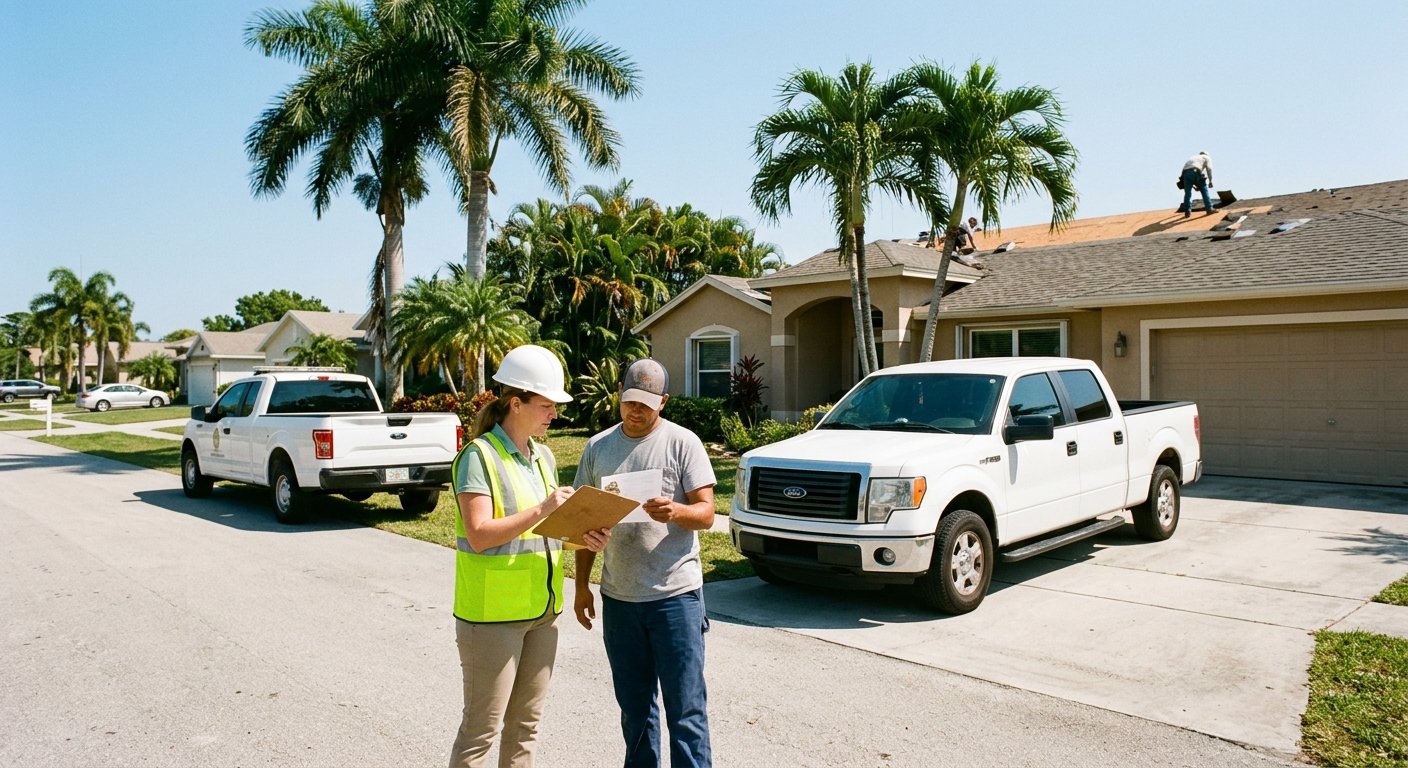
A roof replacement is one of the most heavily regulated construction projects a homeowner can undertake in Florida — and for good reason. The Florida Building Code sets specific requirements for roofing assemblies, wind load ratings, underlayment, and attachment methods. In Palm Beach County, a permit is required for any full re-roof, and the job must pass both a dry-in inspection and a final inspection before the permit closes.
If you hire a contractor who pulls no permit, you inherit the risk: an unpermitted roof can create problems when you sell the home, file an insurance claim, or try to get a certificate of occupancy after a future renovation. At Access Impact (CGC1525402 / CCC1337755), every project we take on carries a permit-passing guarantee — no shortcuts, no gray areas.
You can confirm any Florida roofing contractor’s license status at myfloridalicense.com. Look for a CCC (Certified Roofing Contractor) or CBC/CGC designation. If a contractor can’t produce a license number immediately, that’s your answer.
Choosing the Right Roofing Material
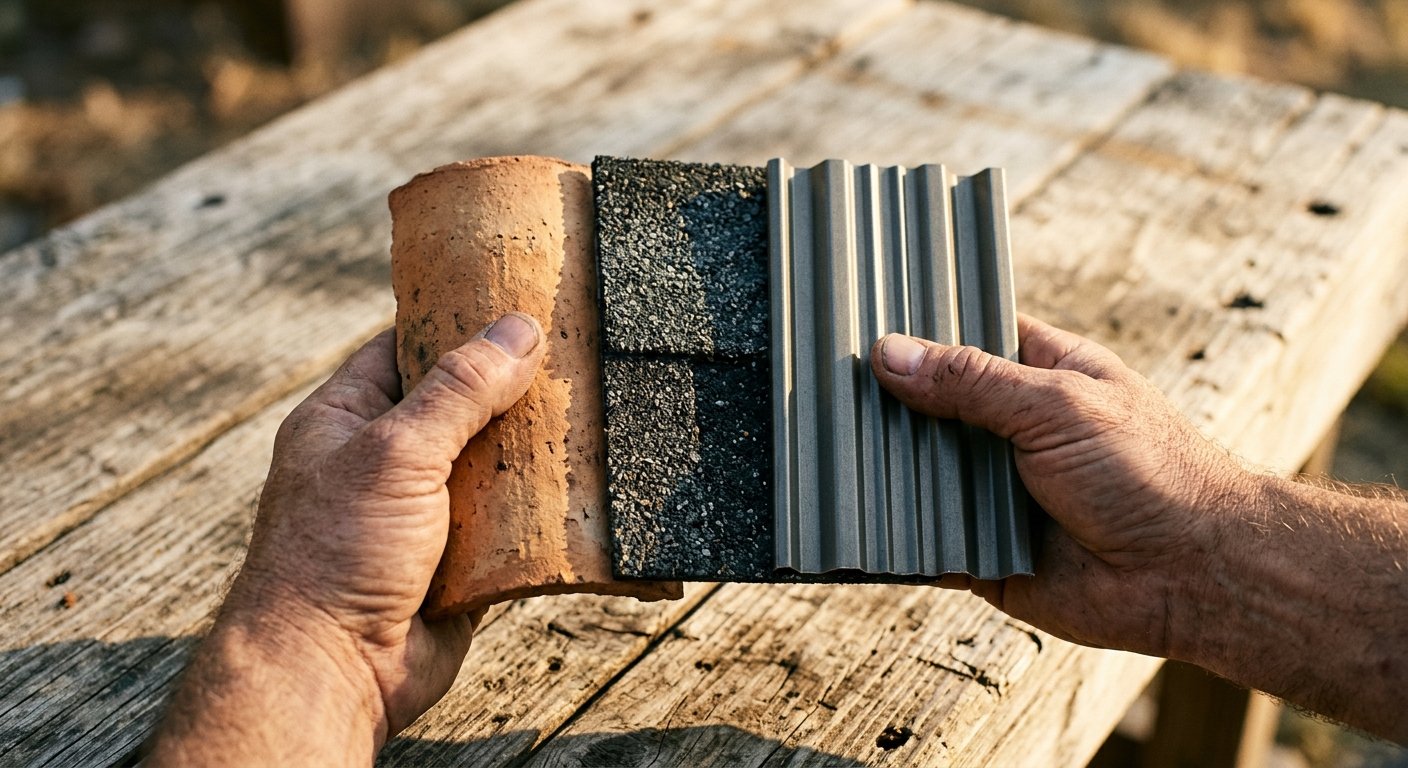
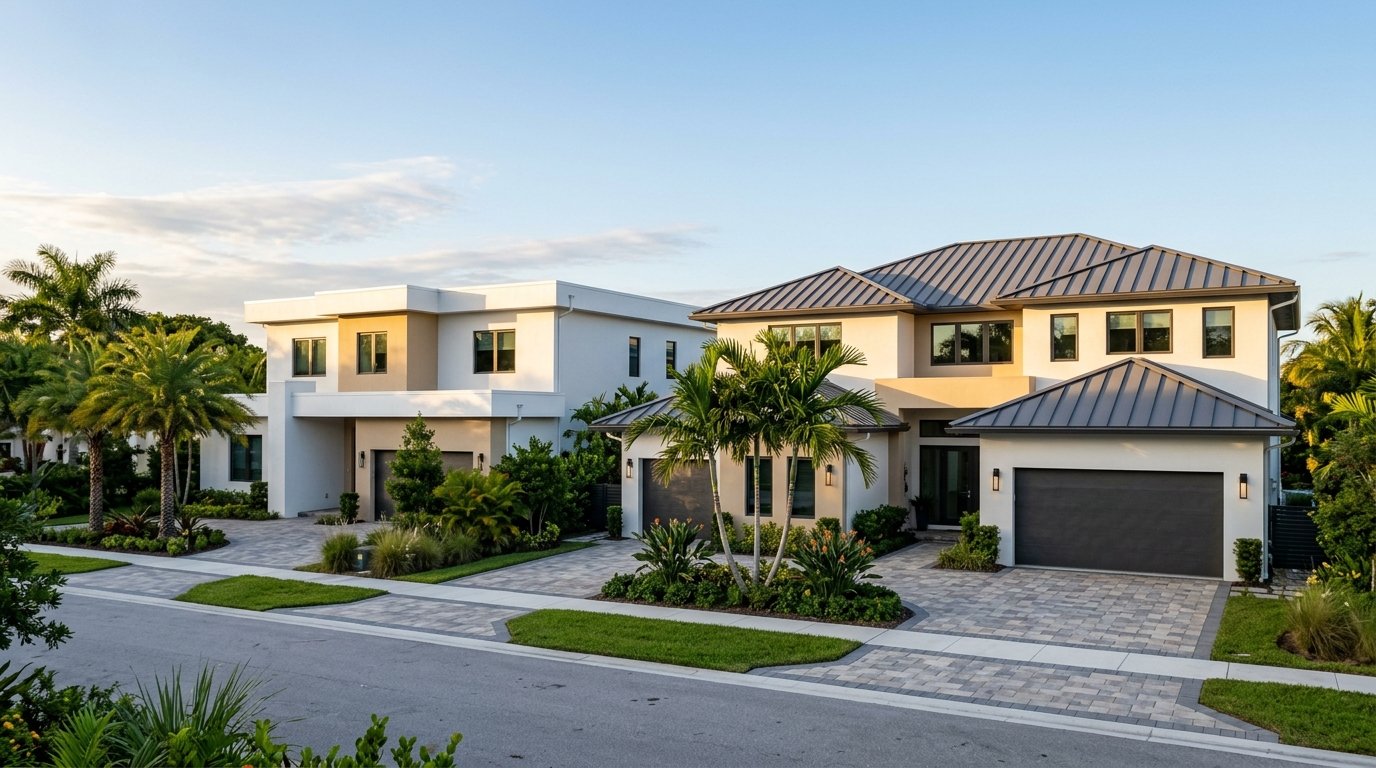
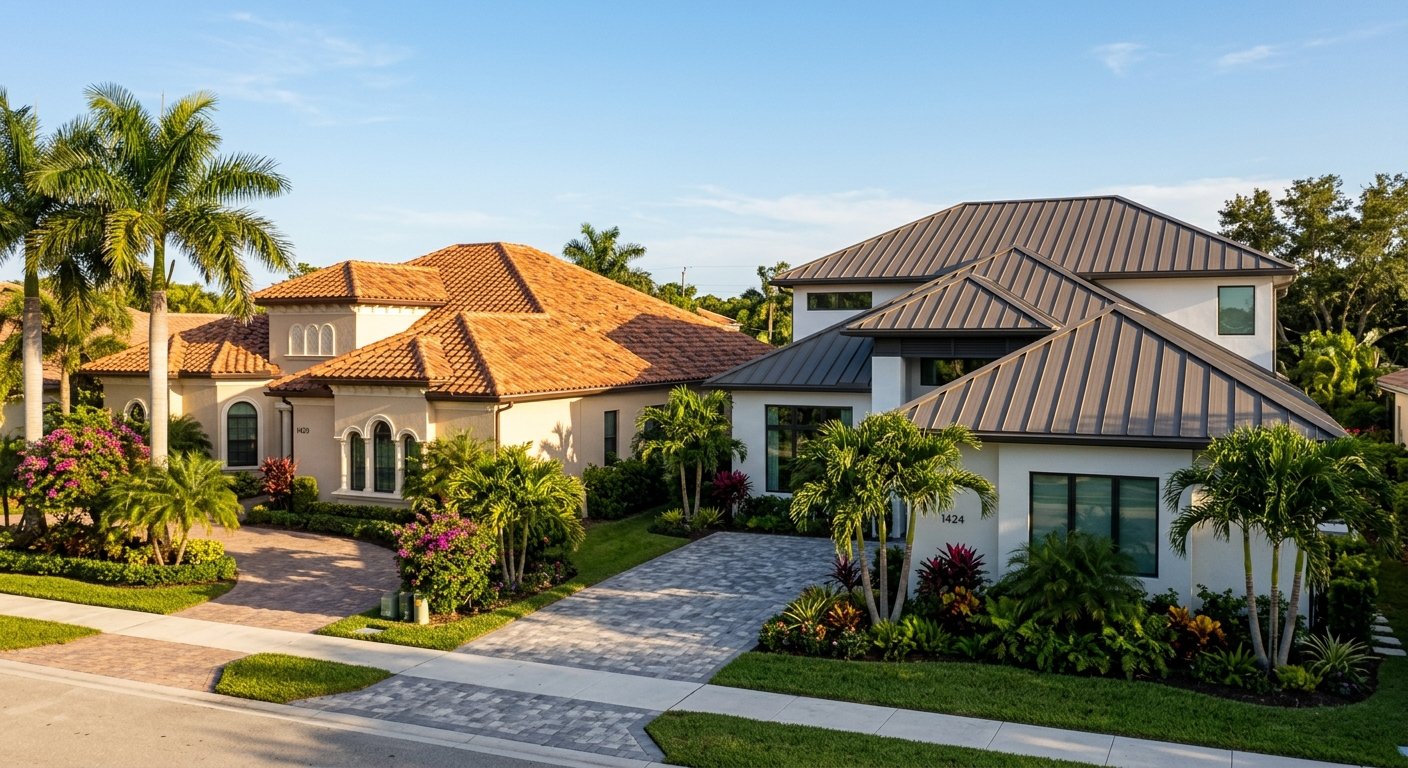
Palm Beach County homes carry a mix of roofing systems — you’ll see asphalt shingle in Delray Beach subdivisions, clay and concrete tile in Boca Raton and Palm Beach Gardens, and standing-seam metal on everything from Boynton Beach bungalows to Wellington equestrian estates. The right material depends on your home’s structure, HOA requirements, and long-term plans.
| Criteria | Asphalt Shingle | Concrete / Clay Tile | Metal |
|---|---|---|---|
| Typical lifespan in South FL | 15–25 years | 40–50+ years | 40–70 years |
| Weight consideration | Light; most structures | Heavy; may need engineering | Light; most structures |
| HOA compatibility | Widely accepted | Widely accepted | Community-dependent |
| Flat/low-slope option | No | No | Yes (some systems) |
| Manufacturers we use | CertainTeed, Owens Corning, GAF | CertainTeed, Owens Corning, GAF | Dynamic Metals, Metal Alliance |
Asphalt Shingle
Shingle roofing remains the most common re-roof system in Broward and Palm Beach counties. Modern architectural shingles from CertainTeed, Owens Corning, and GAF carry Florida Product Approvals and are engineered to meet the wind-load requirements imposed by the Florida Building Code for this region. They’re a practical, well-understood system — fast to install, widely available in material, and straightforward to permit. Learn more about our shingle roofing installations.
Concrete and Clay Tile
Tile roofing defines the look of communities across Boca Raton, Jupiter, and Palm Beach Gardens. It’s durable and time-tested, but tile replacement in South Florida has specific code requirements around underlayment — particularly the transition away from single-ply underlayment to high-performance systems using Polyglass modified bitumen products. Tile re-roofs also require engineering review when the structural load is close to the margin. Our tile roofing page covers the full process.
Metal Roofing
Standing-seam and metal panel systems from Dynamic Metals and Metal Alliance have grown considerably in Palm Beach County as homeowners recognize their longevity and performance in South Florida’s conditions. Metal roofing on a residential structure still requires the same permitting, product approvals, and inspections as any other system. It’s not a shortcut — it’s a long-term investment. See our metal roofing installations for details on available profiles and applications.
Flat and Low-Slope Roofing
Many homes in South Florida — particularly mid-century designs in Delray Beach and Pompano Beach — have flat or low-slope sections. These require a different system entirely: typically a modified bitumen or TPO membrane, not shingles or tile. Polyglass membranes are our standard for flat roofing, and the installation method (torch-applied vs. self-adhered) is governed by both Florida Building Code and manufacturer specifications.
Florida Building Code Section 1507 specifies underlayment requirements by roofing type and wind zone. In Palm Beach County’s high-velocity wind zone, the underlayment specification is more demanding than in central Florida — this is one reason why a contractor who “does Florida roofing” isn’t the same as one who knows the Palm Beach County permitting office and what those inspectors look for.
What the Replacement Process Looks Like
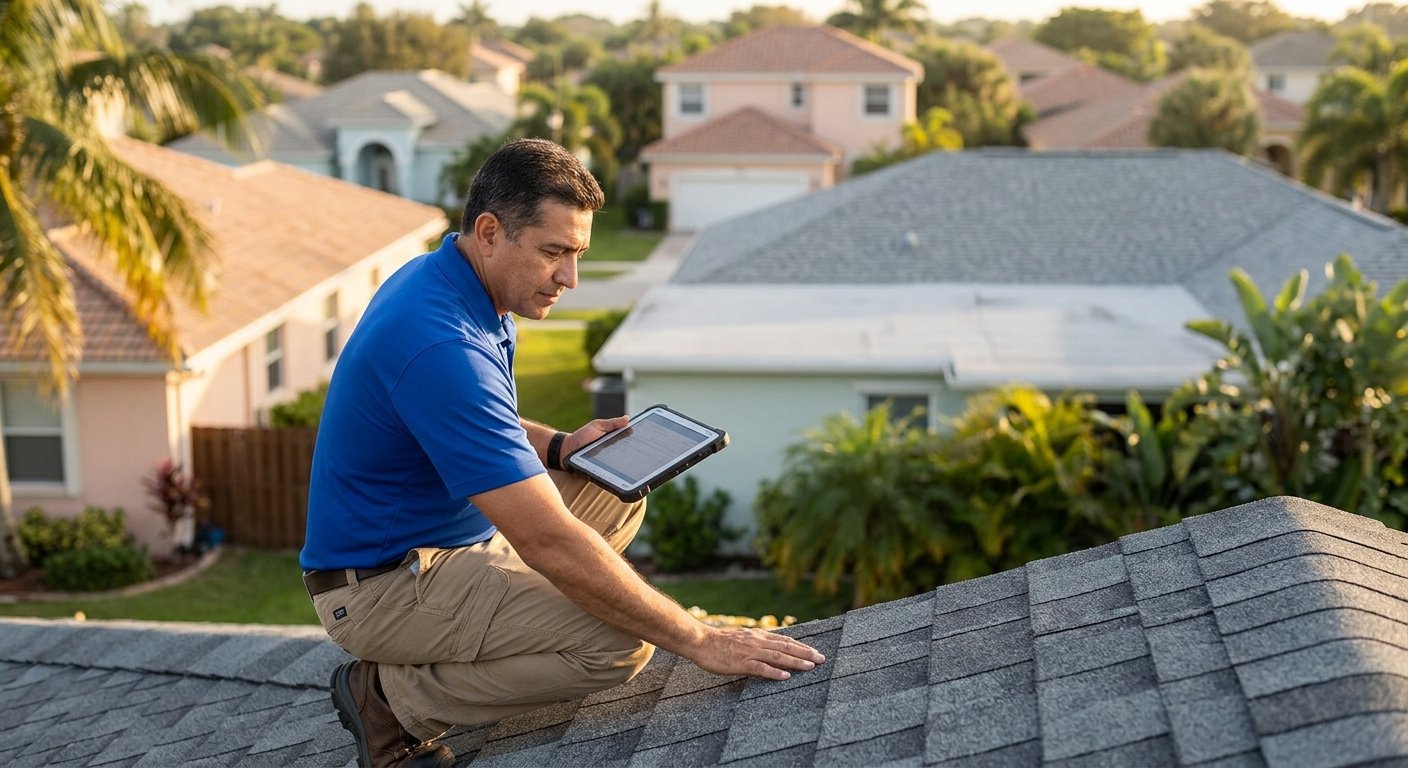
From signed contract to completed final inspection, a typical Palm Beach County roof replacement follows a defined sequence. Understanding it helps you plan and set realistic expectations.
Free Estimate and Material Selection
We assess the existing roof system, review your HOA requirements if applicable, and help you select the right material and manufacturer. Pricing is quote-specific — we don’t publish ranges because every project is different in scope, decking condition, and access.
Permit Application
We pull the permit with Palm Beach County Building Division (or the relevant municipality — Boca Raton, West Palm Beach, and Boynton Beach each have their own permitting offices within the county). Florida Product Approval numbers for every material are included in the permit package.
Tear-Off and Decking Inspection
Our in-house crews remove the existing roofing system and inspect the decking. Damaged or deteriorated sheathing is replaced before any new system is installed — this is non-negotiable for passing inspection and for the integrity of the finished roof.
Dry-In and Final Inspections
Most Palm Beach County re-roofs require a dry-in inspection (after underlayment, before final material) and a final inspection. Our permit-passing guarantee means we manage the inspection schedule and address any correction notices — you don’t chase inspectors.
Storm Damage and Insurance Claim Restoration
When a storm damages a roof, the path forward is a documented insurance claim followed by a licensed contractor completing the approved restoration scope. At Access Impact, storm-damage roof repair and insurance-claim restoration are services we provide directly — our in-house crews do the documentation, the repair, and the permit work. We don’t subcontract damage assessment to a separate party.
If you’ve had roof damage from wind or water intrusion, the first step is a thorough inspection to document the extent of damage with photos, measurements, and written scope — the same documentation your insurance adjuster needs to process the claim. Our storm-damage roof repair page outlines the process.
An unpermitted roof creates problems when you sell the home, file an insurance claim, or plan a future renovation — the permit is there to protect you, not inconvenience you.
Frequently Asked Questions
Do I need a permit for a roof replacement in Palm Beach County?
Yes. Every full roof replacement in Palm Beach County requires a building permit and at least one inspection — typically a dry-in and a final. This applies regardless of material type. Contractors who offer to skip permitting are putting you at legal and financial risk; unpermitted work can surface during property sales or insurance claims.
What is Florida Product Approval and why does it matter?
Florida Product Approval is a state-level certification confirming that a building product — shingle, tile, membrane, metal panel — has been tested and approved for use under the Florida Building Code. Every material in a permitted roof replacement must carry a valid approval number. If your contractor’s proposal doesn’t reference product approval numbers, ask for them before signing.
How long does a roof replacement take in Palm Beach County?
For a typical single-family home, the physical installation takes one to three days once materials are staged and the permit is approved. Permitting and material lead time add to the overall timeline — plan for a few weeks from contract signing to project start, depending on county permitting volume and material availability.
Can I get a new roof through an insurance claim?
If your roof sustained documented storm damage, your homeowner’s insurance policy may cover the cost of replacement or repair. The key is documentation: the scope of damage must be itemized and supported by a licensed contractor’s assessment. Access Impact handles the full process — inspection, documentation, repair, and permitting — as a direct service.
What’s the difference between a re-roof and a roof repair?
A re-roof is the complete removal and replacement of the existing roofing system. A repair addresses specific damaged sections without removing the full system. Florida Building Code limits how many layers of roofing a structure can carry before a full tear-off is required — in most cases, a second layer triggers mandatory tear-off on the third replacement. A licensed roofing contractor can assess which scope applies to your home.
Why the Installer Matters as Much as the Material
A Florida Product Approval is issued to a product — but the product performs only as well as the installation. Improper fastening patterns, skipped flashing details, or incorrect underlayment laps are the failure points that cause roofs to leak or fail inspection. Access Impact operates with in-house crews — no day-labor subcontractors — because craftsmanship requires accountability, and accountability requires continuity on the job site.
We’ve been installing roofing across Palm Beach County, Broward County, and Southwest Florida since 2007, and we carry both a Florida Certified General Contractor license (CGC1525402) and a Florida Certified Roofing Contractor license (CCC1337755). Both licenses are verifiable at the state licensing portal. Our roofing work spans residential re-roofs, new construction, and commercial roofing for property managers and building owners across the region.
Get a free roof replacement estimate
Tell us your address, current roofing system, and any concerns — we’ll schedule an inspection and provide a detailed, no-obligation quote with Florida Product Approval references included.

About Access Impact
Access Impact is a licensed Florida general contractor (CGC1525402) and roofing contractor (CCC1337755) installing impact windows, impact doors, and roofing across Palm Beach County, Broward County, and Southwest Florida (Lee and Collier) since 2007. In-house crews, Florida Product Approval on every product, and a permit-passing guarantee: the technically authoritative installer, not a volume reseller. Windows and doors are CWS and ES Windows; roofing is CertainTeed, Owens Corning, GAF, Dynamic Metals, Metal Alliance, and Polyglass. Offices in Deerfield Beach and Fort Myers. Visit accessimpact.com →