For most South Florida homeowners choosing between tile and metal, the decision comes down to three things: weight load capacity of the structure, neighborhood aesthetic standards, and long-term performance expectations. Both are proven, code-compliant roofing systems with Florida Product Approvals — neither is the wrong answer, but one is usually the better fit for a specific home and situation.
- Both concrete/clay tile and metal roofing carry Florida Product Approvals and meet the Florida Building Code for wind resistance — the difference lies in weight, cost structure, and maintenance profile.
- Metal roofing (standing seam in particular) is lighter, installs faster, and handles low-slope sections that tile cannot.
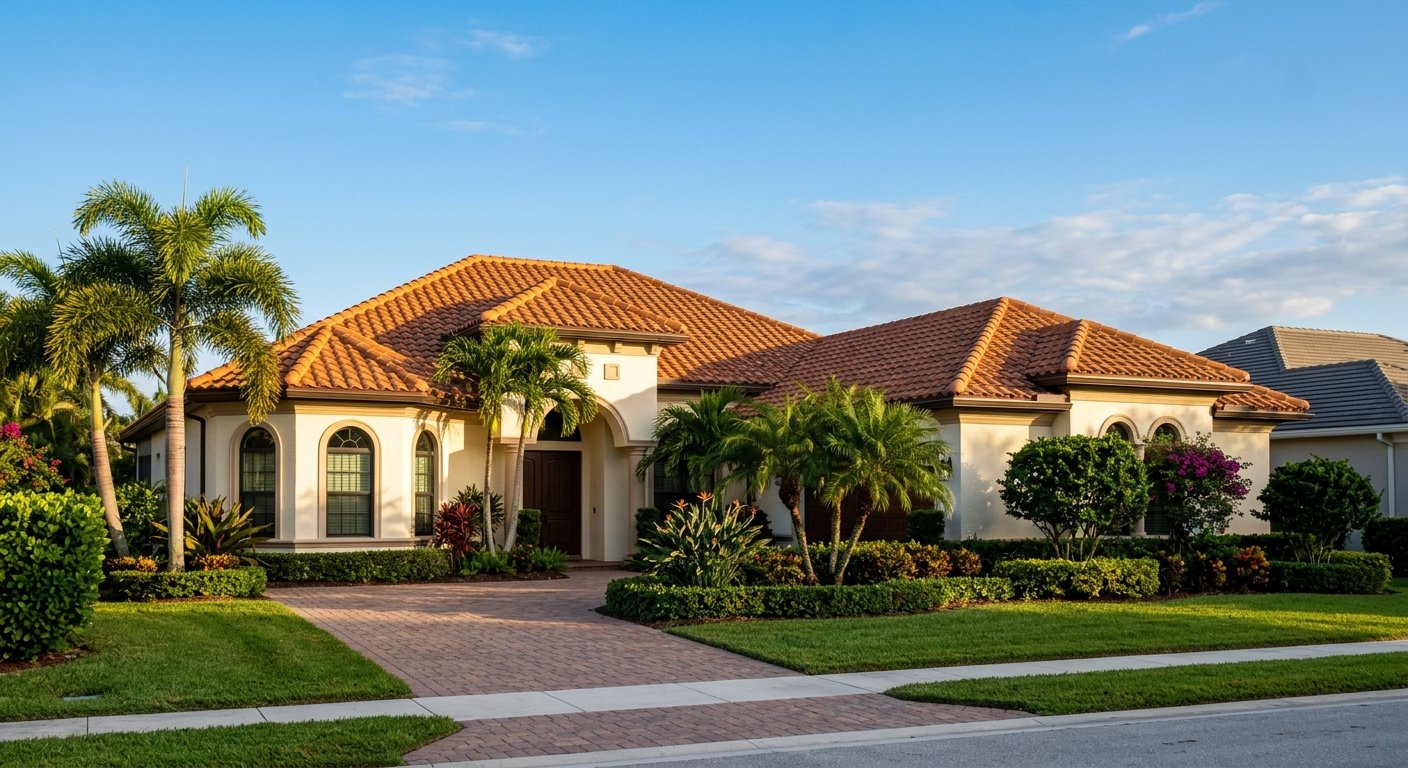
- Tile roofing — concrete or clay — suits traditional Mediterranean and Spanish architecture common across Palm Beach and Broward counties, and meets strict HOA appearance requirements in many communities.
- The right system depends on your roof deck, structural capacity, HOA rules, and how long you plan to hold the property.
- Permit pulling, Florida Product Approval verification, and correct underlayment are where installations succeed or fail — that is the contractor’s responsibility, not yours.
What the Florida Building Code Actually Requires
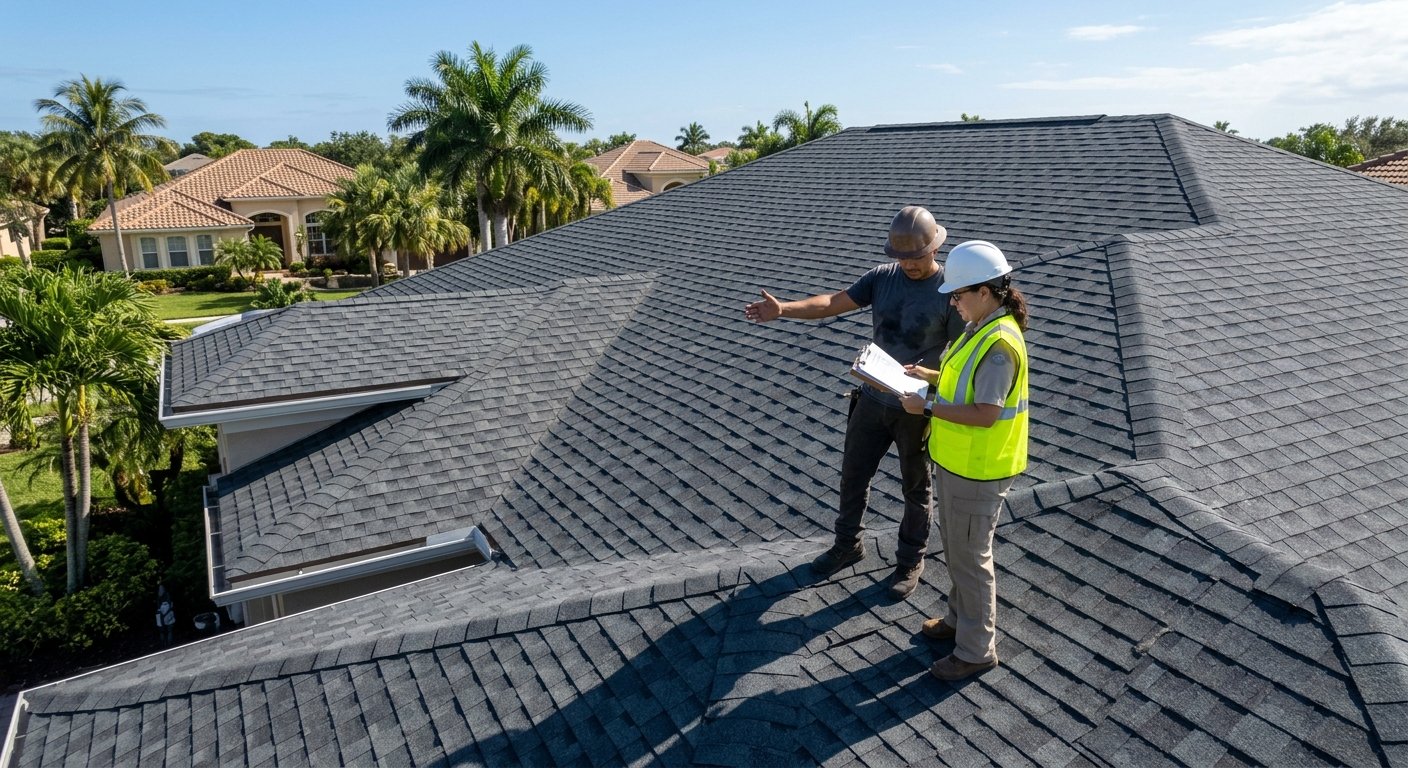
Every roof replacement in Palm Beach County, Broward County, and the Fort Myers–Naples area must be permitted, inspected, and installed per the Florida Building Code, 8th Edition. That means every product on the job must carry a valid Florida Product Approval (or Miami-Dade Notice of Acceptance, which exceeds state minimums), and the installation must follow the approved installation protocol exactly. A product installed out of spec — wrong fastener pattern, wrong underlayment, wrong lap dimensions — will fail inspection even if the product itself is approved.
This is why the contractor you choose matters as much as the material you pick. At Access Impact (CGC1525402 / CCC1337755), every roofing job is permitted and our permit-passing guarantee is backed by in-house crews who have done this work since 2007. No day-labor subcontractors, no shortcuts on the underlayment, no substituted materials on the job site.
Florida’s statewide product approval system requires that roofing products list the specific application method — fastener schedule, deck type, slope range — under which the approval applies. If a crew installs concrete tile on a 2:12 slope when the approval only covers 4:12 and steeper, the inspection will fail regardless of the tile brand. Always ask your contractor to show you the product approval document before work begins.
Concrete and Clay Tile: What Homeowners Should Know
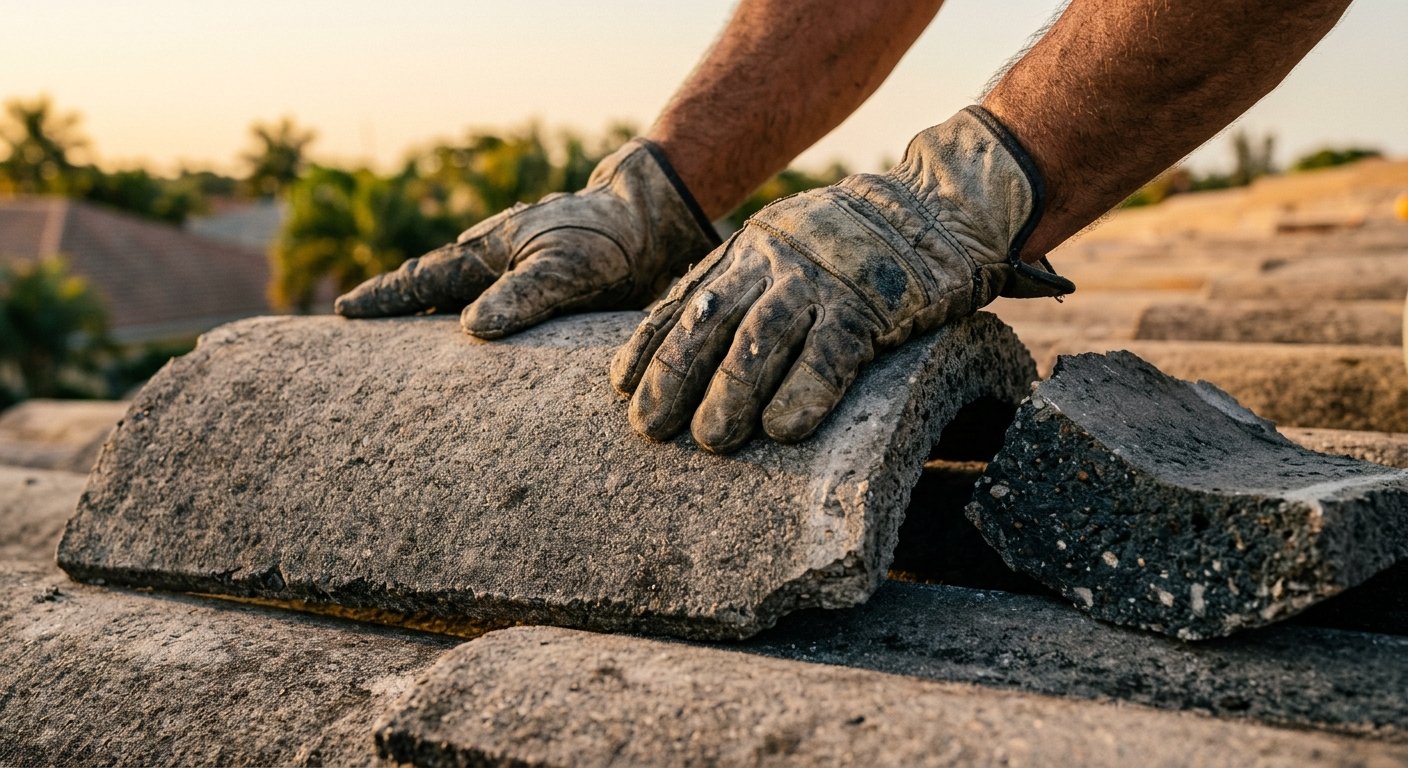
Tile roofing dominates the visual landscape across Boca Raton, Delray Beach, Palm Beach Gardens, Naples, and much of the HOA-governed communities in between. There are real structural and performance reasons for that dominance, and real limitations that homeowners sometimes overlook.
Weight and structural loading
Concrete tile typically runs in the range of 900–1,100 pounds per square (per 100 sq. ft.), and clay tile can exceed that. Before a tile roof replacement, a qualified contractor should assess whether the existing roof deck and framing can carry the load — especially on homes built before the mid-1990s that may have been originally designed for lighter materials. If a re-roof is converting from shingle to tile, a structural review is not optional; it is required under the Florida Building Code.
Performance and longevity
Properly installed concrete and clay tile performs well in South Florida’s heat and humidity. The tile itself is highly resistant to UV degradation and does not corrode. The system’s vulnerability is typically the underlayment beneath the tile, not the tile itself. Florida requires a secondary water barrier on tile roofs — an additional layer of protection that matters when individual tiles crack or shift. When that underlayment degrades (typically over many years of exposure), water infiltration follows. This is one reason tile re-roofs often involve full tear-off and new underlayment even when the tile itself looks serviceable.
HOA and architectural considerations
In communities across Wellington, Coral Springs, Weston, and most of Collier County, HOA documents specify roofing materials and color ranges. Many explicitly require tile. Before committing to a system, confirm your HOA’s requirements in writing — it affects your permit application as well as your approval from the association.
| Factor | Concrete / Clay Tile | Standing Seam Metal |
|---|---|---|
| Weight per square | 900–1,100+ lbs | 100–150 lbs |
| Slope range | Typically 4:12 minimum | As low as 1:12 (system-dependent) |
| HOA compatibility | High — common requirement | Varies; growing acceptance |
| Underlayment replacement | Required at re-roof | New system on every install |
| Florida Product Approval | Required (system-specific) | Required (system-specific) |
| Available from Access Impact | CertainTeed, Owens Corning, GAF | Dynamic Metals, Metal Alliance |
Standing Seam Metal Roofing: The Case for It in 2026
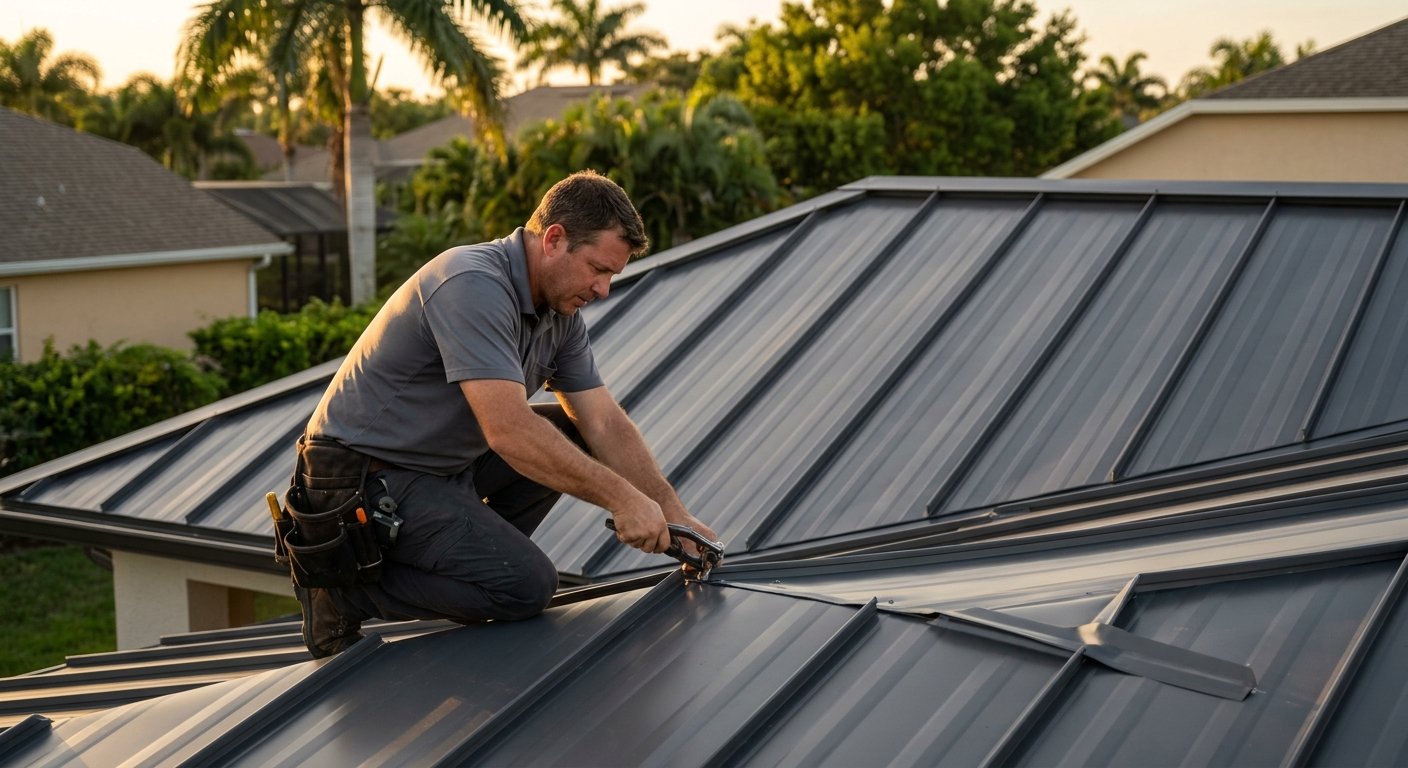
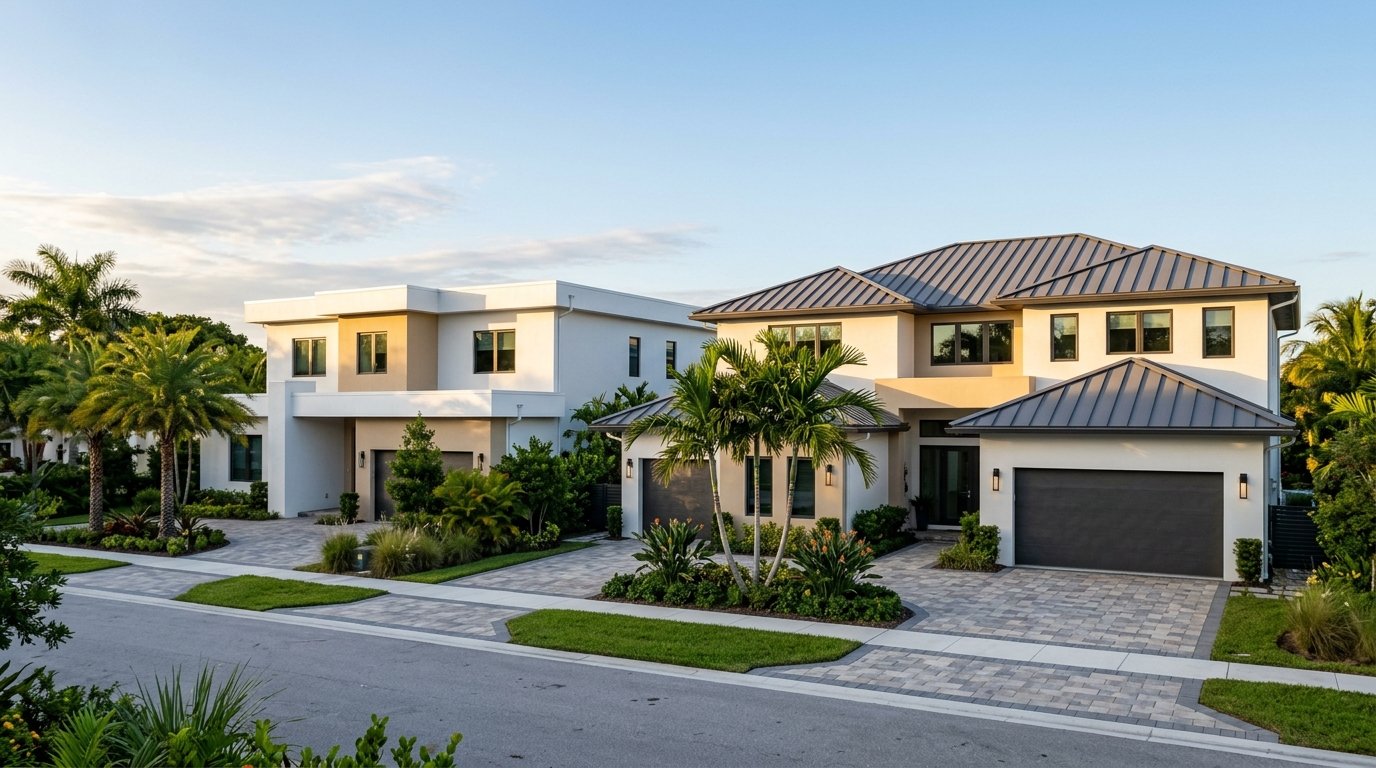
Metal roofing has moved well past its commercial-only image. Standing seam metal roof installations now appear across residential neighborhoods in Fort Myers, Cape Coral, Pompano Beach, and Lighthouse Point — and for straightforward technical reasons, not just aesthetics.
Weight advantage
At roughly 100–150 pounds per square, standing seam metal is among the lightest roofing systems available. This makes it viable on structures that cannot support tile, simplifies re-roofing logistics, and reduces structural stress over time. It is also frequently the right answer for additions, sunrooms, or portions of a home with flatter slopes where tile is not approved for use.
Slope flexibility
Standing seam metal systems from manufacturers like Dynamic Metals and Metal Alliance carry Florida Product Approvals for low-slope applications — as low as 1:12 in some configurations. Tile requires a minimum slope of 4:12 under most product approvals. Homes with flat sections, patio roofs, or shallow-pitch additions often have no viable tile option, making metal the code-compliant solution by default.
Thermal performance
Metal roofing reflects solar radiation more effectively than dark concrete tile. The ENERGY STAR program’s roofing product criteria includes reflectance and emittance thresholds — several metal roofing finishes qualify. In Southwest Florida’s sun exposure, that reflectance translates directly into reduced attic heat gain, which matters for cooling loads. Access Impact does not publish energy savings projections, but the physics of solar reflectance are well established.
If your home has both a steep-slope field roof and a lower-slope porch or addition section, you may need two different roofing systems — tile on the field and metal or flat roofing on the addition. A licensed roofing contractor can design a permit-ready solution that handles both sections cleanly. This is common in Fort Myers, Cape Coral, and older Broward County homes with add-on structures.
Flat and Low-Slope Roofing: The Third System
Many South Florida homes — particularly in Fort Lauderdale, Plantation, Sunrise, and West Palm Beach — include flat or low-slope sections. Tile does not apply here. The right system is typically a modified bitumen membrane (Polyglass is a manufacturer Access Impact works with), TPO, or a similar approved low-slope product. If your roof replacement involves any flat sections, confirm your contractor is licensed and experienced with that system separately from the steep-slope portion. Our flat roofing services cover residential and commercial low-slope applications across Broward, Palm Beach, Lee, and Collier counties.
The Permitting and Inspection Process
A roof replacement permit in Palm Beach County, Broward County, or Lee and Collier counties follows a standard sequence: contractor files permit application with product approval documentation, inspector reviews the deck and underlayment at rough-in, and final inspection closes the permit after completion. The process is not optional or bureaucratic busywork — it is the mechanism by which code compliance is verified independently.
Permit application
Contractor submits scope of work, product approvals, and installation documentation to the local building department. In Broward County, this is the Building Division; in Palm Beach County, it routes through the county or municipality depending on jurisdiction.
Deck and underlayment inspection
Inspector verifies deck condition and secondary water barrier installation before tile or panels are applied. This is where most installation errors are caught — and why in-house crews who know the code matter.
Final inspection
Inspector confirms completed installation matches approved documents. Permit is closed; homeowner receives record of completion.
Access Impact carries both CGC1525402 and CCC1337755 licensing, pulls every permit in-house, and backs the process with a permit-passing guarantee. For more on how a full roof replacement project works from contract to close, visit our roof replacement service page.
The permit is not the obstacle — it is the proof that the work was done right.
Storm Damage and Insurance Claim Restoration
Storm-damage roof repair and insurance-claim restoration are active services at Access Impact. If a storm event triggers roof damage on your home in Davie, Margate, Naples, or anywhere else in our service area, we can assess the damage, document it for your insurance claim, and complete the approved repair or replacement under permit. Visit our storm damage roof repair page for details on how that process works.
Frequently Asked Questions
Can I replace shingles with tile on my existing roof structure?
Not always. Concrete and clay tile is significantly heavier than asphalt shingle, and many homes built before the mid-1990s were not framed to carry that load. A licensed roofing contractor should assess your roof deck and framing before specifying tile as a replacement system. If the structure supports it, a tile re-roof requires full underlayment replacement and a permit regardless of the tile’s condition.
Is standing seam metal roofing suitable for residential homes in HOA communities?
It depends entirely on your HOA documents. Metal roofing has gained broader HOA acceptance across South Florida since 2020, but many communities — particularly in Boca Raton, Wellington, and Naples — still restrict it or limit approved colors. Review your HOA’s architectural standards before selecting a system. Your contractor can help identify what approvals you need before the permit is pulled.
What is the difference between concrete tile and clay tile?
Both are durable, code-approved systems for South Florida. Clay tile is lighter than concrete tile and tends to hold its color longer without surface coating. Concrete tile is more widely available in profile and color variations and generally carries a lower material cost. Both require proper underlayment and correct installation fastening per their Florida Product Approvals. The National Association of Home Builders notes tile roofing as one of the longer-lasting residential roofing systems when properly maintained.
Do I need a permit for a roof replacement in Fort Myers or Naples?
Yes. A full roof replacement in Lee County (Fort Myers, Cape Coral) and Collier County (Naples) requires a permit, a licensed roofing contractor, and inspections at key stages. Any contractor who proposes to skip the permit is exposing you to code violations, insurance complications, and resale problems. Access Impact pulls permits for every job in Southwest Florida from our Fort Myers office.
Get a free roofing estimate
Tell us your address and roofing system and we will provide a detailed, no-obligation estimate — permit, product approvals, and in-house installation included.

About Access Impact
Access Impact is a licensed Florida general contractor (CGC1525402) and roofing contractor (CCC1337755) installing impact windows, impact doors, and roofing across Palm Beach County, Broward County, and Southwest Florida (Lee and Collier) since 2007. In-house crews, Florida Product Approval on every product, and a permit-passing guarantee: the technically authoritative installer, not a volume reseller. Windows and doors are CWS and ES Windows; roofing is CertainTeed, Owens Corning, GAF, Dynamic Metals, Metal Alliance, and Polyglass. Offices in Deerfield Beach and Fort Myers. Visit accessimpact.com →