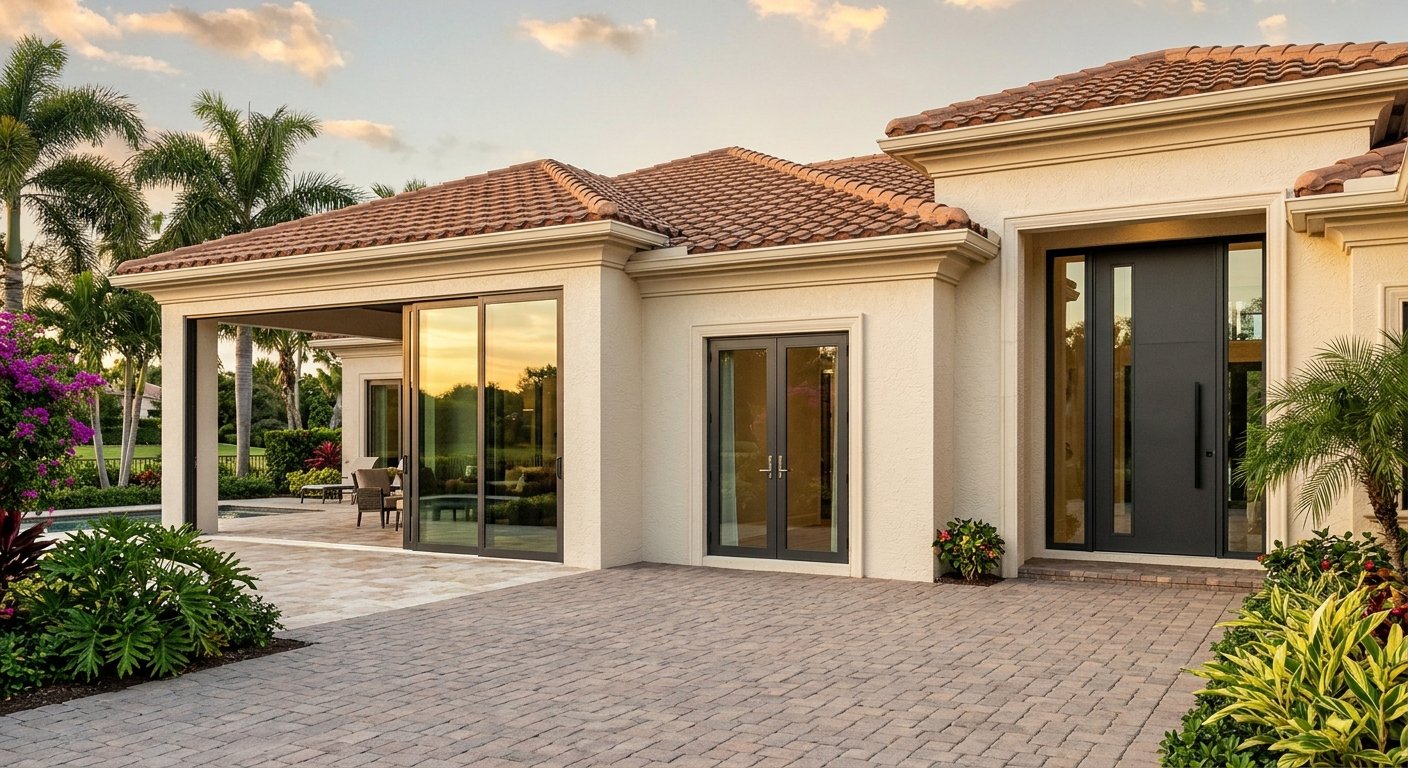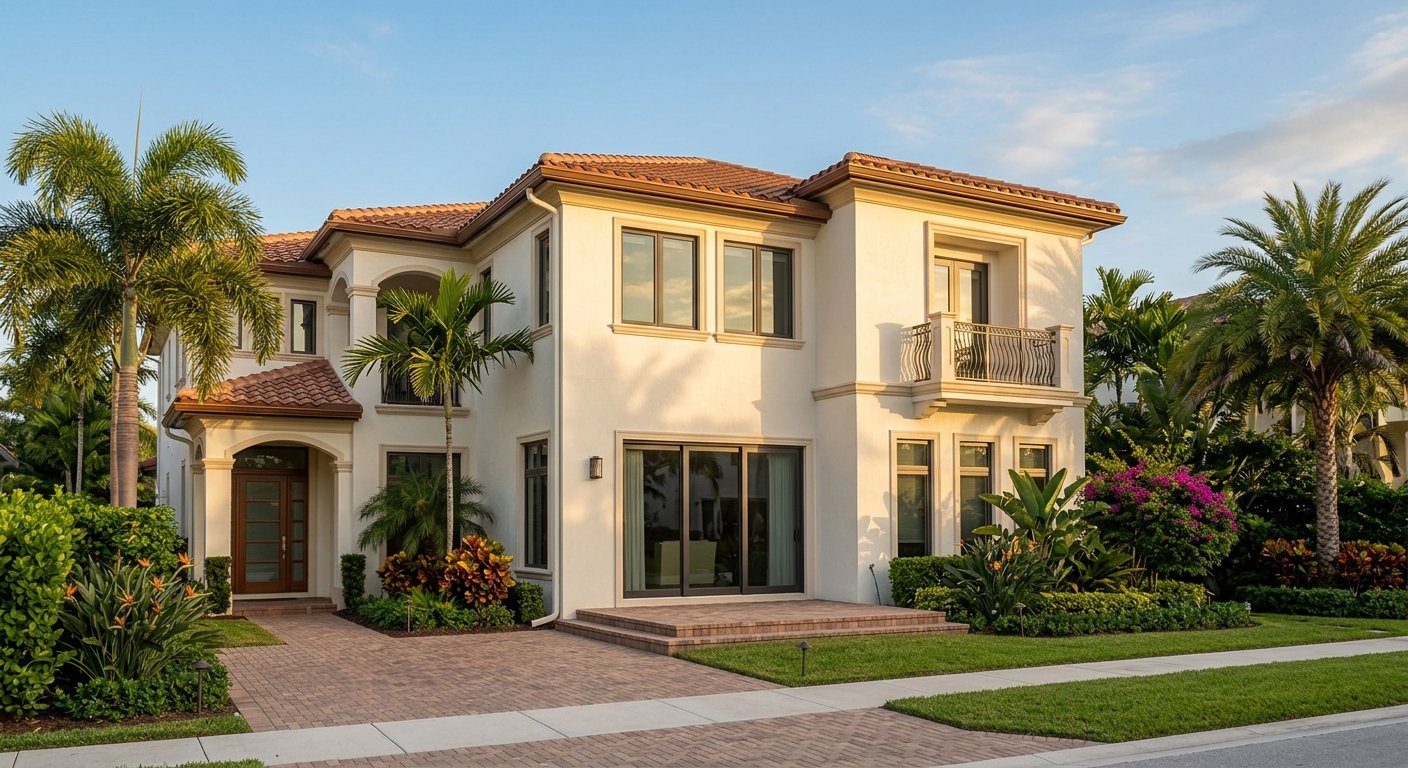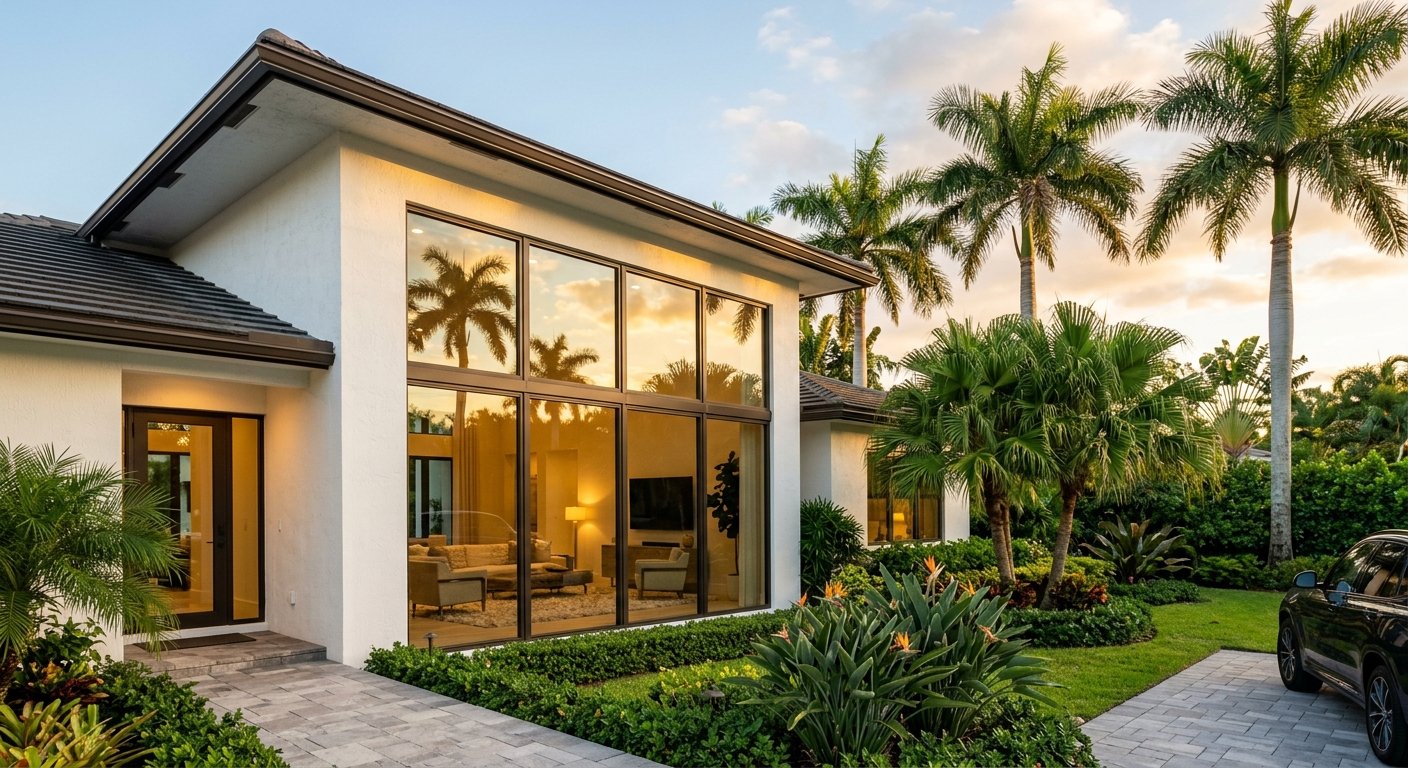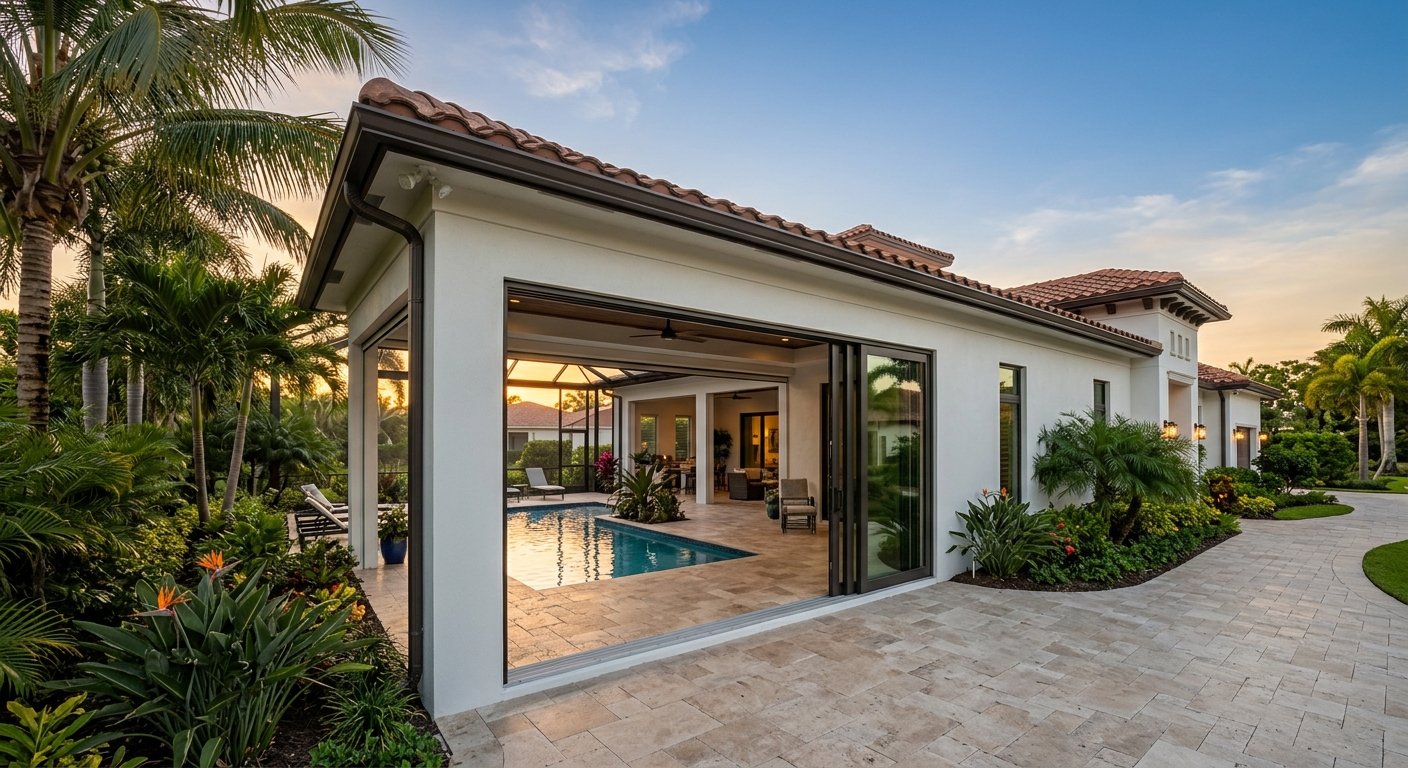
Choosing the right impact sliding glass door comes down to four things: frame material, glass configuration, Florida Product Approval documentation, and the quality of the installation. Get those four elements right, and you end up with a door that passes permit inspection, performs well for decades, and looks exactly as intended. Get any one wrong, and you’re looking at re-inspections, replacement, or both.
- Frame material — aluminum or vinyl — affects durability, thermal performance, and maintenance in South Florida’s salt-air environment.
- Glass configuration (single or dual pane, Low-E coating) drives both energy performance and noise reduction.
- Every impact sliding door installed in Palm Beach County, Broward County, or Southwest Florida must carry a Florida Product Approval or Miami-Dade NOA number — ask to see it before signing anything.
- A permit-pulling, licensed contractor with in-house crews is the single biggest variable in whether a door passes inspection the first time.
- Installation typically runs 10–12 weeks from signed contract to completion for windows and doors.
Why Sliding Doors Are a Distinct Category
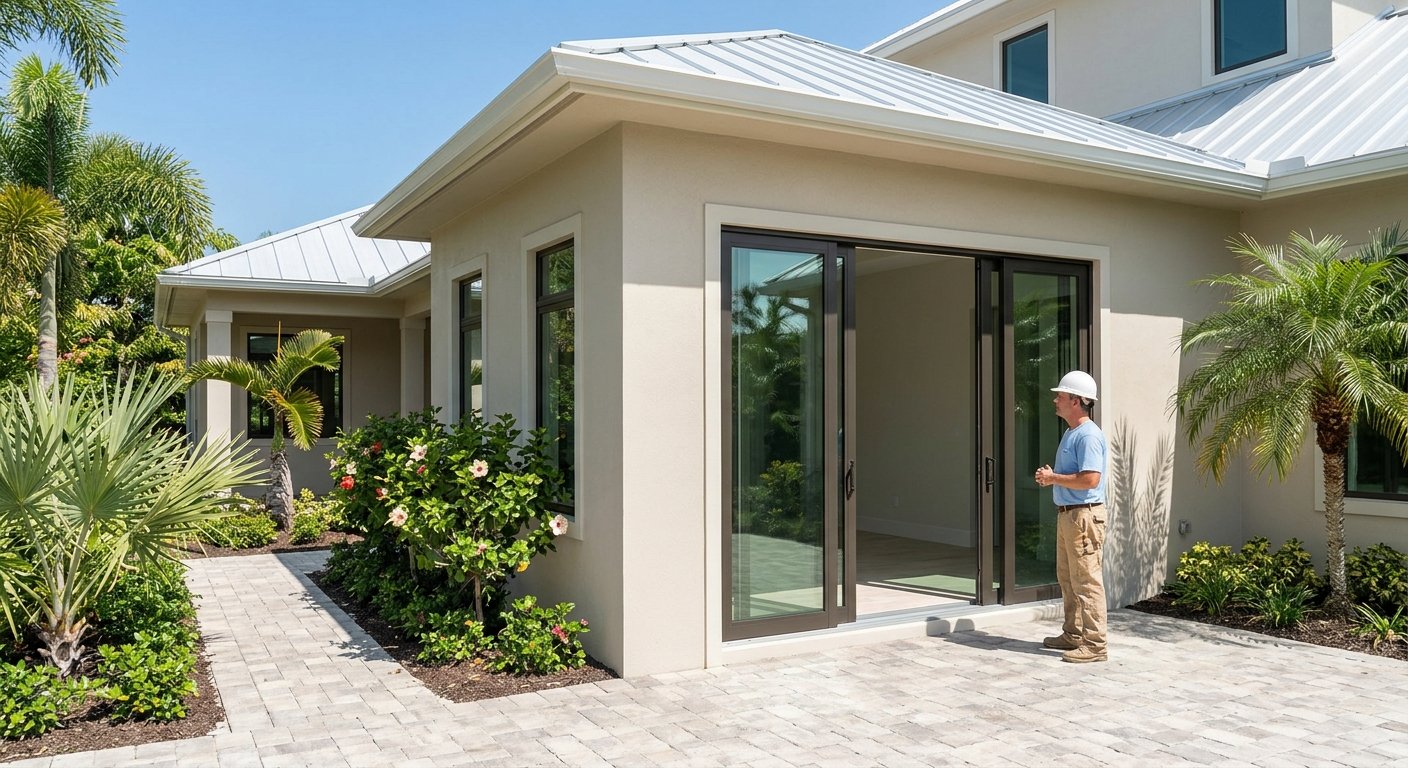
Impact sliding glass doors — sometimes called impact patio doors — are not simply large windows. They carry their own product-approval categories, their own frame engineering requirements, and their own installation protocols. The spans are wider, the frame corners bear more stress, and the threshold detail is critical for water infiltration control. A contractor experienced with impact windows needs additional, specific experience with sliding door systems before you should trust them with a 12-foot opening in your Boca Raton great room or your Cape Coral lanai.
At Access Impact, we install impact sliding doors across Palm Beach County, Broward County, Lee County, and Collier County as a core part of our impact door installation service. The guidance below reflects what we see in the field — what works, what causes permit rejections, and what homeowners wish they had asked before signing.
Frame Material: Aluminum vs. Vinyl
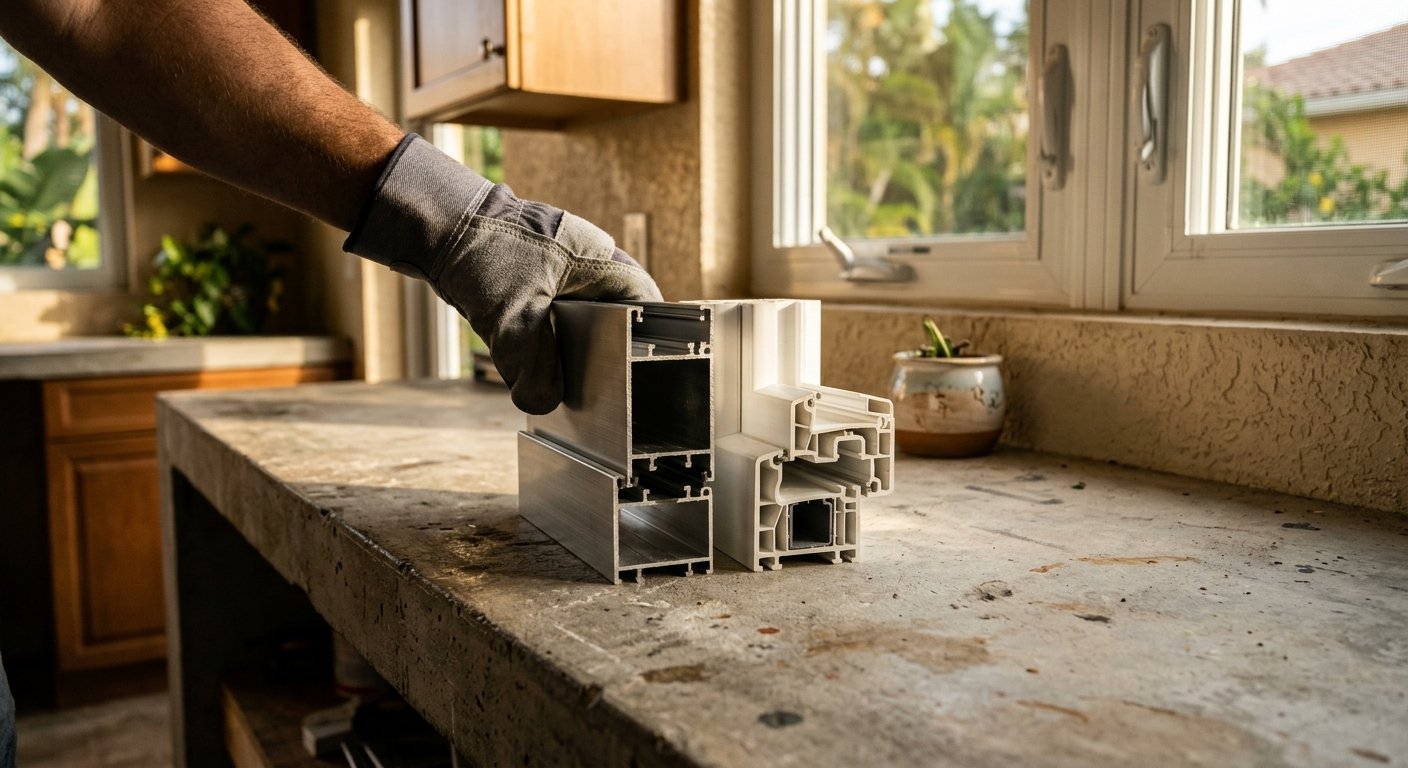
South Florida’s combination of salt air, intense UV exposure, and thermal cycling makes frame material selection more consequential here than in most other U.S. markets. Both aluminum and vinyl have legitimate use cases; neither is universally superior.
| Criterion | Aluminum | Vinyl |
|---|---|---|
| Structural rigidity | Higher — spans wide openings more easily | Lower — may require additional reinforcement at larger widths |
| Thermal conductivity | Higher (conducts heat) — thermal break models reduce this | Lower inherently — better baseline insulation |
| Salt-air corrosion | Requires quality anodizing or paint finish | Unaffected by salt air |
| UV resistance | Excellent with proper finish | Good; lower-quality vinyl can discolor over time |
| Maintenance | Minimal if properly finished | Minimal; no painting required |
| Aesthetic range | Wide — narrow sightlines, dark colors | Moderate — typically white or tan profiles |
For large openings — anything approaching or exceeding 10 feet wide — aluminum frames generally handle the structural load more predictably. For homeowners in Weston, Parkland, or Naples where energy performance is a priority and the opening is a standard width, a quality vinyl frame with a documented Florida Product Approval is a sound choice. The frame material comparison article on aluminum vs. vinyl impact frames covers the physics in more depth if you want to go deeper on that question.
Ask the contractor to show you the frame manufacturer’s Florida Product Approval document — not just a brochure — before you select a frame material. The approval number tells you exactly what configurations, glass types, and installation conditions are covered. If they can’t produce it, that’s a red flag.
Glass Configuration and Performance
Laminated vs. Laminated Insulating
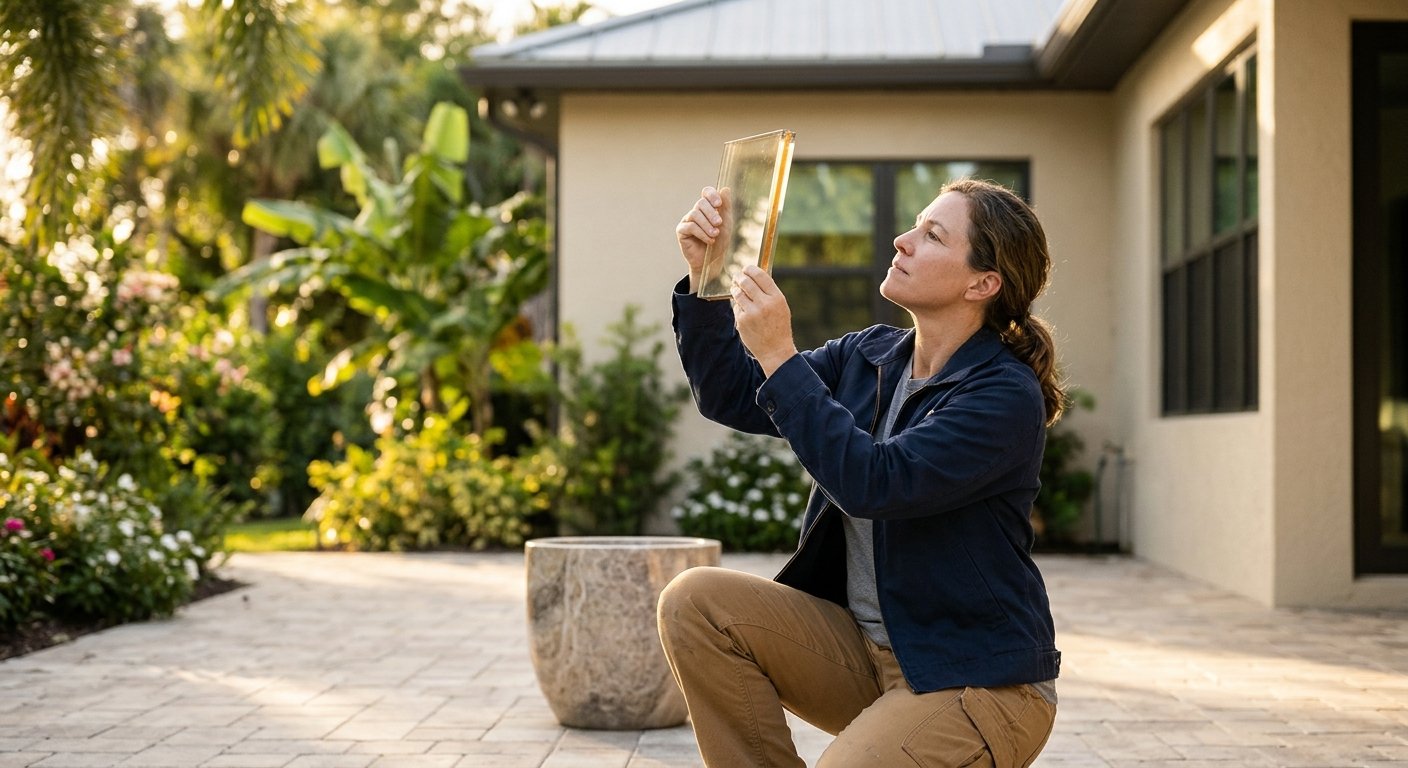
Impact sliding glass doors use laminated glass — two panes of glass bonded to an interlayer — as the baseline. This laminated construction is what prevents the glass from shattering into dangerous fragments on impact. For South Florida’s climate, the more relevant question is whether to specify a single laminated unit or a laminated insulating unit (two laminated lites separated by an air or gas space).
A laminated insulating unit adds meaningful thermal resistance and — because the sealed air space attenuates sound transmission — noticeably reduces exterior noise. In a home near a busy corridor in West Palm Beach, Coral Springs, or Fort Myers, that acoustic difference is real and livable. The tradeoff is slightly more frame depth and a modestly higher product cost, both of which your quote will reflect accurately.
Low-E Coatings
Low-E (low-emissivity) coatings on the inner glass surface reduce solar heat gain without meaningful reduction in visible light. In a market where cooling costs dominate the energy bill, Low-E glass on an impact sliding door is rarely an optional upgrade — it’s the standard specification. The ENERGY STAR program’s fenestration criteria provide a useful benchmark for solar heat gain coefficient (SHGC) and U-factor targets for South Florida’s climate zone.
Every impact sliding door we install through Access Impact — whether CWS or ES Windows product — carries a documented NFRC label and a Florida Product Approval number that specifies the glass configuration approved for that exact frame and opening size. Nothing is assumed; everything is on paper.
The glass configuration that passes permit in Broward County must match the product approval on file — not just the brochure spec sheet.
Florida Product Approval: The Non-Negotiable
Florida’s product approval system, administered through the Florida Building Commission’s product approval database, requires that every impact door installed in the state carry an approval number that matches the exact product, configuration, and installation method used on the job. This is not a formality. Inspectors in Palm Beach County, Broward County, and the Lee/Collier counties check product approval numbers against the permit documents. A mismatch — even a minor one, like a glass substitution — can trigger a rejection and require product replacement.
When you review proposals for impact patio doors, ask each contractor to include the Florida Product Approval or Miami-Dade NOA number for the specific door being quoted. At Access Impact, every quote lists that number by default. It’s how we’ve maintained a permit passing guarantee across 2,000+ installations since 2007.
Product approval applies to the complete system — frame, glass, hardware, and installation method. Swapping the glass type or using a non-approved anchor pattern voids the approval even if the frame itself is listed. Your contractor must pull the permit and install exactly to spec.
The Installation Variables That Determine Permit Outcome
Even a correctly specified door can fail inspection if the installation departs from the approved method. The most common field issues we see on doors that arrive to us for correction involve three things: anchor spacing that doesn’t match the approval document, inadequate sealant at the threshold, and improper shimming that loads the frame unevenly.
Rough opening verification
Before the door ships, the rough opening must be measured and documented against the product approval’s size table. An opening that’s even slightly out of square creates frame stress and sealant voids over time.
Anchor installation
Anchor type, embedment depth, and spacing are specified in the product approval. In-house crews working to a documented process install to spec consistently — day-labor subcontractors working piecework don’t have the same accountability.
Threshold and sill pan
Water infiltration at the threshold is the most common performance complaint with sliding doors. The sill pan, drainage path, and exterior sealant must be installed as a system, not as an afterthought.
Permit inspection
The inspector verifies the product approval number, the anchor pattern, and the sealant detail against the approved permit documents. Access Impact carries every permit through to final inspection — that’s what “permit passing guaranteed” means in practice.
For homeowners planning a full opening replacement — windows and doors together — understanding what happens during a Florida Building Code impact window inspection gives useful context for what the inspector is actually looking for and why installation method matters as much as product selection.
How to Evaluate Proposals Side by Side
When you receive multiple proposals for impact doors in Palm Beach County or Broward County, the price difference between them usually traces to one of three sources: frame and glass specification differences, contractor overhead and crew structure, or profit margin. To compare apples to apples, request that each proposal include the Florida Product Approval number, the frame material and manufacturer, the glass configuration (laminated vs. laminated insulating, Low-E specification), and the anchor pattern. If any proposal is missing those elements, ask for them in writing before you decide.
Access Impact is an authorized installer of CWS and ES Windows products — both carry complete Florida Product Approvals across their sliding door lines. Our in-house crews — no day-labor subcontractors — handle every installation under licenses CGC1525402 and CCC1337755. The permit is pulled in our name and we carry it through final inspection.
Ask your insurance agent what documentation they need related to your new door installation — we don’t make insurance claims on your behalf, but we can provide the permit, product approval documentation, and installation records your agent may request.
Frequently Asked Questions
What size impact sliding glass door do I need for my opening?
Door sizing is determined by your rough opening dimensions and confirmed against the product approval’s size table for the specific model being installed. There is no universal “standard” — the product approval lists the approved width and height ranges. Your contractor should measure the rough opening before quoting the product, not after.
Do impact sliding doors require a permit in Palm Beach County and Broward County?
Yes. Any impact door replacement or new installation in Palm Beach County, Broward County, Lee County, or Collier County requires a building permit. The permit process verifies that the product carries a valid Florida Product Approval and that the installation method matches that approval. Skipping the permit exposes you to code violations and can complicate a future property sale.
How long does impact sliding door installation take?
From signed contract to completed installation, the typical timeline for impact windows and doors through Access Impact is 10–12 weeks. That window accounts for product lead time, permitting, and scheduling the installation crew. The physical installation of a sliding door opening generally takes one day for the crew on site.
Can I replace just the sliding door without replacing the surrounding windows?
Yes. A sliding door is permitted and installed as an independent opening — it doesn’t require simultaneous window replacement. That said, many homeowners in Delray Beach, Fort Lauderdale, and Naples choose to combine a door and window project to reduce total permitting and crew mobilization costs. Your quote will reflect each scope separately so you can decide.
What’s the difference between a two-panel and three-panel impact sliding door?
A two-panel door has one fixed panel and one operating panel; a three-panel configuration adds a second fixed panel for wider openings. The product approval must cover the specific panel count and overall width you’re installing — a two-panel approval does not automatically cover a three-panel configuration in the same frame system. Confirm panel configuration is specified in the product approval before signing the contract.
Get a detailed quote for your sliding door project
Tell us your opening size, location, and timeline — we’ll provide a written proposal with the Florida Product Approval number included, at no cost.

About Access Impact
Access Impact is a licensed Florida general contractor (CGC1525402) and roofing contractor (CCC1337755) installing impact windows, impact doors, and roofing across Palm Beach County, Broward County, and Southwest Florida (Lee and Collier) since 2007. In-house crews, Florida Product Approval on every product, and a permit-passing guarantee: the technically authoritative installer, not a volume reseller. Windows and doors are CWS and ES Windows; roofing is CertainTeed, Owens Corning, GAF, Dynamic Metals, Metal Alliance, and Polyglass. Offices in Deerfield Beach and Fort Myers. Visit accessimpact.com →