Your garage door is the largest opening in your home—and in a hurricane, it’s often the first point of failure. When a garage door gives way under storm pressure, it doesn’t just mean a ruined car or damaged belongings. Structural engineers consistently identify garage door failure as one of the leading causes of catastrophic roof loss during high-wind events. For South Florida homeowners, that’s not a hypothetical risk. It’s a reality that plays out across Palm Beach, Broward, Martin, Lee, Collier, and Charlotte counties every active hurricane season.
If you’re considering upgrading to a hurricane-resistant garage door—or you’re building new and want to get it right the first time—here’s what you genuinely need to know before making this investment.
Why the Garage Door Is a Hurricane Vulnerability Priority
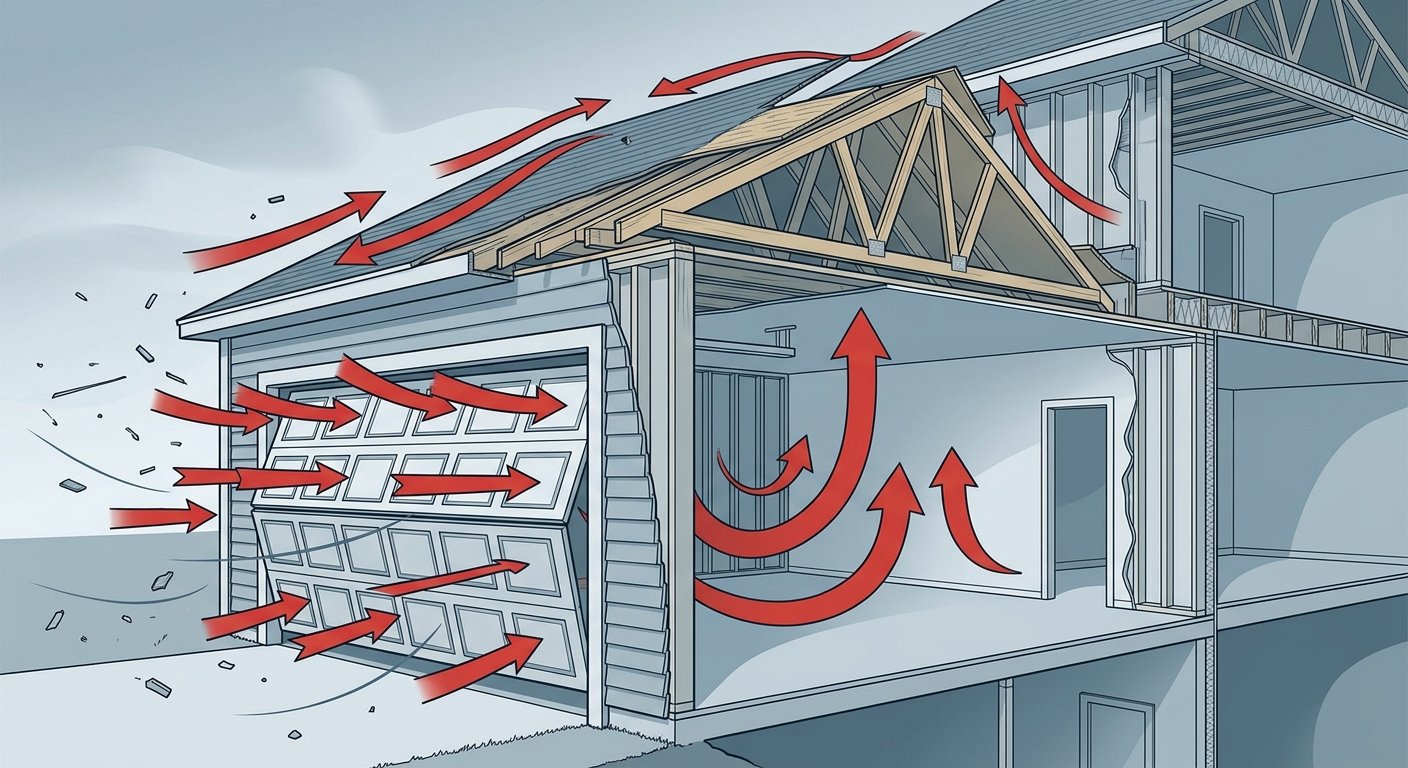
Standard residential garage doors are designed to open and close smoothly, not to resist sustained 150+ mph wind loads or the pressure changes that occur when a storm pushes and pulls against your home’s envelope. When a garage door breaches during a hurricane, the sudden pressurization can lift roofs, buckle walls, and compromise the entire structural integrity of your home in seconds.
According to the Federal Emergency Management Agency, garage door failure during high-wind events is one of the most preventable causes of major residential storm damage. The fix isn’t complicated—but it does require the right product, correctly installed, to Florida Building Code standards.
Impact garage doors are engineered specifically to address this vulnerability. They’re built with reinforced panels, heavy-duty hardware, and wind-load ratings that standard doors simply cannot match. And unlike temporary solutions like hurricane panels or fabric covers, an impact garage door is always ready—no setup required when a storm approaches.
Florida Building Code Requirements You Need to Understand
Florida has some of the most rigorous building codes in the country when it comes to hurricane protection, and for good reason. The Florida Building Code mandates that garage doors in high-velocity hurricane zones (HVHZ) meet specific wind-load performance standards verified through testing protocols like ASTM E1886 and ASTM E1996.
What this means practically for homeowners:
- Your new garage door must carry a valid product approval number recognized by Florida’s Building Commission.
- Installation must be performed by a licensed contractor who pulls the required permits.
- An inspection must be completed to verify code compliance before the permit is closed.
- Choosing a door based on price alone—without verifying Florida Product Approval—can result in a failed inspection, insurance complications, or worse, a door that fails in a storm.
As a Florida Certified General Contractor with nearly two decades serving South Florida families, we’ve seen what happens when homeowners skip this process. Saving a few hundred dollars upfront can cost thousands when a non-compliant installation must be redone—or when an insurance claim is disputed after a storm because the door lacked proper certification.
Impact Garage Door Installation: The Process Explained
Understanding what professional hurricane garage door installation actually involves helps homeowners make confident decisions and ask the right questions. Here’s how the process works when done correctly.
Step 1: Site Assessment and Product Selection
Every installation begins with a thorough assessment of your garage opening dimensions, structural framing condition, and the wind-load zone for your specific location. Homes in Broward County or along the Lee County coastline may have different design pressure requirements than properties further inland. This step determines which impact garage door models are appropriate for your home’s specific exposure category.
We partner with industry-leading manufacturers including CWS and ES Windows, whose impact-resistant product lines carry the Florida Product Approvals necessary for compliant installation throughout our service area.
Step 2: Permitting
Before a single panel is removed from your current garage door, permits must be submitted and approved by your local building department. This isn’t a formality—it’s a legal requirement and a layer of consumer protection. A licensed contractor handles this process on your behalf, ensuring your project is documented and inspected properly.
Step 3: Removal and Preparation
Existing door panels, tracks, springs, and hardware are removed. The opening is inspected for any structural issues in the framing—rot, termite damage, or improper framing—that must be addressed before installation proceeds. Installing an impact door over compromised framing undermines the door’s rated performance.
Step 4: Installation
Impact garage door panels are significantly heavier than standard doors, which is why the track system, springs, and hardware must be specifically rated for the door’s weight and wind-load requirements. Every anchor point, bracket, and fastener is installed to manufacturer specifications and Florida Building Code standards. This is not a process where shortcuts are acceptable.
Step 5: Inspection and Final Approval
A municipal inspector verifies the installation meets all code requirements. Once the permit is closed, you have documented proof of compliance—valuable for insurance purposes and future property transactions.
Modern Impact Glass Garage Doors: A Growing Option in South Florida
One trend gaining significant traction across Palm Beach and Broward County neighborhoods is the modern impact glass garage door. These doors combine hurricane-rated construction with full-lite or aluminum-framed glass panel designs that dramatically enhance curb appeal and bring natural light into garage spaces.
For homeowners with coastal properties, contemporary architecture, or simply a desire to distinguish their home’s exterior, impact glass garage doors offer a compelling combination of form and function. The glass used in these products is impact-resistant laminated glass—the same technology used in impact windows—so performance is not sacrificed for aesthetics.
If you’re exploring the full range of impact protection options, our impact garage door installation page provides detailed information about the door styles and configurations available through our manufacturer partnerships.
How Impact Garage Doors Fit Into Your Whole-Home Protection Plan
A hurricane-resistant garage door is a critical piece of a complete impact protection strategy—but it’s one piece. True whole-home protection means every opening is rated and code-compliant, including your entry doors, sliding glass doors, and windows.
Many South Florida homeowners upgrade incrementally, starting with the highest-risk openings first. The garage door is often that starting point. From there, a consultative approach helps prioritize impact doors and impact windows based on exposure, budget, and insurance considerations.
For homeowners evaluating their entry and exterior door options alongside garage protection, our impact door installation resource covers the full range of products and options we offer through manufacturers like CWS and ES Windows. And for those ready to address windows across the home, our impact window installation page outlines the process, product options, and what to expect from a professional installation.
What to Look for in a Hurricane Garage Door Contractor
The impact garage door installation market in South Florida is competitive, and not every contractor delivers the same level of accountability. Here’s what homeowners should verify before signing any contract:
- Florida Certified General Contractor license — Confirm the license number is active and in good standing with the Florida Department of Business and Professional Regulation.
- Florida Product Approval compliance — The specific door model being installed must carry a valid Florida Product Approval number for your wind zone.
- Permit pull and inspection process — Any contractor who suggests skipping permits to save time or money is a serious red flag.
- Manufacturer authorization — Authorized dealers receive proper product training and stand behind warranty commitments. Ask for documentation.
- Local references and track record — A contractor with nearly two decades of installations across Palm Beach, Broward, and Southwest Florida counties has a verifiable record you can check.
As a military family-owned business, we bring the values of integrity and accountability that our service background instilled in us to every project. No pressure tactics. No shortcuts. Just honest guidance and professional installation that stands behind the code.
Frequently Asked Questions
How long does hurricane garage door installation take?
Most residential impact garage door installations are completed in one day once permits are approved. The permitting timeline varies by municipality but typically ranges from a few days to two weeks. Your contractor should give you a realistic timeline upfront and manage the permitting process on your behalf.
Will an impact garage door lower my insurance premium?
However, specific savings vary by insurer, policy, and property.
Do impact garage doors require special maintenance?
Impact garage doors require similar maintenance to standard doors—periodic lubrication of hardware, visual inspection of springs and cables, and cleaning of panels and tracks. The heavier construction means the spring and hardware system does more work, so annual professional inspection is recommended to ensure everything remains in proper working order.
What wind speeds are impact garage doors rated for?
This varies by product and installation design pressure. Florida-approved impact garage doors are tested and rated according to specific design pressure (DP) values, which correspond to wind speeds for your location’s exposure category. Your contractor should match the door’s rated DP value to the requirements of your specific address and building code zone.
Can I install an impact garage door myself?
No. Impact garage door installation in Florida requires licensed contractor installation, pulled permits, and municipal inspection. Improper installation—even of a compliant product—can void the product approval, invalidate your homeowner’s insurance coverage for storm damage, and create genuine safety risks. Florida Building Code exists to protect homeowners, and professional installation is a non-negotiable part of that protection.
Ready to Protect Your Home’s Largest Opening?
If your garage door isn’t hurricane-rated and professionally installed to Florida Building Code, your home has a significant vulnerability that no amount of preparation elsewhere can fully compensate for. The good news is that impact garage door installation is a straightforward process when you work with the right contractor.
Access Impact has protected South Florida families since 2007 with honest, code-compliant impact protection installations across Palm Beach, Broward, Martin, Lee, Collier, and Charlotte counties. We’re military family owned, Florida Certified General Contractor licensed, and authorized dealers for the industry’s most trusted manufacturers.
Call us at (561) 283-2777 to schedule a no-pressure consultation. We’ll assess your home, explain your options clearly, and help you make the right decision for your family’s safety and your home’s long-term protection.