The price of an impact window project is driven by five core variables: the number and size of openings, the glass package you choose, the frame material, the permit fees your county charges, and the labor complexity of your specific home. Understanding how each factor moves the number helps you budget accurately and evaluate competing quotes on their merits rather than on the bottom line alone.
- Opening count and total glass area are the biggest single cost drivers — more openings, higher project price.
- Glass package choices (laminate type, Low-E coating) affect both upfront cost and long-term energy performance.
- Frame material — aluminum vs. vinyl — changes price, durability, and maintenance requirements in salt-air environments.
- Permit fees vary by county and city; every legitimate Florida project requires a pulled permit, and permit costs are real project costs.
- Labor complexity depends on construction type: concrete block homes require different tooling and time than wood-frame homes.
Opening Count and Size: The Foundation of Any Estimate
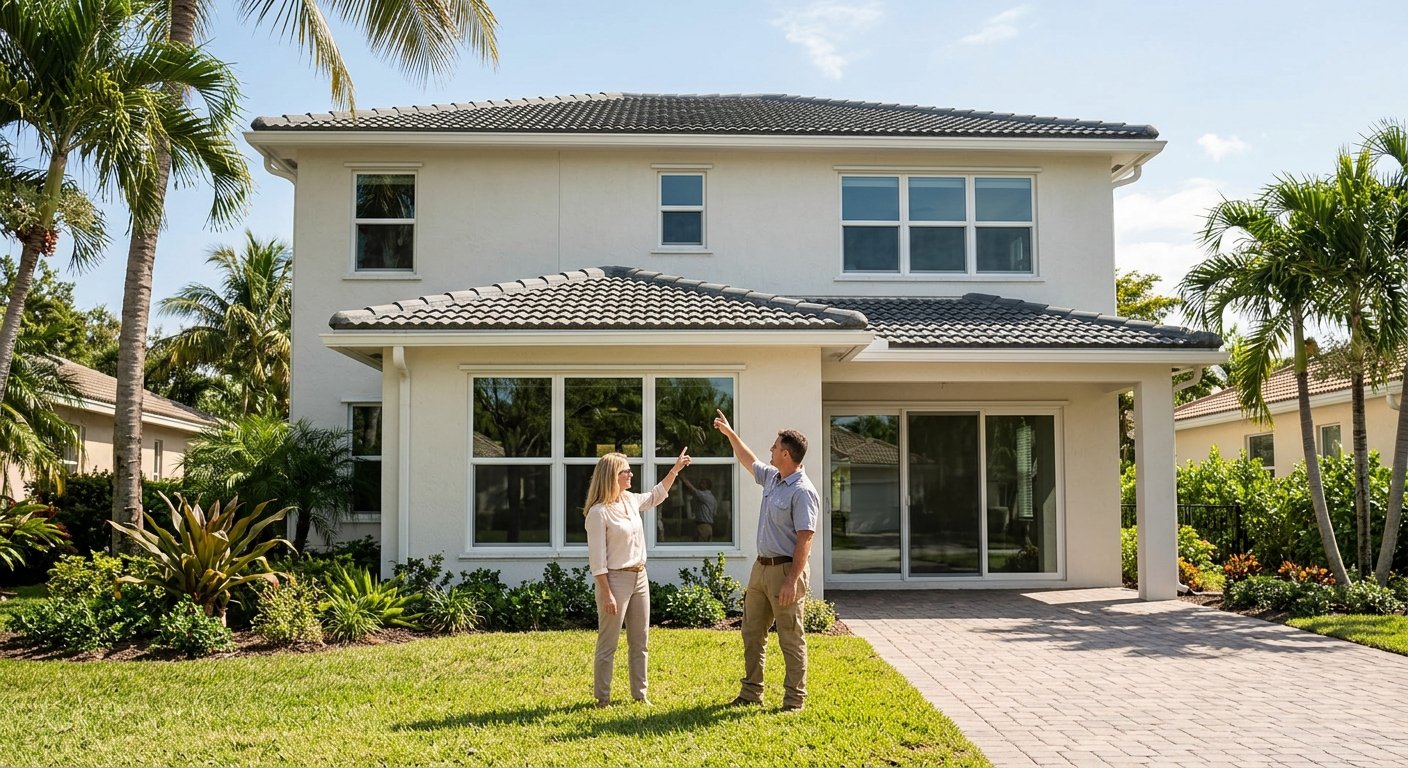
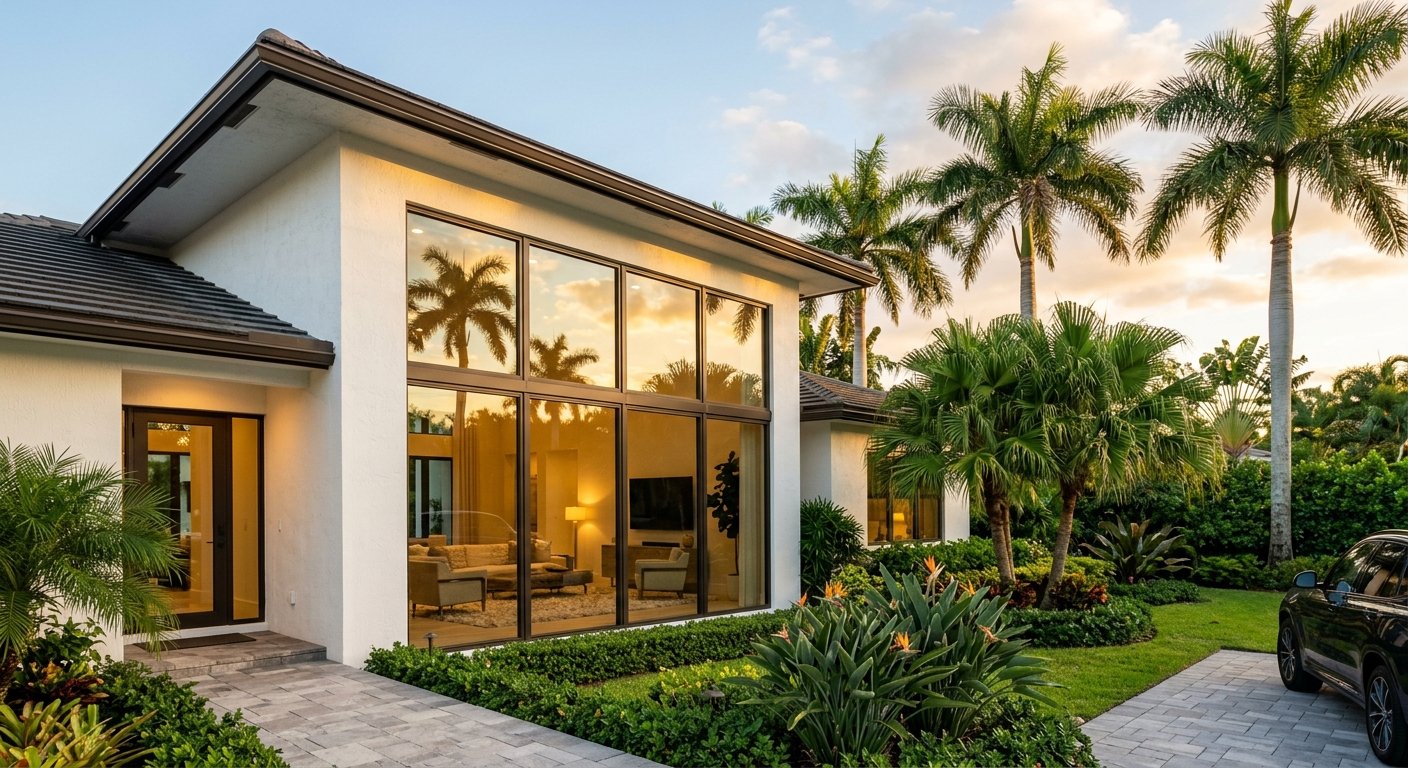
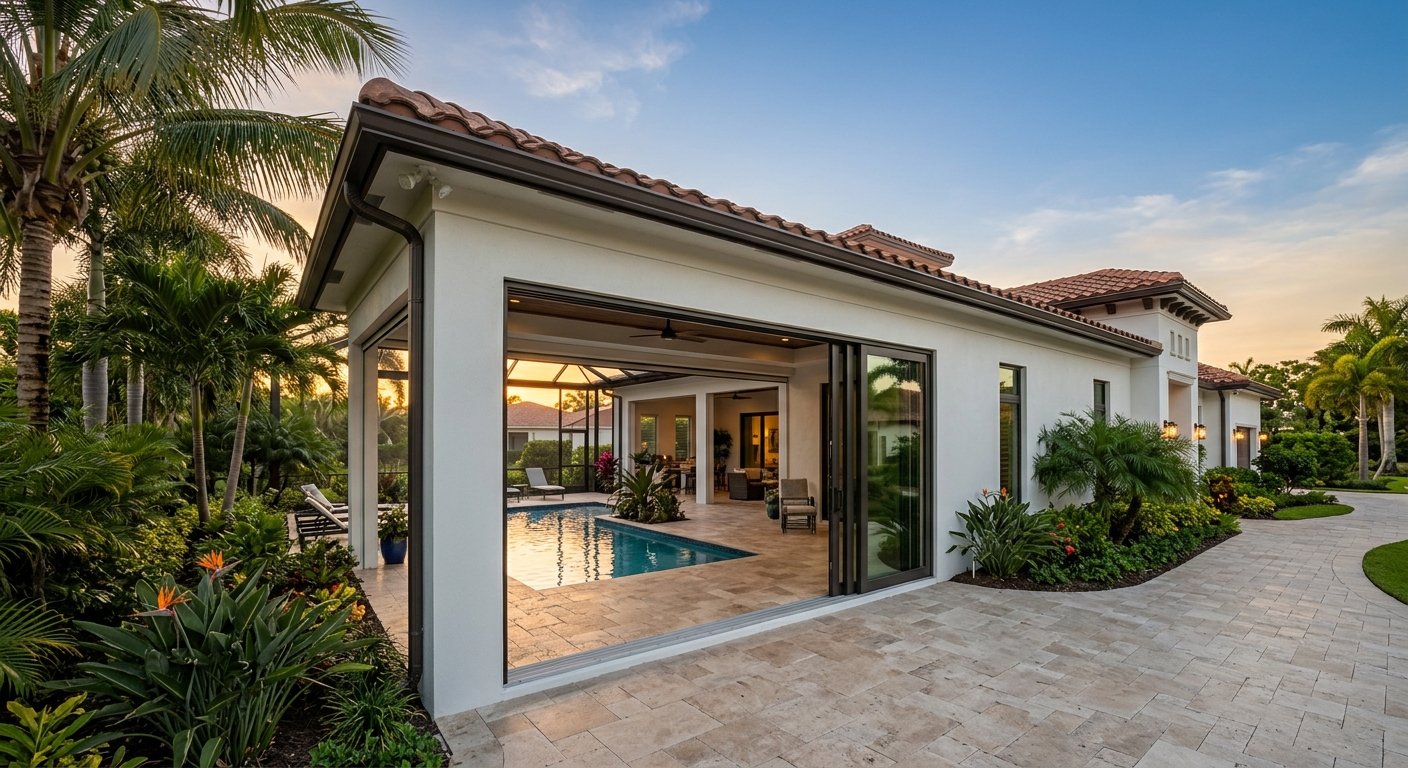
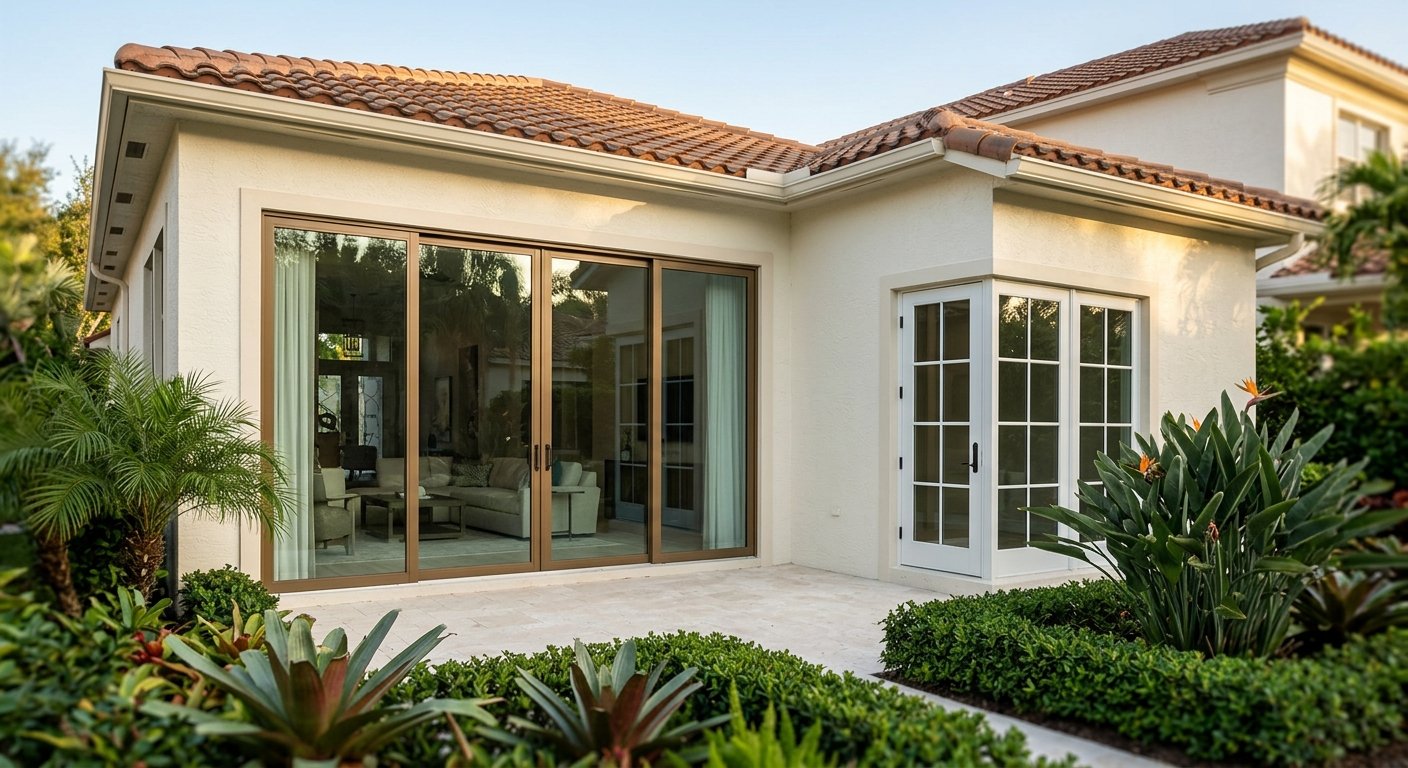
No single variable moves the total project cost more than how many openings you’re replacing and how large they are. A modest single-family home in Boynton Beach with a dozen standard single-hung windows will cost considerably less than a two-story home in Jupiter or Palm Beach Gardens with floor-to-ceiling picture windows, multiple sliders, and a set of French doors — regardless of everything else being equal.
Square footage of glass is the underlying unit pricing is built on. Larger openings require more glass, heavier frames, and more complex installation rigging. Oversized picture windows or wide architectural openings often require additional anchorage points and more installation time per unit. When you’re comparing quotes from different impact windows and doors South Florida contractors, ask whether each quote itemizes openings individually — that’s how you verify you’re comparing the same scope.
Before any estimator visits, walk your home and count every opening — including fixed panels, transoms, and specialty shapes. Contractors sometimes miss secondary openings on an initial drive-by. A complete opening count protects you from change-order surprises after the contract is signed.
Glass Package: Laminate Type and Low-E Coating
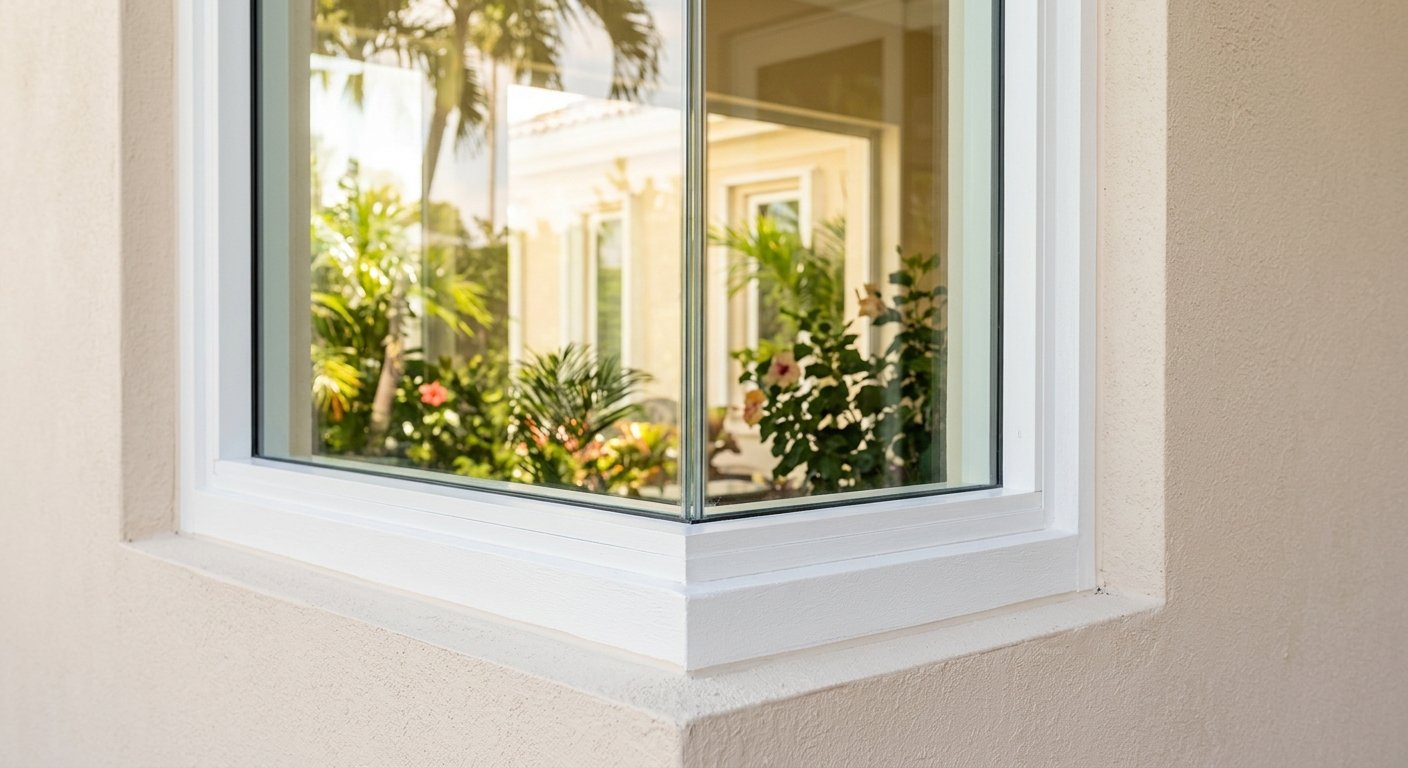
All impact glass uses a laminated construction — two panes bonded with an interlayer — but the interlayer thickness, the glass thickness, and any added coatings vary across product lines and affect both performance and price.
Laminate Construction
Entry-level impact glass uses a standard polyvinyl butyral (PVB) interlayer. Mid-range and higher-performance products use a thicker interlayer, a stiffer ionoplast interlayer, or structural laminate configurations. Thicker interlayers generally improve sound attenuation — laminated impact glass is noticeably quieter than single-pane or standard insulated glass, which matters if your home is near a road in Deerfield Beach or Coral Springs. The specific laminate spec on every product we install is listed on its Florida Product Approval, so you’re not taking the manufacturer’s word for it.
Low-E and Insulating Glass Units
A Low-E (low-emissivity) coating applies a microscopically thin metallic layer to the glass surface that reflects infrared heat while passing visible light. In South Florida’s climate, Low-E glass meaningfully reduces solar heat gain, which translates directly to lower cooling load. Insulated glass units (IGUs) — two panes separated by an argon or air gap — add another layer of thermal resistance. IGU configurations cost more than single-lite laminated units, but they perform better on energy metrics. The ENERGY STAR program for windows and doors publishes performance criteria by climate zone; South Florida falls in the hottest zone, where Low-E performance gains are most pronounced.
For homeowners in Naples, Fort Myers, or Cape Coral who run air conditioning year-round, the glass package choice is worth discussing carefully with your installer — not just for cost, but for the performance return on the upgrade.
Every product Access Impact installs carries Florida Product Approval or a Miami-Dade NOA number. That approval number appears on your quote and your permit application, which is how the building department verifies the product before issuing a permit. A quote with no product approval reference is a red flag.
Frame Material: Aluminum vs. Vinyl in Salt Air
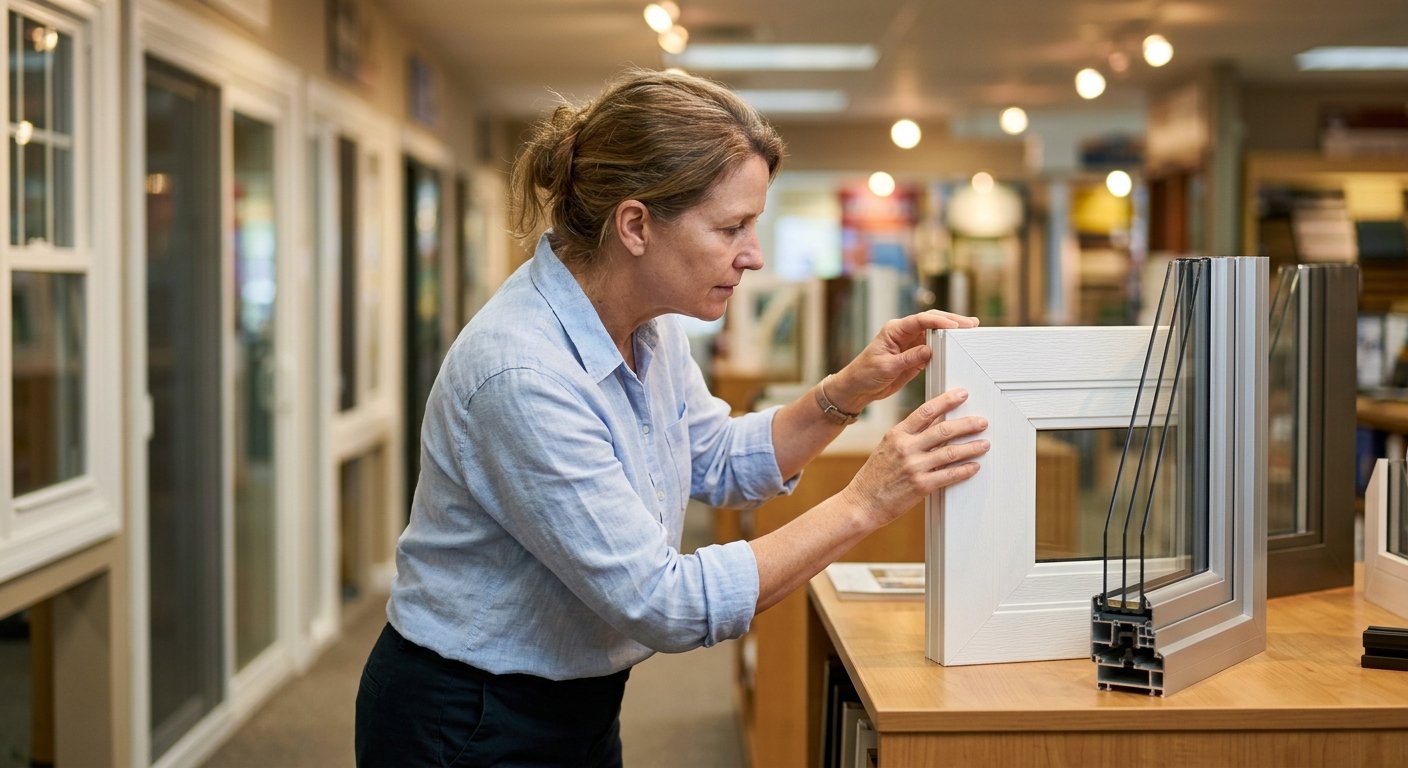
The two dominant frame materials for impact windows in South Florida are aluminum and vinyl. Each has a different price point, a different maintenance profile, and different performance characteristics in a coastal environment.
Aluminum frames are structurally stiffer, which allows slimmer sight lines and larger spans — relevant for wide picture windows or architectural openings. They handle the thermal expansion of South Florida summers well and are standard in commercial applications. Vinyl frames are thermally broken by nature (the material itself is a poor conductor), which improves energy performance at the frame edge. They require no painting and resist corrosion in salt-air environments. For a detailed performance comparison between the two materials, see this breakdown of aluminum vs. vinyl impact window frames.
From a cost standpoint, vinyl frames tend to run lower on standard residential openings; aluminum adds cost on larger or more complex units. CWS and ES Windows — the two manufacturers we install — both offer aluminum and vinyl product lines with full Florida Product Approvals, so the choice is driven by performance preference and budget, not availability.
| Frame Factor | Aluminum | Vinyl |
|---|---|---|
| Structural rigidity | Higher — allows wider spans | Lower — better for standard openings |
| Thermal performance | Lower (conducts heat) | Higher (natural thermal break) |
| Salt-air corrosion | Requires anodized or painted finish | Inherently corrosion-resistant |
| Maintenance | Periodic finish inspection | Minimal — no painting needed |
| Cost tier | Higher on large/complex openings | Generally lower on standard openings |
Permits and Florida Product Approvals: Real Costs, Not Optional
Every impact window installation in Florida requires a pulled permit, a product approval on file with the building department, and a final inspection before the job is legally closed. These aren’t bureaucratic formalities — they’re the mechanism by which the state verifies that the installation meets the Florida Building Code. Permit fees are set by each municipality and county, and they vary. A project in West Palm Beach will have different fee schedules than the same project in Boca Raton or Fort Lauderdale.
Permit costs are real project costs and should appear on any complete quote. If a quote you’re reviewing doesn’t include permit fees, ask whether they’re excluded — and if so, get a separate estimate of what they’ll be. For homeowners in Palm Beach County who want to understand why permits sometimes get pushed back, this article on why impact window permits get rejected in Palm Beach County walks through the common reasons.
At Access Impact, permit passing is guaranteed — we pull the permit, manage the submittal with the county or city, and carry the project through final inspection. Our licenses as Florida Certified General Contractor CGC1525402 and Florida Certified Roofing Contractor CCC1337755 cover the full scope of work.
Labor Complexity: Concrete Block vs. Wood Frame
How a home is built determines how an impact window is installed — and how long it takes. The majority of homes in Broward and Palm Beach County are concrete block (CBS) construction. Anchor installation into masonry requires hammer-drill work, specific fastener types, and more time per opening than a wood-frame installation. The installation crew needs the right tooling and the experience to hit proper embedment depth without cracking block or stucco.
Wood-frame homes — more common in older neighborhoods and in parts of Lee and Collier counties — allow faster anchor setting but require careful attention to the condition of the rough opening, sheathing, and framing members. A rotted sill or deteriorated header discovered mid-install adds time and material. An experienced in-house crew identifies these conditions before they become a surprise.
Access Impact uses in-house crews — no day-labor subcontractors — on every installation across Palm Beach County, Broward County, Fort Myers, Cape Coral, and Naples. That’s relevant to labor complexity because an experienced crew that installs impact windows every day is faster, more accurate, and more likely to pass final inspection without correction work than a crew assembled for the job.
A complete quote itemizes openings, glass specs, frame material, permit fees, and labor — anything less is an incomplete number.
How to Evaluate Competing Quotes Accurately
The lowest quote is not automatically the best value — and the highest quote is not automatically the most thorough. When comparing quotes for impact windows in West Palm Beach, Boca Raton, or Fort Myers, check that each quote includes: a per-opening or per-unit breakdown, the product name and Florida Product Approval number for the glass and frame, permit fees (or a clear note that they’re excluded), and a description of how the installation crew is structured.
A quote that bundles everything into a single line item makes comparison difficult by design. Ask the contractor to itemize. If they won’t, that’s information.
For a broader overview of what the installation process involves and what to expect on install day, see our impact window installation guide.
Frequently Asked Questions
Why do two quotes for the same home come in at very different totals?
Different contractors may be quoting different glass packages, different frame materials, or different product lines with different Florida Product Approval tiers. One quote may include permit fees and the other may not. Ask both contractors to itemize by opening, list the product approval number, and confirm whether permit fees are included. Once you’re comparing the same scope with the same product specs, the difference becomes meaningful.
Do permit fees vary between Palm Beach County and Broward County?
Yes. Permit fee schedules are set by each county and municipality independently, and they change periodically. A project in Delray Beach will have a different fee structure than the same project in Pompano Beach or Fort Lauderdale. Your contractor should include permit fee estimates in the quote or provide them as a separate line item — they’re a real project cost, not an afterthought.
Does the number of stories in my home affect the cost?
It can. Second-floor openings require different rigging, sometimes scaffolding, and more installation time per unit than ground-floor work. If your home has significant second-floor exposure — as many homes in Jupiter, Palm Beach Gardens, or Naples do — expect that to appear in the labor portion of your estimate.
What’s the typical project timeline from contract to completed installation?
At Access Impact, the timeline from signed contract to completed installation is typically 10–12 weeks. That window accounts for order lead time from the manufacturer, permit submittal and review by the building department, and scheduling the installation crew. Permit review timelines vary by county and current municipal workload.
Should I ask my insurance agent about documentation before I start?
Yes. Ask your insurance agent what documentation they need after installation is complete. We’re not in a position to advise on coverage or premiums — that’s your agent’s role — but we do provide the permit, the product approval numbers, and the final inspection record, which are the documents agents most commonly request.
Get a Detailed, Itemized Quote
Tell us your home’s location and opening count, and we’ll schedule a free on-site estimate — no obligation, no pressure, just an accurate number with every line item explained.

About Access Impact
Access Impact is a licensed Florida general contractor (CGC1525402) and roofing contractor (CCC1337755) installing impact windows, impact doors, and roofing across Palm Beach County, Broward County, and Southwest Florida (Lee and Collier) since 2007. In-house crews, Florida Product Approval on every product, and a permit-passing guarantee: the technically authoritative installer, not a volume reseller. Windows and doors are CWS and ES Windows; roofing is CertainTeed, Owens Corning, GAF, Dynamic Metals, Metal Alliance, and Polyglass. Offices in Deerfield Beach and Fort Myers. Visit accessimpact.com →