Glass garage doors · Palm Beach, Broward, Lee & Collier
A modern look in frosted or clear glass and an aluminum frame, from the same crew that does your windows and doors across Palm Beach, Broward, Lee and Collier counties. We measure the opening at a free in‑home estimate, put the door on a written quote with its Florida Product Approval number, pull the permit, and see it through final inspection.
4.9 254 Google reviews across our two offices
Lee & Collier: (239) 296‑5996 (Fort Myers office)
Tell us about your garage door
Takes about a minute. Add windows or doors to the same request if you like.
We use your details only to contact you about your estimate. Privacy policy
Filmed on one of our installs
Real footage of one of our glass garage door installs, frame by frame. Drag across the photo or use the slider, then read what a Fort Myers customer said about theirs.
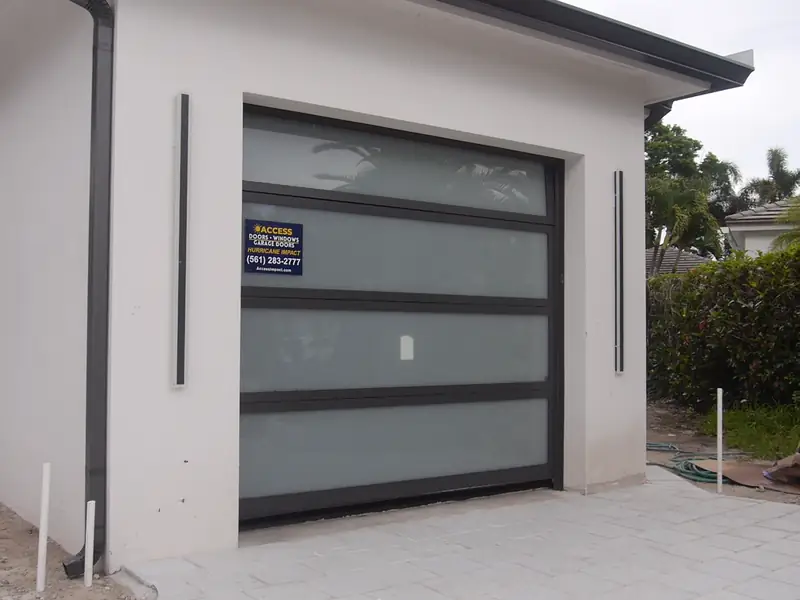
They recently installed my impact garage door. The service and installation were excellent. Couldn’t be happier. Highly recommend them.
One job, not two contractors
A Deerfield Beach homeowner got three quotes for new windows and doors. Here's what each one covered, in his words.
| Quote 1 | Quote 2 | Access | |
|---|---|---|---|
| Windows | Included | Included | Included |
| Doors | Included | Included | Included |
| New garage door | Left to him | Left to him | Included |
I liked the quote from Access because it included installation of a new garage door, where the other 2 quotes were only for the windows and doors, and were going to leave it up to me to find a separate contractor to install a new garage door.
We measure the garage opening at the same free in‑home estimate as any windows and doors you want priced.
Every product listed with its Florida Product Approval or NOA number (the state or county product approval you can look up).
We pull the permit, our in‑house crew installs, and we carry it through final inspection.
In customers' words
From Google reviews on our Deerfield Beach and Fort Myers listings. Reviewers don't say which style of garage door they bought; the photo is one of our glass installs.
I'm very happy with how quiet my garage door is when opening and closing. My matching front door really sealed the deal!!
It was done within less than a day and the windows, front door, and garage door never looked better. … The inspection with the city went very well as they did everything within guidelines.
I just recently replaced all my windows and garage door with Access Doors & Windows. … He ordered materials and when I received them the work was done in one day.
From our installs
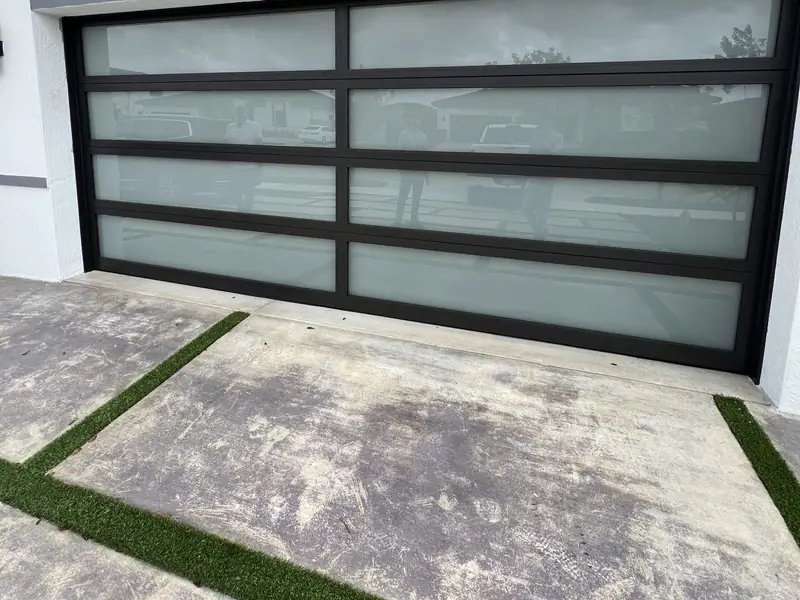
Frame color, glass and width change the whole front of the house. These full-view glass garage doors were all installed by our crews.
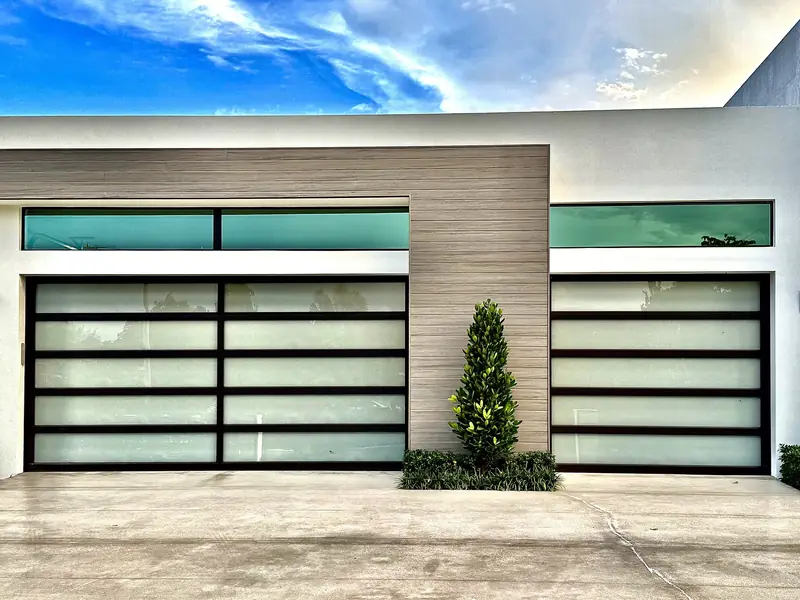
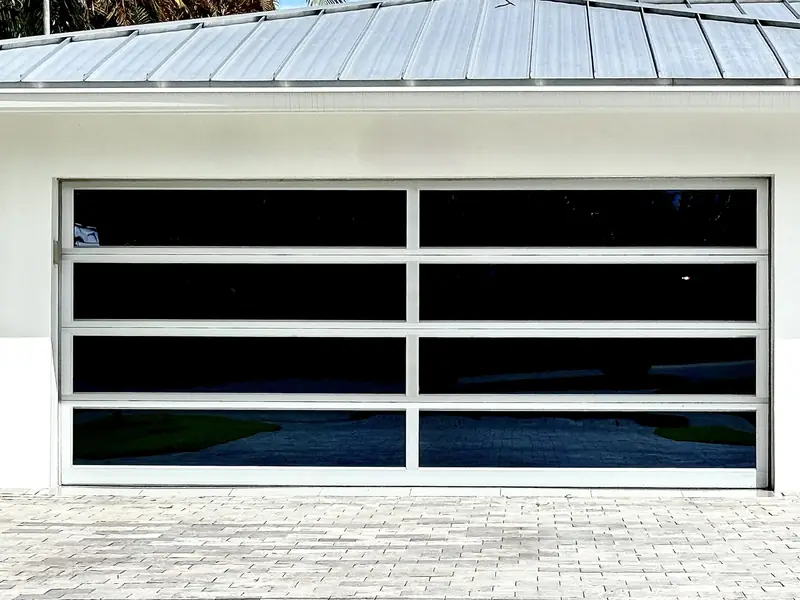
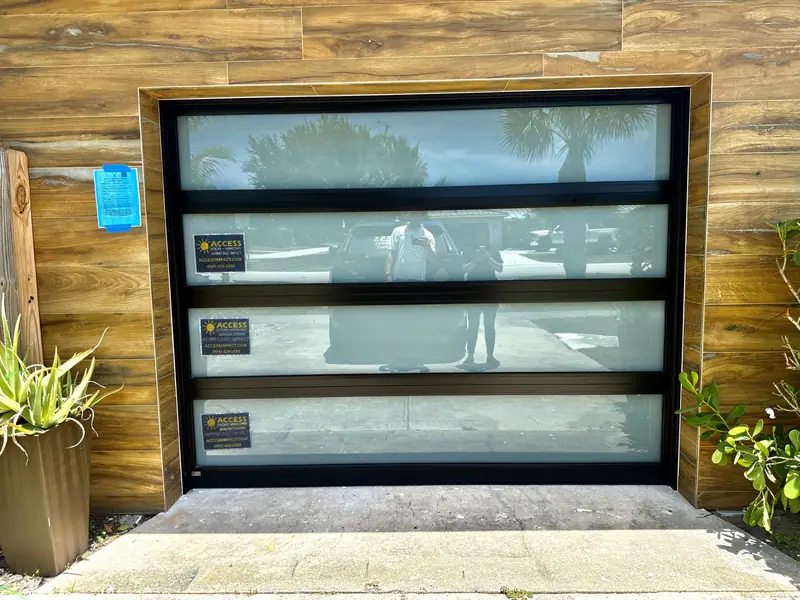
We don't rank brands. Your quote carries the door's Florida Product Approval or NOA number, so you can look it up yourself. More doors we install: sliding, French and pivot doors, all on impact door installation. See more in our project gallery.
From quote to final inspection
10–12weeks from signed
contract to install day
We measure the garage opening, plus any windows and doors you want quoted.
The door listed with its Florida Product Approval or NOA number.
We pull the permit, and your door is ordered to your measurements.
Our in-house crew takes out the old door and installs the new one.
We carry the permit through final inspection. Permit passing guaranteed.
Also replacing windows? See impact window installation.
Authorized installer for


Every written quote lists each product with its Florida Product Approval or Miami-Dade approval (NOA) number, so you can look it up before you sign.
Questions
Something not covered here? Call (561) 283‑2777 or (239) 296‑5996.
We don't publish a price list, because the number depends on your opening and your choices: the width and height, frosted or clear glass, the frame color, the opener, and the condition of the opening once the old door comes out. The estimate is free and done at your home, and the quote comes in writing with the door's Florida Product Approval or NOA number on it.
The pros: daylight in the garage, and a modern look that goes with large windows. The trade-offs: people can see in through clear glass, and glass lets in sun, so a garage facing the afternoon sun can get warmer. Frosted glass keeps the daylight while blurring the view, and Low-E glass cuts solar heat gain. We go through both at the free estimate.
With clear glass, yes, most of all at night with the lights on. Frosted glass lets daylight in while blurring what's inside, which is why most of the glass garage doors in our photos use it. Darker glass is another look. We bring the choices for your opening to the free in-home estimate and note the glass on your written quote.
Glass lets sun in, so a garage that faces the afternoon sun, or one with a bedroom above it, can warm up. Low-E glass cuts solar heat gain, so it's worth asking about for that kind of garage. At the estimate we look at which way your garage faces and which rooms share its walls, and the glass you choose goes on your quote.
Yes, and customers on both our listings describe doing it as one job. A Deerfield Beach customer chose our quote because it included a new garage door, when the other two quotes only covered windows and doors. A customer on our Fort Myers listing did a garage lift door along with windows, sliding doors and front doors in 3 phases. Same quote, same in-house crew.
We do. We pull the permit, our in-house crew installs the door, and we carry the permit through final inspection. Permit passing is guaranteed. A customer on our Deerfield Beach listing, who had windows, a front door and a garage door done, wrote that the inspection with the city “went very well as they did everything within guidelines.”
We plan on 10 to 12 weeks from signed contract to install day, while the permit is pulled and your door is made to your measurements. Install day is done by our own crew; one customer wrote that the windows, front door and garage door were done “within less than a day.” Your quote gives the plan for your job.
In Palm Beach and Broward counties from our Deerfield Beach office at 740 S Deerfield Ave, Suite 1, (561) 283-2777, and in Lee and Collier counties from our Fort Myers office at 12270 Itec Pk Dr, Unit 300, (239) 296-5996. Both offices are open Monday to Friday 8:30 AM to 4:30 PM and Saturday 9 AM to 12 PM.
Free in-home measure, written quote, our own crew.
Both officesMon–Fri 8:30–4:30 · Sat 9–12