Your front door is the first line of defense between your family and a Category 4 storm. Yet many South Florida homeowners spend more time choosing paint colors than understanding what actually goes into a proper impact door installation. The process matters—not just for aesthetics, but for structural integrity, code compliance, and long-term performance. Whether you’re upgrading from a standard wood door in Boca Raton or replacing aging hardware in Fort Myers, here’s exactly what a professional impact front door installation looks like from start to finish.
Why the Installation Process Is Just as Important as the Product
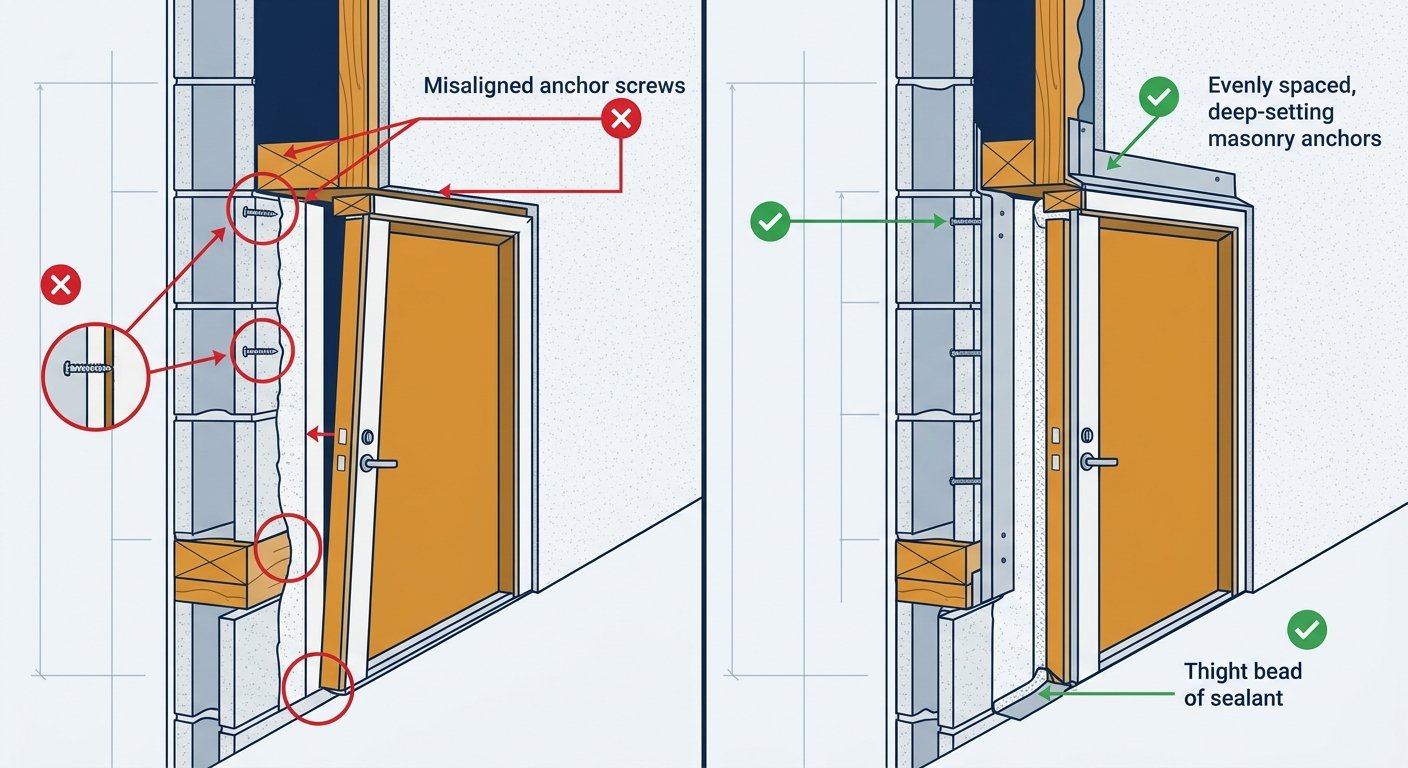
Impact doors are engineered systems—not just thick slabs of material. A high-quality door from a manufacturer like Therma-Tru or PGT will underperform if it’s installed incorrectly. The Florida Building Code has specific requirements for impact-rated openings because even the best door can fail at the frame, at the anchoring system, or at the threshold if any component is compromised.
According to the Florida Building Commission, all exterior openings in high-velocity hurricane zones must meet defined missile impact and cyclic pressure standards. This isn’t bureaucratic red tape—it’s science-backed protection. A door that passes those tests and is installed by a licensed contractor gives you genuine storm protection. One that’s improperly anchored does not, no matter what the label says.
That’s why, as a Florida Certified General Contractor serving Palm Beach, Broward, Martin, Lee, Collier, and Charlotte counties for over 30 years, we approach every installation as a structural project—not just a door swap.
Step 1: Product Selection and Measurement
The installation process begins well before anyone picks up a tool. The right door for your home depends on several factors:
- Opening size and configuration: Single, double, or single with sidelights—each requires a different frame and anchoring approach.
- Exposure category: Homes in coastal Palm Beach County or Lee County face different wind load requirements than inland properties.
- HOA and aesthetic requirements: Many communities in Boca Raton and Deerfield Beach have architectural guidelines that must be respected.
- Material preference: Fiberglass, steel, and aluminum impact doors each have distinct benefits for energy efficiency, maintenance, and durability in Florida’s salt-air environment.
Accurate field measurements are taken at the rough opening—not just the existing door frame—because existing frames are often out of square or damaged in older homes. We document the rough opening dimensions, check for structural headers above the opening, and verify the sill condition before ordering any product. Ordering the wrong size wastes weeks and delays your protection.
Step 2: Permit Pulling and Code Review
Before installation begins, a permit must be pulled from your local building department. This step is non-negotiable in Florida, and any contractor suggesting you skip it should raise immediate red flags.
The permit process requires submitting product approval documentation—proof that the door and frame system carries a Florida Product Approval (FPA) number. Manufacturers like Therma-Tru and Lawson provide this documentation, and it must match the specific product being installed. The approved installation instructions also become part of the permit package and must be followed exactly during installation.
This process protects you as a homeowner. It ensures your installation is inspected by a third-party building official, creating a verifiable record that your home meets Florida Building Code. This matters enormously when filing an insurance claim or selling your home.
Step 3: Removing the Existing Door and Preparing the Opening
Once the permit is in hand, the physical work begins. Removing an existing door isn’t as simple as pulling it off the hinges. The old frame, buck, and any existing fasteners must be removed carefully to avoid damaging the surrounding stucco, drywall, or structural framing.
After removal, the rough opening is inspected for:
- Rot or moisture damage in the framing members
- Structural integrity of the header
- Level and plumb of the opening
- Condition of the subfloor or slab at the threshold
Any deteriorated wood or compromised framing is replaced before the new door goes in. Skipping this step is one of the most common shortcuts that leads to installation failures down the road. In South Florida’s humidity, moisture damage around door frames is far more common than most homeowners realize—especially in homes built before 2000.
Step 4: Installing the Impact Door Frame and Unit
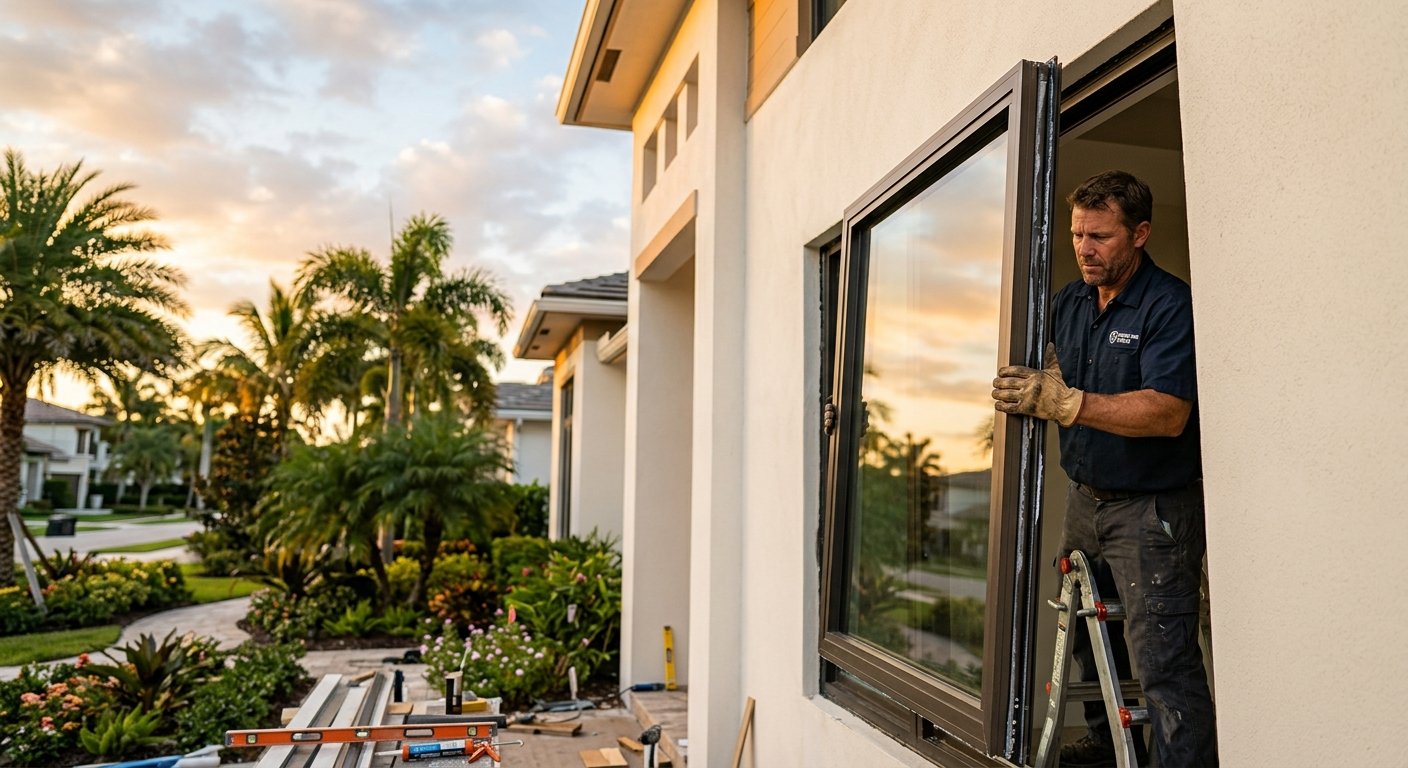
This is the technical core of the entire project. Impact door installation south Florida contractors must follow the manufacturer’s approved installation instructions precisely, including:
- Shimming the frame: The door frame is shimmed level, plumb, and square before any fasteners are set. Even a 1/8-inch variance can affect how the door seals and swings.
- Fastener type and spacing: Florida Product Approval documents specify exactly which fasteners are required and at what intervals. Tapcon screws, structural anchors, or through-bolts into a masonry or wood buck are common—each application is different.
- Buck installation (masonry openings): Most South Florida homes have concrete block or poured concrete construction. A pressure-treated or steel buck must be properly anchored to the masonry before the door frame can be set.
- Sealing and flashing: The perimeter of the frame is sealed with approved caulking and flashing tape to create a weathertight barrier. This prevents water intrusion even under extreme wind-driven rain.
The door unit itself—pre-hung in its frame—is then set into place, checked for operation, and secured. Hardware is installed, including multi-point locking systems that are standard on most quality impact doors and provide significantly better security than traditional single-point locks.
Step 5: Inspection and Final Approval
Once installation is complete, the building department inspector visits to verify that the installation matches the approved permit documents. The inspector checks fastener placement, product approval numbers, and frame condition. A passing inspection results in a final sign-off that becomes part of your home’s permanent record.
This step is often underappreciated by homeowners but it’s genuinely valuable. The Insurance Institute for Business & Home Safety consistently highlights proper installation verification as a critical factor in whether impact products actually perform as rated during a storm event.
After inspection, we do a final walkthrough with the homeowner—demonstrating proper door operation, locking mechanisms, and explaining any maintenance requirements. An impact door that’s properly operated and maintained will last decades in South Florida’s climate.
Impact Doors Beyond the Front Entry
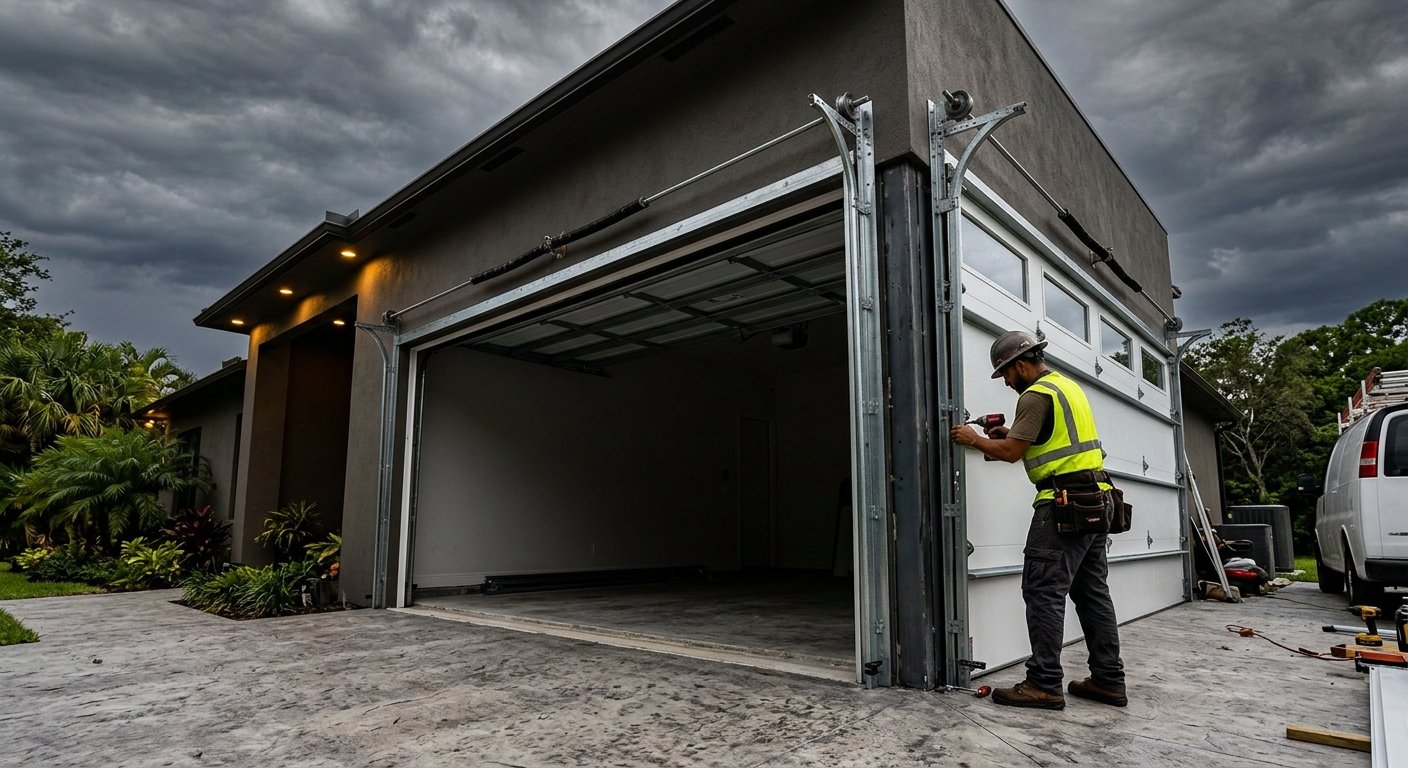
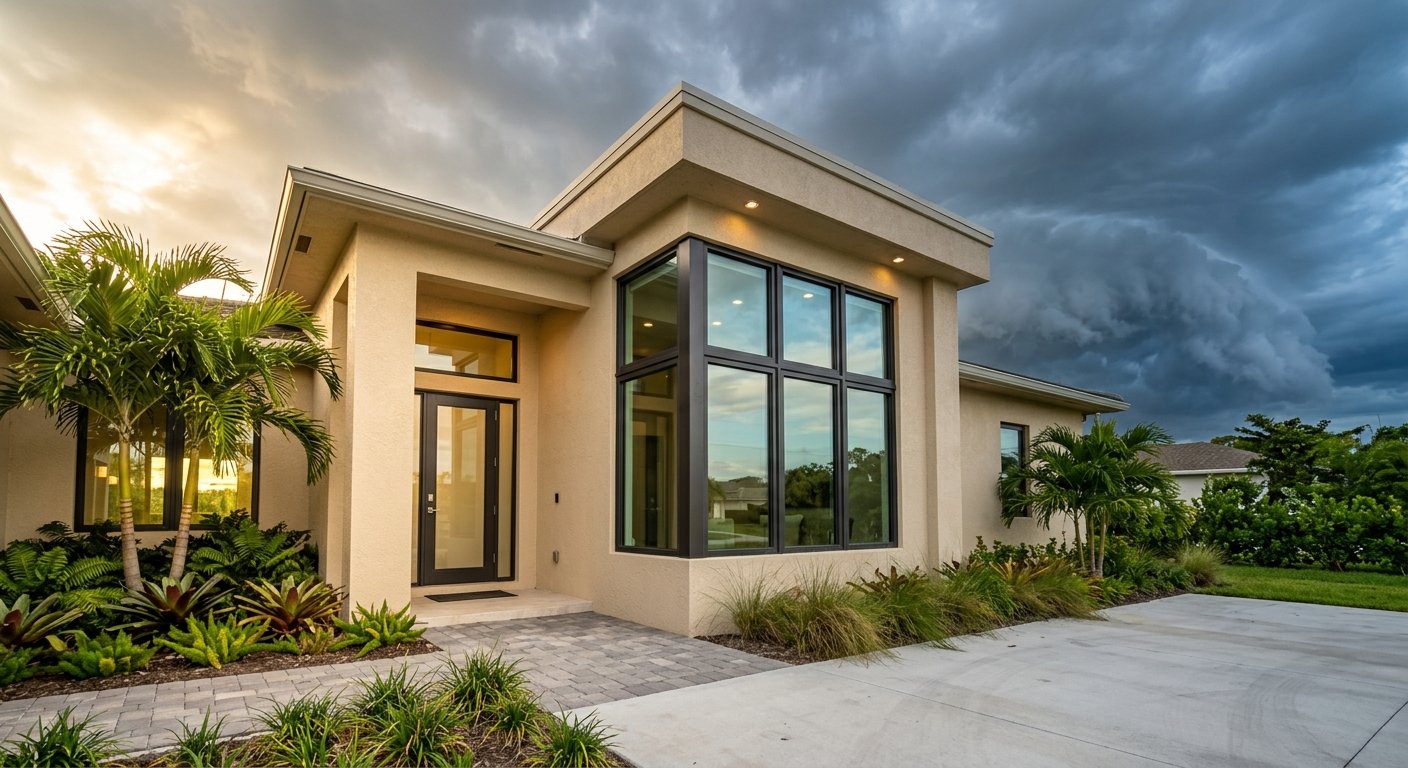
While the front door gets the most attention, a complete impact protection plan considers every vulnerable opening. Our impact door installation services cover all entry points—including rear sliders, French doors, and side entries. Many homeowners also overlook the garage, which can be the largest and most structurally critical opening in the home. Our impact garage door installation services include custom impact glass garage doors—a beautiful and highly functional option that’s grown popular throughout Palm Beach and Broward counties. And of course, impact window installation completes the protection envelope when combined with impact doors.
Frequently Asked Questions
How long does an impact front door installation take?
A standard single impact door installation typically takes one day for a professional crew. More complex configurations—such as double doors with sidelights or custom sizes requiring modified openings—may take two days. The permit process prior to installation generally adds one to three weeks depending on your municipality’s processing time.
Do I need a permit for impact door installation in Florida?
Yes, absolutely. Florida law requires permits for all impact-rated door and window replacements. The permit process ensures your installation is inspected and documented as code-compliant. Any contractor recommending you skip this step is putting your safety, insurance, and home resale value at risk.
What’s the difference between impact doors and standard doors with hurricane shutters?
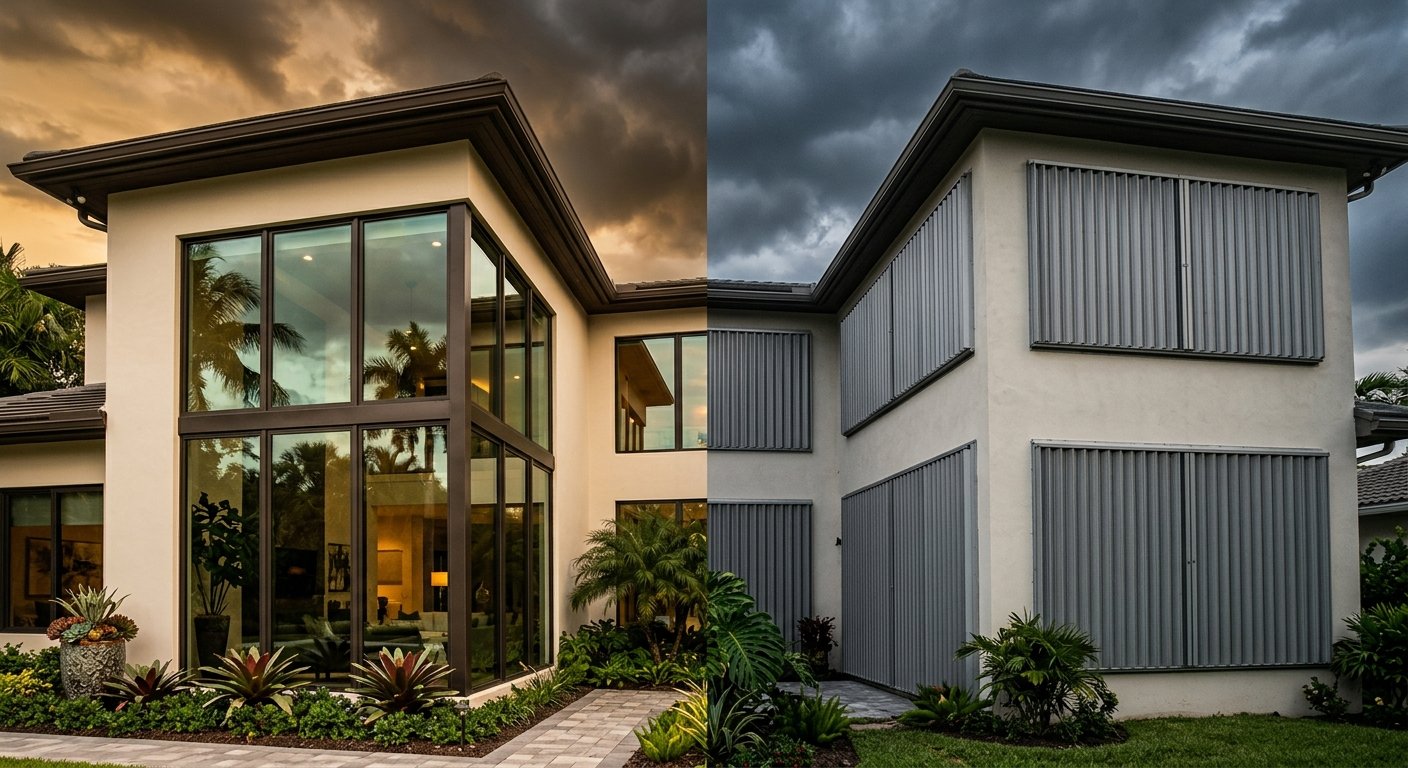
Impact doors are permanently engineered to resist hurricane-force winds and debris penetration without any additional preparation. Standard doors with hurricane shutters require manual deployment before a storm and may not meet current Florida Building Code requirements for new installations. Impact doors also provide year-round benefits including noise reduction, energy efficiency, and enhanced security.
Can any contractor install an impact door, or does it need to be a licensed contractor?
Florida law requires that impact door installation be performed by a licensed contractor. Specifically, a Florida Certified General Contractor or a licensed specialty contractor is required. Unlicensed installation voids manufacturer warranties, fails building code compliance, and can create serious liability issues if the installation fails during a storm.
How do I know if my impact door qualifies for insurance benefits?
Most Florida homeowner insurance carriers recognize impact-rated door and window installations. After your installation passes inspection, you’ll receive documentation—including permit records and product approval numbers—to submit to your insurer. We recommend contacting your insurance provider directly to understand your specific policy’s requirements and potential premium adjustments.
Ready to Upgrade Your Front Entry?
As a military family-owned company with more than 30 years of experience protecting South Florida homes, we take every installation seriously—because your family’s safety is on the line. From initial measurement to final inspection, our licensed team handles the entire process with the professionalism and integrity that’s guided us since day one.
We proudly serve homeowners in Deerfield Beach, Boca Raton, Fort Myers, and surrounding communities across Palm Beach, Broward, Martin, Lee, Collier, and Charlotte counties. If you’re ready to discuss your impact front door installation, contact Access Doors & Windows at (561) 283-2777. We’ll give you honest guidance, not a high-pressure pitch—because that’s how we’ve earned the trust of South Florida families for over three decades.